Campania Mater: a 24-Hour Event to Reflect on the Future of Agriculture
Redazione
19 min di lettura
The data contained in the CAMPANIA MATER Report provide a snapshot of the agri-food sector in the Campania Region, serving as a basis for reflection on its future.
Commissioned by the Department of Agriculture of the Campania Region, the report was drafted under the supervision of the Regional Minister of Agriculture, Nicola Caputo, with scientific coordination by Teresa del Giudice, Professor of Agricultural Economics and Policy at the Department of Agriculture of the University of Naples Federico II, and Alex Giordano, our Scientific Director, Professor of Business Economics and Management at Giustino Fortunato University and Lecturer in Social Innovation and Digital Transformation at the University of Naples Federico II. The two also oversaw extensive research conducted by the Nomisma Research Institute, later discussed and examined with over 150 stakeholders involved in nine working groups, including regional officials, university professors, researchers, trade associations, professional bodies, LAGs, entrepreneurs, and farmers. Rural Hack managed the Content Lab to coordinate this vast collective intelligence initiative.
The nearly 400-page volume provides an up-to-date overview of the main challenges and opportunities in the regional agricultural and agri-food sectors. The results are organized along nine thematic lines, which formed the scientific basis for the discussions at the Campania Mater event, scheduled for September 17 and 18 in Naples. The research, based on official data and established indicators, presents a detailed picture in which natural resources, social and economic transformations, technological innovation, and global markets intertwine, outlining the future of agriculture in Campania.
The first working group, coordinated by Raffaella Pergamo, Senior Researcher at CREA – National Rural Network, and Fabio Terribile, Full Professor of Pedology at the University of Naples Federico II, included participants such as Giuseppe Castaldi, Amedeo D’Antonio, Flora Della Valle, Angelo Basile, Michele Buonomo, Caterina Capri, Fabrizio Cembalo, Generoso De Simone, Antonio Di Gennaro, Massimo Fagnano, Antonio P. Leone, Veronica Manganiello, Angelo Marciano, Michele Munafò, Giovanni Quaranta, and Vincenzo Michele Sellitto.
This group analyzed the crucial issue of soil and water, fundamental resources for Campania’s agriculture increasingly exposed to environmental and human pressures. Data show that nationally, 47% of Italian soils are in poor health, compromised by erosion, loss of organic carbon, compaction, salinization, and heavy metal pollution.
In Campania, the situation reflects specific challenges: in 2023, 143,000 hectares had been consumed, equal to 11% of the regional territory, placing Campania third in Italy after Lombardy and Veneto. The province of Naples alone accounts for over a third of the region’s soil consumption (34.9%), followed by Caserta and Salerno. Soil consumption in Campania is linked to high population density — 408 inhabitants/km², more than double the national average — and has steadily increased over the past 20 years, resulting in irreversible territorial transformations.
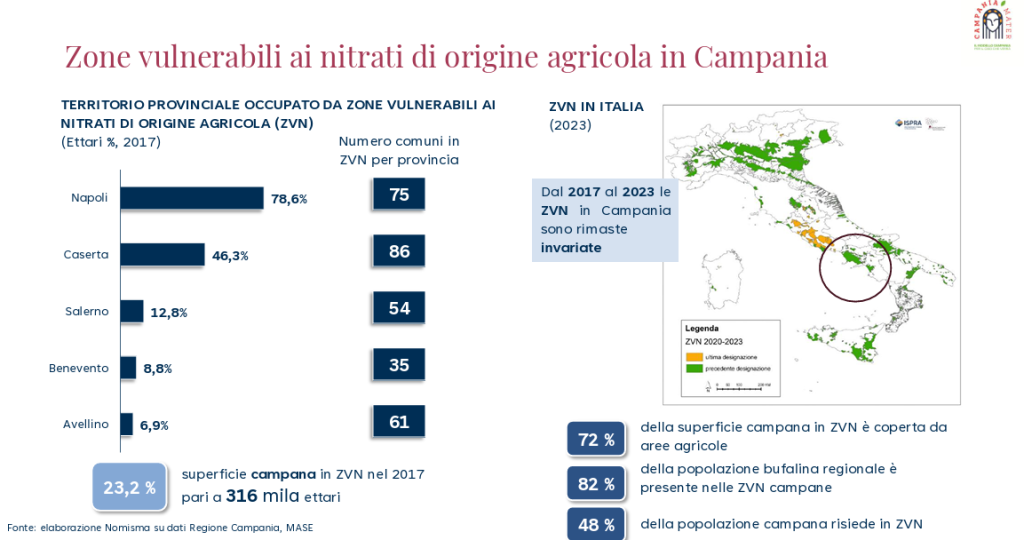
Another critical issue concerns zones vulnerable to nitrate pollution from agricultural sources (NVZs): in 2017, Campania had 316,000 hectares classified as such, equal to 23% of the regional territory. Of these, 72% are agricultural areas, overlapping with 82% of the regional buffalo population, while nearly half of Campania’s citizens (48%) live in vulnerable zones. The presence of nitrates in soil and water exerts significant pressure on the sustainability of production and environmental health. Water availability data confirm further fragility: in recent decades, Italy has experienced repeated episodes of record water shortages (2003, 2017, 2022), with indices above 300 — the highest since 1951.
In 2023, the water deficit index stood at 223.9 compared to a historical average of 326.3, highlighting a chronic trend of water scarcity compounded by uneven irrigation availability. These findings confirm that protecting soil and water resources must be central to regional agricultural strategies, with actions to curb land consumption, improve environmental quality, and manage water sustainably — essential elements for the resilience and competitiveness of Campania’s agriculture.
Agriculture and climate: adaptoin strategies
The second area of research focused on the relationship between agriculture and climate change, coordinated by Fabian Capitanio, Lecturer in the Department of Veterinary Medicine and Animal Production, and Francesco Pennacchio, Lecturer in the Department of Agriculture at the University of Naples Federico II, with participation from Daniela Carella, Giovanni Padovano, Eliana Paladino, Flavia Grazia Tropiano, Daniele Caceffo, Pietro Caggiano, Francesco Castelluccio, Giuseppe Ceparano, Vincenzo Cerone, Donato De Marco, Stefania De Pascale, Giuseppe Iovane, Albino Maggio, Vincenzo Patella, and Rossella Robusto. The research paid particular attention to adaptation scenarios relevant to Campania in both European and global contexts.
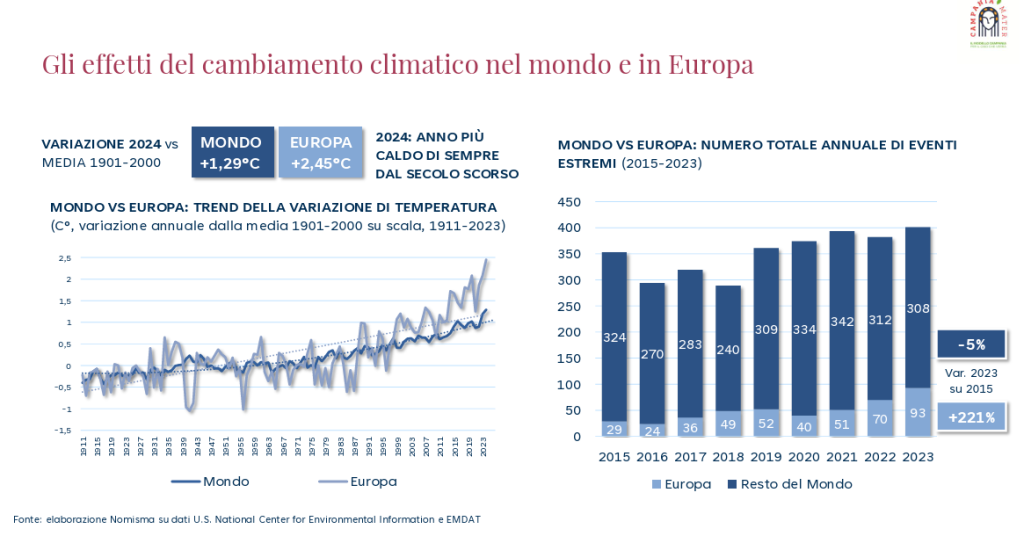
In Italy, the average annual temperature between 2014 and 2023 was approximately 1.3°C higher than in 1974–1983, confirming a warming trend directly impacting agricultural production. At the same time, extreme weather events have increased significantly: from 2015 to 2023, the average number of extreme events in Europe rose by 221%, while the global growth was less pronounced. In Italy, droughts, floods, and hailstorms have severely affected crop stability and supply chain sustainability. Water deficit figures are particularly concerning, with record shortages in 2003, 2017, and 2022 exceeding index values of 300 — the highest since 1951.
In 2023, the annual water deficit index was 223.9, compared to a historical average of 326.3, confirming a growing scarcity that especially impacts crops in areas lacking efficient irrigation systems. In this context, climate adaptation becomes a strategic priority: Campania’s agricultural sector must strengthen water resource management practices, crop diversification, and resilient techniques to cope with a structurally risky climate scenario that threatens the competitiveness and sustainability of agricultural businesses.
Zero waste: reduction and enhancement
The third area of investigation, coordinated by Andrea Segrè, Full Professor of Circular Economy at the University of Bologna, with participants including Giuseppe Rosario Mazzeo, Enrico Amico, Valentina Carfora, Giorgio Casagranda, Paolo Conte, Guido Coppola, Emilio Ferrara, Matteo Morvillo, Simona Pelliccia, Raffaele Sacchi, Giovanna Sangiuolo, Amedeo Valestra, and Fabio Verneau, focused on food waste and resource enhancement — a theme linking environmental sustainability, supply chain competitiveness, and social responsibility.
The research shows how waste occurs throughout the agri-food chain in different forms: food loss, linked to production and processing stages, and food waste, concentrated in distribution and final consumption. Globally, it is estimated that in 2022, 13% of food was lost at the primary production stage and 19% was wasted in the later stages of the food chain. In Europe, Italy ranks among the countries with relatively low levels of waste, yet remains in the higher range, with 139 kg per capita annually versus the EU average of 129 kg. Specifically, 53% of waste in Italy happens at the household level, 12% in food service, and 18% in manufacturing.
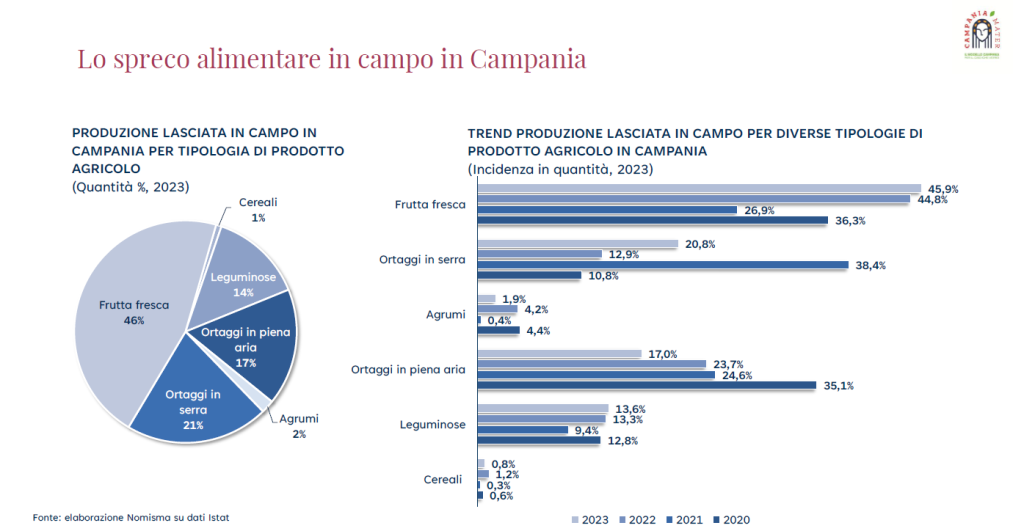
The Campania snapshot reveals specific issues: in 2023, nearly half of the region’s fresh fruit production (46%) remained unharvested, along with 21% of greenhouse-grown vegetables and 17% of open-field vegetables. This unharvested produce represents a significant economic loss for farms and a missed opportunity for the entire supply chain. A multi-year analysis shows that the share of fruit left in the field has remained consistently high, peaking at 45.9% in 2020. Regarding household waste, data shows that Italian families throw away an average of 618 grams of food per week — a 16% increase compared to 2021.
The most wasted items are fresh fruit (24g per week), bread (21g), and vegetables (20g), followed by lettuce and onions. In Campania, food spending is particularly significant: in 2022, households allocated an average of €552 per month to food and non-alcoholic beverages, compared to a national average of €481, representing 25% of total household spending. These findings underscore how waste reduction and surplus valorization must be priorities for the regional agri-food system. Targeted logistical interventions, incentives for processing unharvested crops, and consumer awareness programs can deliver environmental, economic, and social benefits, strengthening the sustainability of Campania’s model.
Rural communities and resilient territories
The fourth focus area, coordinated by Teresa Del Giudice, Professor in the Department of Agriculture at the University of Naples Federico II, involved participants such as Katja Aversano, Ferdinando Gandolfi, Marcello Murino, Veronica Barbati, Angelo Barone, Valerio Calabrese, Davide Della Porta, Roberta Garibaldi, Gennaro Granata, Francesco Nardone, Teresa Panico, Gaetano Pascariello, Margherita Rizzuto, Eligio Troisi, and Italia Valentino. It focused on rural communities and resilient territories.
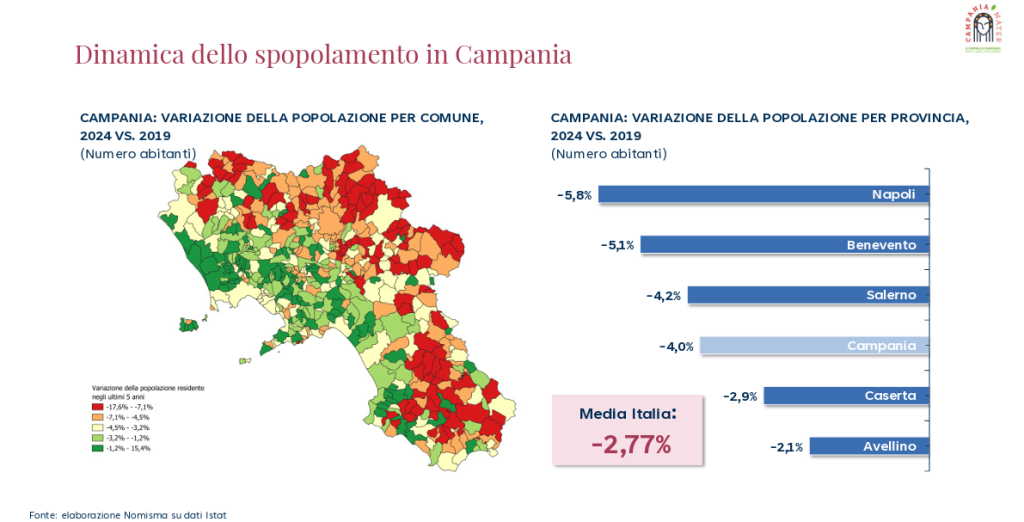
The analysis highlighted demographic trends and economic dynamics affecting the region’s internal and hilly areas. A gradual depopulation trend emerged: between 2019 and 2024, Campania lost an average of 4% of its population, with more significant declines in Naples (-5.8%) and Benevento (-5.1%), while Salerno and Avellino saw drops of about 3%. This phenomenon directly impacts the vitality of rural communities, the availability of agricultural labor, and the provision of services in small towns. Economically, Campania reports an average taxpayer income of €16,834 — well below the national average of over €20,000.
This gap translates into lower investment capacity and increased vulnerability among families in rural areas. The dynamics of utilized agricultural area (UAA) confirm structural difficulties: between 2010 and 2020, there was a 10% reduction, particularly in hilly (-15.4%) and plain (-11.9%) areas. The loss of cultivated land, combined with depopulation, increases the risk of abandonment and landscape degradation but also encourages reflection on the need for policies that enhance inner areas. In this context, territorial resilience depends on the ability to combine social cohesion, environmental sustainability, and economic innovation.
The research highlights that strengthening rural communities requires targeted support for agricultural businesses, short supply chains, and local services, to counter demographic decline and ensure new opportunities for local development.
DOP economy and Made in Campania: identity, quality and global markets
The fifth working group, coordinated by Chiara Giovoni, Expert in Marketing and Communication, with participants including Claudio Ansanelli, Luciano D’Aponte, Emiddio De Franciscis Di Casanova, Addolorata Ruocco, Ettore Bellelli, Salvatore Ciardiello, Gianluca Compare, Giuseppe Di Martino, Stefano Di Marzo, Carmine Fusco, Giovanni Giugliano, Gennaro Masiello, Angela Pisacane, Giovanni Rago, Maria Manuela Russo, Floriana Schiano Moriello, and Salvatore Schiavone, addressed the theme of the DOP Economy and Made in Campania, outlining a strong and forward-looking picture of the regional agri-food sector on international markets.
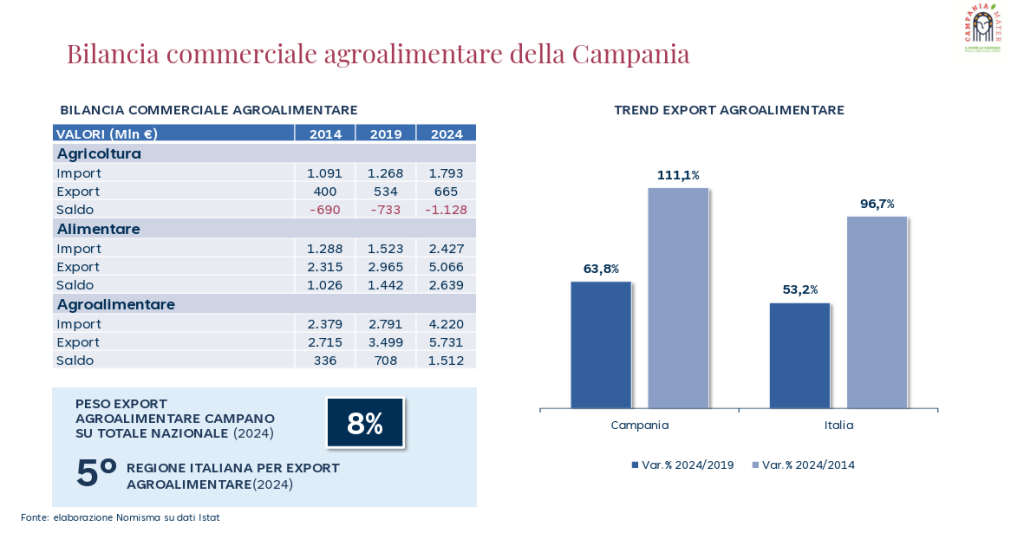
In 2024, Campania’s agri-food exports reached €5.7 billion, up 111% compared to 2014 and 63.8% compared to 2019, positioning the region fifth nationally in export value. Growth has been especially strong in processed food products, which account for 87% of the total; agricultural products make up 12%, and beverages 1%. The structure of exports highlights Campania’s specialization in processed fruit and vegetables (37% of total), followed by baked and cereal-based goods (17%), and dairy products (10%).
This composition reflects the regional supply chains’ capacity to deliver internationally recognized excellence, closely linked to origin-denominated products. Geographically, Campania maintains a balanced export strategy: 45% to the EU and 55% to non-EU countries. The United States remains the top market (16%), followed by the United Kingdom and Germany (12% each), and France (7%).
Noteworthy are dynamic performances in newer markets such as Austria, Spain, and the Netherlands, signaling expanded presence in strategic European regions. At the same time, the agri-food trade balance shows a positive surplus of €1.5 billion — mainly due to processed food — while the agricultural sector still records a deficit. These outcomes demonstrate how Campania has built a competitive model grounded in territorial identity, certified quality, and the recognizability of DOP and IGP labels, sustaining exports and enhancing the global reputation of Made in Campania.
The blue economy
The sixth working group, led by Giovanni Fulvio Russo, Full Professor of Ecology at the University of Naples Parthenope, with participants including Maurizio Cinque, Teodolinda Toderico, Aniello Anastasio, Teresa Di Nardo, Fabio Di Nocera, Carmine Farnetano, Maurizio Giordano, Fulvio Giugliano, Giuseppe Greco, Danilo Guida, Giuseppe Palma, Valentina Stinga, and Yari Vecchio, focused on the relationship between the sea and agri-food, emphasizing the role of the blue economy in the region’s development strategy.
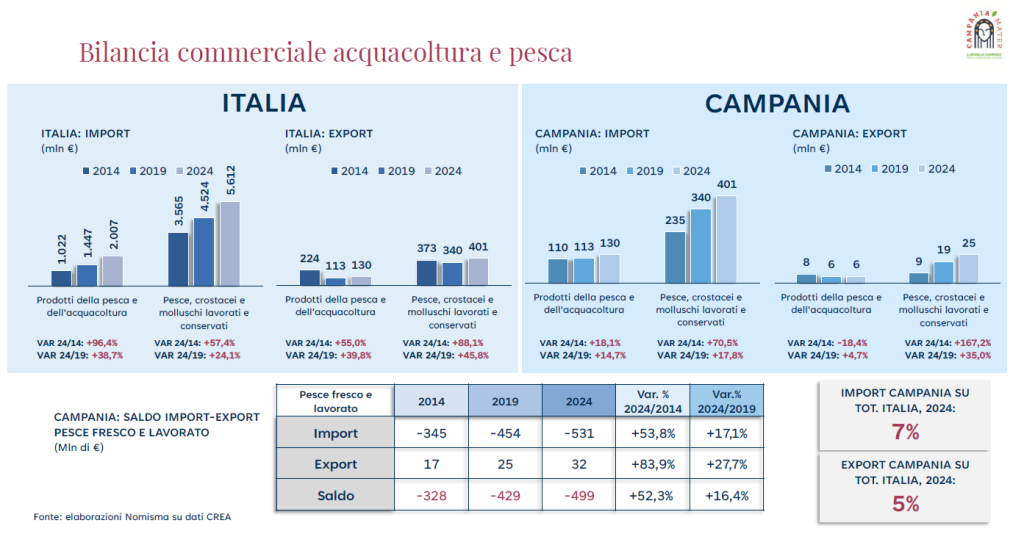
Campania’s fishing fleet consists of 1,021 vessels, representing 8.6% of the national total. These boats are, on average, smaller and less powerful than the national standard: 8 tons in average gross tonnage compared to the national 12, and installed power of 59.5 kW versus 78 kW nationwide. This describes a fleet primarily engaged in coastal fishing, with structural features defining its operational patterns. In 2023, regional fish production totaled 5,001 tons, with a value of €37.3 million, placing Campania ninth nationally in both quantity and value.
The main techniques used are trawling and seine fishing (22.2%) and purse seining (41.1%), together accounting for over half of the regional catch and significantly impacting production value. Although smaller in scale, this sector remains a vital part of the regional agri-food system, especially in terms of economic diversification and local fishery value chains.
Food and health
The seventh group, coordinated by Mauro Minelli, Physician and Specialist in Clinical Immunology and Allergology, and Southern Italy Coordinator of the Foundation for Personalized Medicine, included participants such as Gianni Ruggiero, Giovanni Silenzio, Giorgia Borriello, Margherita Ceparano, Angelo Corallo, Giovanni Feola, Massimiliano Gervasi, Antonio Limone, Dominga Maio, Annamaria Mastrantuono, Ludovico Montebianco Abenavoli, Marina Reale, Ilaria Vergallo, and Marianna Visone. The group examined the link between food and health, showing how dietary choices, production methods, and lifestyles directly impact population well-being.
Analysis of household spending shows mixed trends: between 2014 and 2023, spending on bread, cereals, fruits, and vegetables rose in nominal terms, but when adjusted for inflation, it reveals a drop in volume. In 2023, real spending on fruit was down 23.3% from 2014, while vegetable spending fell by 4.9%. Conversely, real spending on oils and fats increased by 30.8% over the same period, indicating changing consumption habits. A similar trend was observed for animal-based products: while current spending rose, real values declined significantly.
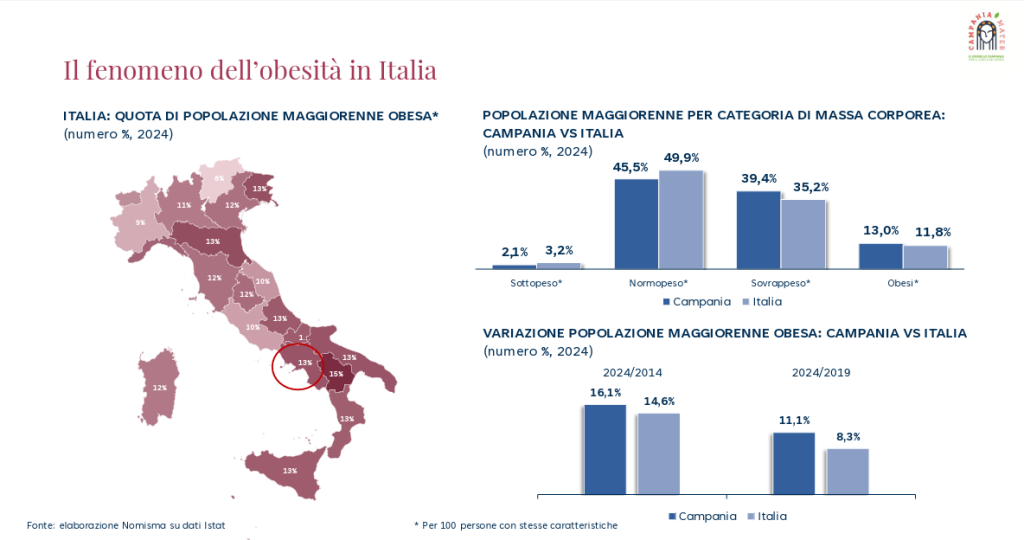
Between 2014 and 2023, real spending on meat dropped by 9.8%. Organic farming, however, is growing: Campania’s organic area rose from 21,000 hectares in 2014 to 103,000 in 2023 — 20% of the regional UAA, aligning with the national average. Certified integrated production (SQNPI) is also expanding, covering over 100,000 hectares in Campania — 14% of the national total — particularly in vine, olive, and citrus crops. Regarding public health, Italy has a lower obesity rate than the EU average: in 2019, 10.5% of the population was obese, compared to 16% in the EU-27.
However, regional data show concerning trends, especially in Southern Italy, where overweight and obesity rates are higher, directly affecting healthcare costs and community well-being. The findings highlight how food choices and production methods are closely tied to citizens’ health. The research stresses that promoting the Mediterranean Diet, certified production, and sustainable agricultural practices are key to linking sector competitiveness with improved quality of life.
Innovation and knowledge for agriculture
The eighth area of focus is innovation and knowledge in agriculture, coordinated by our own Prof. Alex Giordano, who in recent years has led the thematic group on “Innovation, AKIS, new entrepreneurship, and digitalization” within the Committee for the New Agricultural Programming (CNPA) of the Campania Region’s Department of Agriculture.
Participants included Ferdinando Gandolfi, Giuseppe Malferà, Domenico Carputo, Giuseppe Cilento, Umberto Comentale, Enrica De Falco, Davide De Nicolò, Annalisa Gramigna, Angelo Marino, Concetta Menna, Michele Nunziata Rega, Rosa Pepe, Andrea Ricciardiello, Melania Carmela Santarcangelo, Antonio Santoro, and Anna Vagnozzi.
The Nomisma report shows that in 2020, over 60% of Campania’s farm operators had no education beyond middle school, while only 9% held a university degree, compared to a national average of 12%. This educational level directly impacts the adoption of innovation and advanced technologies. A positive signal comes from continuing education: 29% of Campania’s farmers had attended at least one training course, with participation rates highest in Naples (31%), followed by Benevento (26%), Caserta (25%), Avellino (23%), and Salerno (17%).
The education and training system is well-established: Campania hosts 69 agricultural institutes — 8% of Italy’s total — and student enrollment has increased by 55% since 2015. Students in agricultural programs represent 7.1% of the national total, placing Campania among the top five regions in terms of agricultural training.
These data indicate that the future of Campania’s agriculture depends on strengthening human capital. The region’s competitiveness relies on developing new skills, attracting young entrepreneurs, and spreading modern management practices.
Young people in agriculture: challenges and opportunities
The final working group, led by Roberto Mazzei, Head of Innovation and AKIS – Coldiretti, with participants including Carlo Coduti, Giuseppe Gorga, Alfredo Lassandro, Liana Agostinelli, Virgilio Buscemi, Giovanni De Sio, Francesca Luisa Fedele, Salvatore Loffreda, Concetta Nazzaro, Raffaele Pezone, Giuseppe Russo, and Bruno Striano, analyzed the challenges and opportunities for youth in agriculture, presenting both weaknesses and potential in Campania’s system.
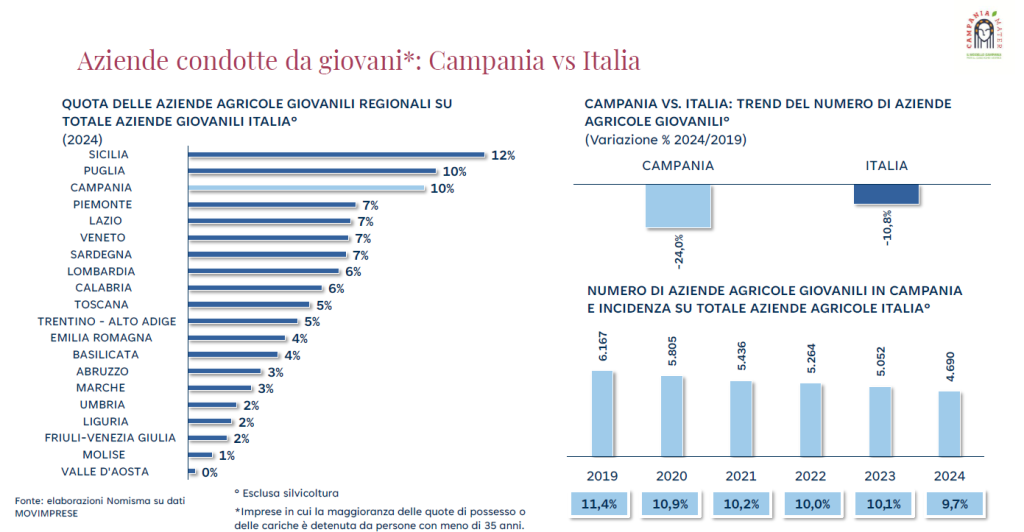
In 2020, 9.3% of agricultural enterprises in Campania were led by individuals under 40 — slightly below the national average of 10.9%. Age distribution shows strong aging in the sector: over 37% of enterprises are managed by people aged 60–74, while only 3% are led by entrepreneurs under 29. Gender-wise, Campania stands out: 38.8% of farms are run by women, one of the highest shares in Italy. Over 30,700 enterprises are female-led, underscoring women’s central role in rural development strategies.
However, the number of youth-run farms has declined sharply: from 2019 to 2024, Campania lost 24% of under-35-led enterprises, compared to a national decline of 10.8%. Despite this, the region still accounts for about 10% of Italy’s youth-led farms, playing a significant national role. Regionally, 50% of farms are located in hilly areas, 33% in plains, and 17% in mountains. Average farm sizes are smaller than the national average: 9.6 hectares in plains versus 13.5 nationally, and just 4.7 hectares in mountains compared to the national average of 6.
This structural fragmentation affects profitability and the capacity for innovation. A positive aspect is income diversification: 33.6% of Campania’s farms generate additional income through agritourism, processing, subcontracting, or energy production. Specifically, 21.4% are involved in processing, 11.4% offer agritourism or educational services, and 16.9% operate in primary processing. This multifunctionality reflects the drive of young, dynamic businesses to broaden income sources and establish a local presence.
The research highlights the need to support generational turnover, promote women’s entrepreneurship, and strengthen innovation and training pathways to turn today’s weaknesses into levers for revitalizing Campania’s agriculture.
Nicola Caputo, Campania Region’s Minister of Agriculture, states:
We called this model Campania Mater, with a process built on the data collected and deep reflections I personally held with the help of Rural Hack’s research team and the 150+ members of the 9 thematic groups, whose results will be presented during the Campania Mater event. We hope this work contributes to shaping new regional agricultural and agri-food policies that strengthen the region’s identity and position it competitively in global markets.”
“The nearly 400 pages of the Campania Mater report provide a complex picture of Campania’s agriculture and agri-food system. It reveals a system facing structural challenges — land consumption, water scarcity, depopulation of inland areas, and an aging entrepreneurial base — but also one with solid strengths capable of guiding future development. Export growth, the expansion of organic and integrated production, income diversification, and the central role of DOP and IGP supply chains all show Campania’s ability to leverage its identity and compete globally.
The role of rural communities, the vitality of the fisheries sector, the significant presence of women-led businesses, and the contribution of young people outline a dynamic fabric that requires targeted policies to consolidate.
The research emphasizes that the resilience of Campania’s agri-food system depends on integrating multiple dimensions: natural resource protection, innovation and training, support for youth and women entrepreneurs, strengthening rural communities, and waste reduction.
Only by integrating these factors can we ensure competitiveness, sustainability, and inclusion — making agriculture not only a productive sector but also a driver of social cohesion and regional development. Over the years, we have worked to meet the territory’s real needs, and it seemed right to leave a foundation for doing even more, believing that Campania can represent a model of future agriculture.
Teresa Del Giudice, Scientific Coordinator of the Campania Mater Report:
“The transition required of agriculture is not only ecological and digital, but also social. Innovation, governance, and the roles of many stakeholders — some long-established, others new — must be reconsidered. Public intervention must evolve, with new objectives, tools, and boundaries.
The expanding influence of the primary sector and its intensifying connections with other sectors demand increasingly broad policy frameworks. Food policy, food security, nutrition, health, and the social and environmental dimensions of agriculture — especially in fragile and marginal areas — require new, integrated, and systemic public approaches.”
Alex Giordano, Scientific Coordinator of the Campania Mater Report:
“Throughout this project, I often thought of the pomegranate — a symbol I frequently saw in Paestum, my chosen place. Associated with the cult of Demeter, the pomegranate has long been a symbol of prosperity and abundance. Its multitude of seeds confirms for me the importance of biodiversity — not only natural but also human and social.
In plurality, in the diversity of voices and experiences, lies the value of biodiversity as a force of life. Just as the pomegranate opens to reveal countless seeds, we too, through cooperation and diverse perspectives, can reveal the infinite possibilities born from synergy. In this diversity lies true prosperity, which allows us to build a regenerated, sustainable future for all.
The Campania Region, responding to the EU’s call to rethink the agri-food system in an increasingly complex and interconnected world, has embarked on an ambitious journey — not just aligning with EU policies, but laying the groundwork for a regional model rooted in local biodiversity, territorial specificities, and community experiences.
This journey — this toolkit — takes shape in the Campania Mater process: a collective effort to gather, analyze, and reinterpret recent developments in agriculture and natural resource management, to provide not only a critical analysis, but a practical path forward.”
The approximately 400-page volume, in both Italian and English, will be presented on September 17–18 at the Royal Palace of Naples during a 24-hour event organized by Campania Festival https://www.campaniamater.it.