

On the International Day of Rural Women, we highlight the Empowerment Kit for Young People in Agrifood Systems, developed by the World Food Forum Italy Chapter. At its heart are young women and a question that has always guided our work: innovation, but for whom?
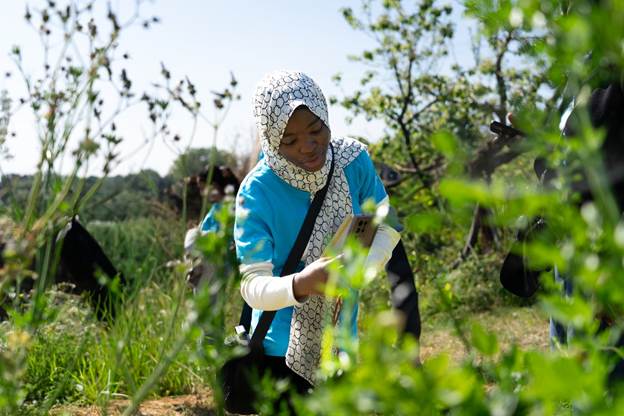
The World Food Forum Italy Chapter is an initiative established within the framework of the FAO, dedicated to empowering younger generations to take an active role in transforming agrifood systems. Rural Hack is a partner of the initiative, and together we work to promote and pilot the Empowerment Kit for Young People in Agrifood Systems.
Young Women at the Heart of Transformation
The Kit was developed in response to one of the major challenges facing agrifood systems: ensuring that younger generations, particularly girls and young women, have the conditions and tools they need to access opportunities, make their voices heard, take on decision-making roles, and contribute to the transformation of the sector. This is why women’s empowerment is not an additional consideration, but a cross-cutting dimension and a key priority.
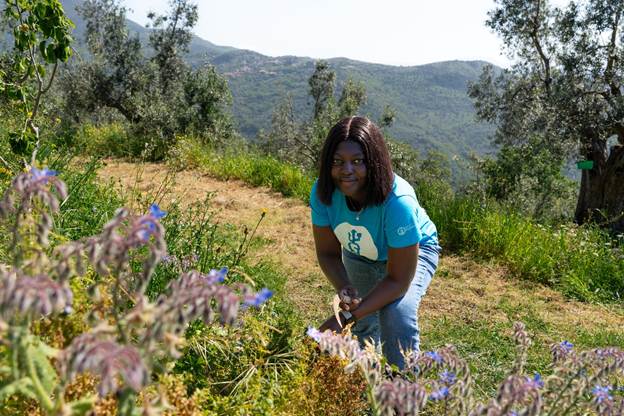
The data help explain why. In Italy, only 31.5% of agricultural holdings are managed by women, and these tend to be smaller in size (ISTAT). Yet it is precisely women-led farms that are at the forefront of agricultural multifunctionality, from agritourism and educational farms to social farming (ISMEA).
These barriers are not incidental; they are structural:
- Invisible labour: often relegated to unpaid work as a “contributing family member”.
- Land and credit: limited land ownership in their own name and fewer assets to offer as collateral when applying for loans.
- Digital divide: a significant gap in the adoption of Industry 4.0 technologies.
- Representation and welfare: limited representation of women in decision-making bodies and inadequate access to essential services in rural and remote areas.
Gender stereotypes also reinforce these barriers, continuing to shape educational and career choices and to restrict women’s access to land, credit, technology, markets, and decision-making processes.
This is why the Kit adopts a transformative approach. Simply including women in the system as it stands is not enough. Social norms and power relations must also change, with men actively involved in the process. For each barrier, the Kit identifies practical tools, ranging from ISMEA initiatives that facilitate access to land and credit, such as Generazione Terra and Donne in Campo, to microcredit, support networks, and strategies for accessing and competing in markets.
The Kit: From Awareness to Action
The Empowerment Kit for Young People in Agrifood Systems was developed by the World Food Forum Italy Chapter and validated by the FAO. It is an educational and practical resource designed for young people aged 15 to 35, aimed at strengthening their knowledge, skills, agency, and leadership.
The Kit takes an integrated approach, connecting agrifood systems, gender equality, innovation and technology, financial and entrepreneurial skills, access to resources, leadership, networking, and advocacy. Its aim is to move beyond a purely technical understanding of agriculture and help young people understand the dynamics of the system, the inequalities embedded within it, and the opportunities to transform it. It does so through five modules:
- Education and Career Opportunities
- Financial Literacy and Rural Entrepreneurship
- Transformative Leadership and Alliances
- Agricultural Technologies and Inclusive Innovation
- Advocacy Tools
The Kit follows a progressive learning pathway: understanding the system, identifying barriers, developing skills, building networks and accessing resources, and turning ideas into action. Through exercises, practical tools, examples, and resources, it can be used for self-directed learning, workshops, and educational activities. Its aim is to strengthen the participation of young women in innovation, entrepreneurship, and leadership.
Innovating, but for Whom?
This is where the Kit connects with the question at the heart of our work. “Technology is neutral, access is not,” reads Module 4. We would take this a step further: no tool is ever neutral, because it carries within it the questions asked by those who designed it, as well as the silence surrounding those they never thought to ask. Sensors, drones, and digital platforms are developed where capital and research laboratories are concentrated, rarely where the farms that will eventually use them are located. They can become drivers of equity, but only if those who will use them have a say in their design.
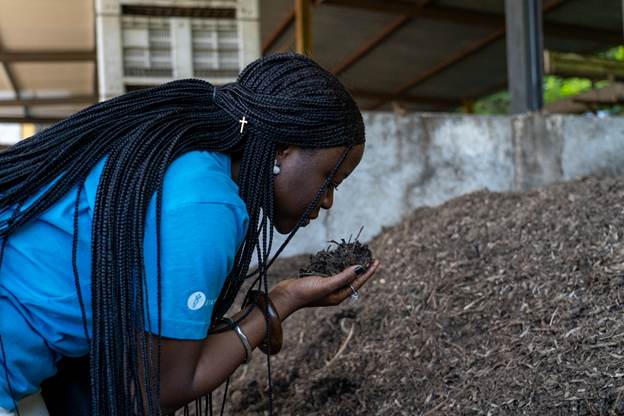
One example featured in the Kit is Olivair, the startup led by Diana Zagarella that uses drones for olive harvesting, reducing physical labour and making agricultural work accessible to people who were previously excluded from it. Yet a crucial question remains: who controls the data collected by the drones, and at what cost does the service become accessible to a two-hectare farm? This is where we determine whether a technology broadens access or creates a new form of dependency.
From the Kit to Local Communities
Together with the World Food Forum Italy Chapter, we bring the Kit into secondary schools and universities through participatory learning workshops. These are spaces where:
- test the Kit’s methodologies and tools in practice, starting with innovation and technology;
- adapt them to different educational contexts;
- adapt them to different educational contexts;
The broader aim is to develop a replicable educational model capable of embedding empowerment, gender equality, and youth participation into education and career guidance programmes, both in Campania and beyond. But on one condition: the Kit must emerge from these workshops different from how it entered them. It is the young people, schools, and local communities themselves who must tell us what works and what needs to be rewritten.
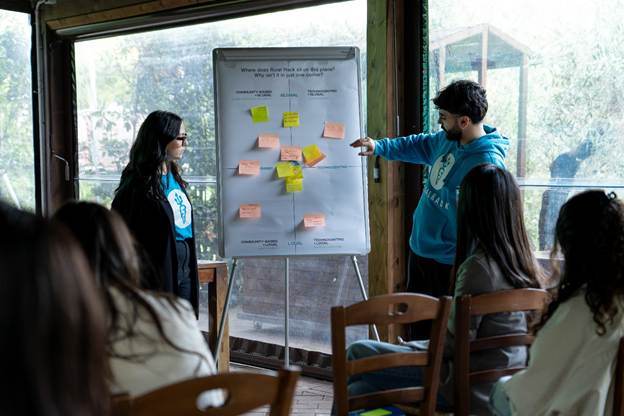
Together with the World Food Forum Italy Chapter, we aim to transform the Kit from a tool for building knowledge into a catalyst for action, creating spaces where younger generations can develop awareness, strengthen their skills, and envision their own role in shaping the future of agrifood systems.
Women Leading Change
Placing young women at the centre means more than simply increasing their participation. It means strengthening their capacity to become protagonists of change. This is not a painless process: changing who has access to land, credit, and decision-making means challenging positions of power currently held by others. There is no transition without conflict, and this is no exception.
The Kit is available free of charge.
Follow us to learn more about the journey ahead and the activities we will be developing over the coming months.
Want to try out the Kit? If you represent a university or a high school and would like to explore the potential of this tool with us, get in touch at info@ruralhack.org.