

Presented at Vinitaly, the report promoted by Le Donne del Vino Campania and developed with the scientific coordination of Rural Hack offers more than a simple snapshot of the sector. It brings into focus a decisive threshold: the one at which wine is being called to confront artificial intelligence, sustainability, the quality of relationships, and a different form of leadership.
Wine is not simply going through a phase of adjustment. It is crossing a civilizational threshold. When climate, consumption patterns, distribution channels, and the cultural codes that have sustained its value for decades all shift at once, the issue is no longer simply how to produce well. The issue becomes how to remain recognizable, desirable, and credible in a world that has lost its stability. It is within this passage that we must read the deeper meaning of the presentation of the report Women, Wine and the Future, held at the Campania Region pavilion at Vinitaly.
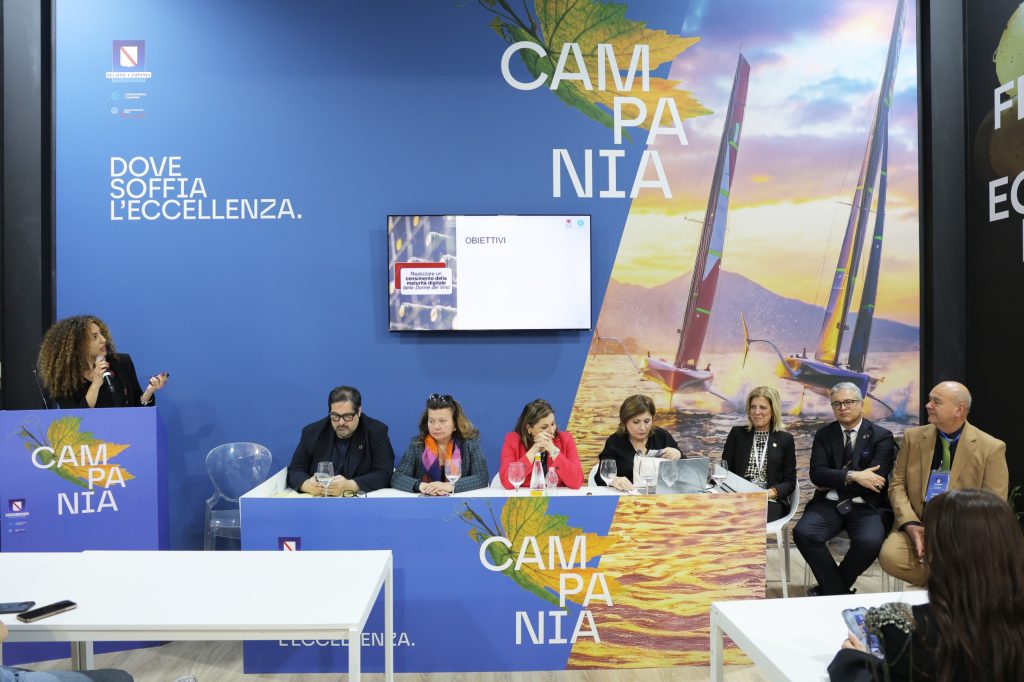
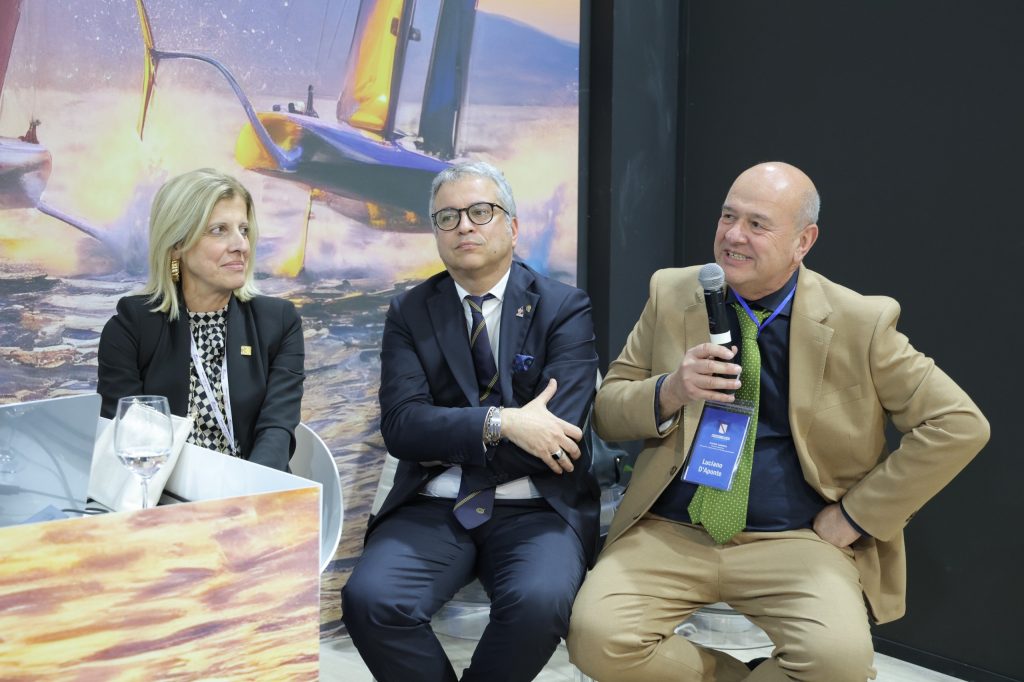
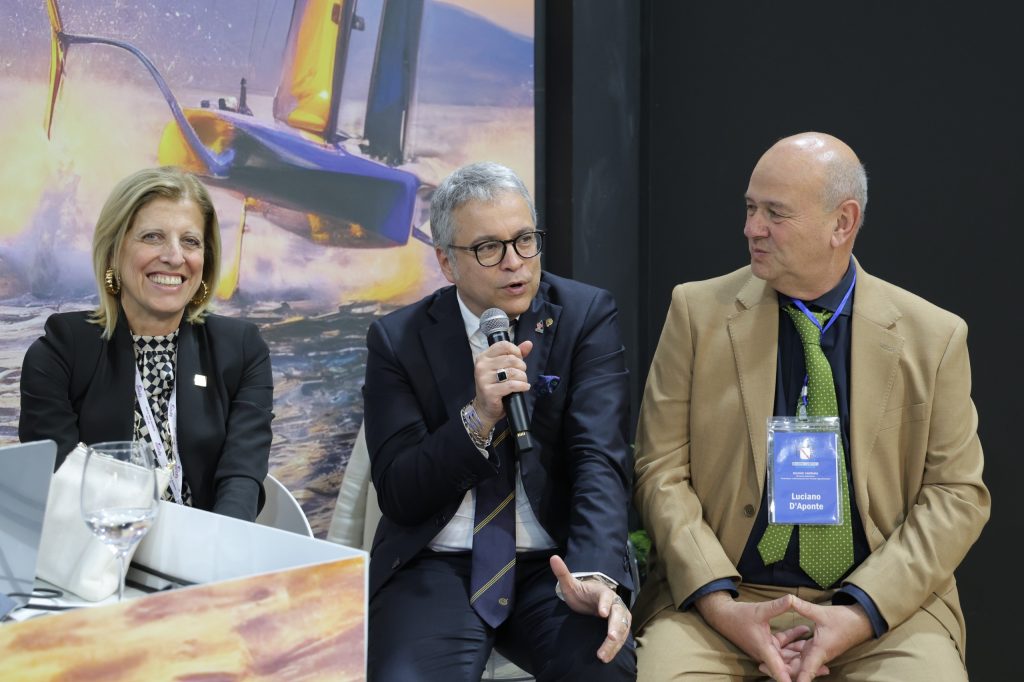
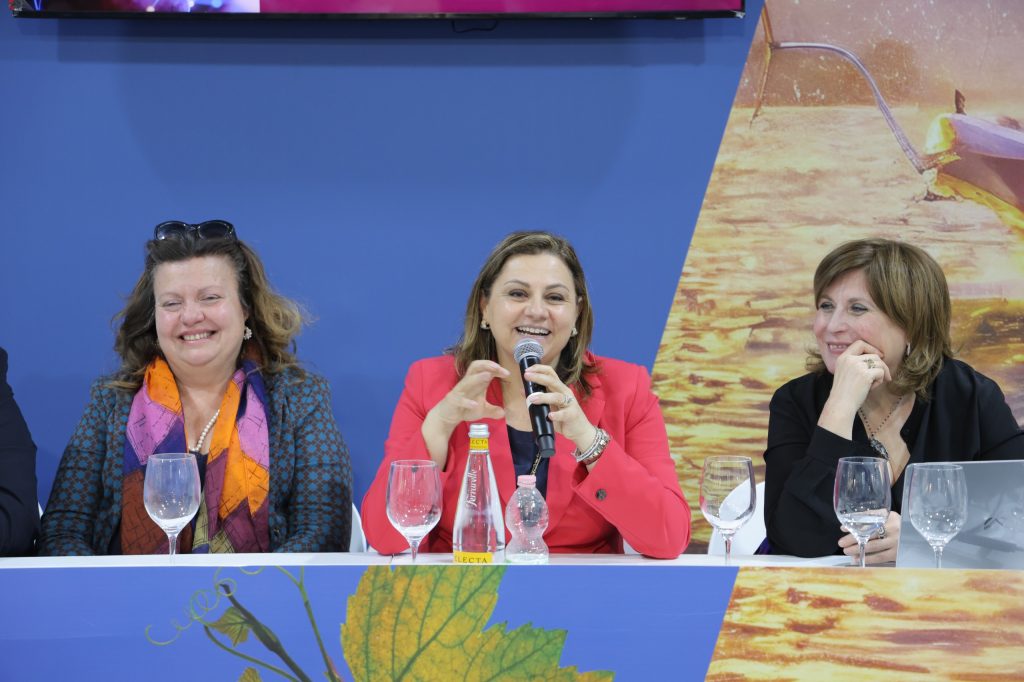
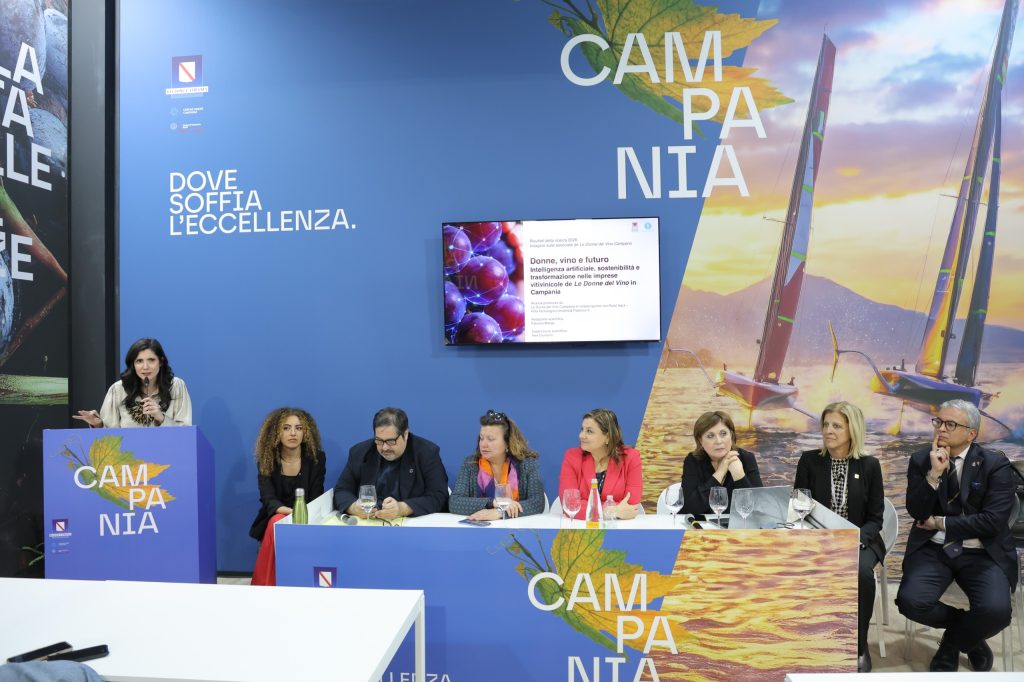
The initiative, promoted by Le Donne del Vino Campania and developed with the scientific coordination of Rural Hack, featured my contribution as Scientific Director of Rural Hack, alongside those of Mariacarmela Serluca, Councillor for Agriculture of the Campania Region; Maria Teresa Del Giudice, Professor of Agricultural Economics at the University of Naples Federico II; Luciano Daponte, official of the Campania Region; Tommaso Luongo, President of AIS Campania; Daniela Mastroberardino, National President of the Association Le Donne del Vino; and Gilda Guida Martusciello, Campania Delegate of Le Donne del Vino. Yet the value of the discussion did not lie only in the plurality of voices. It lay in the fact that, for once, research, institutions, and the productive system did not merely comment on a set of numbers, but tried together to recognize the contours of a transformation already underway.
A research project that does not merely photograph the present
The research, developed starting from the members of the association Le Donne del Vino in Campania, was coordinated by Fabiana Mango, researcher at Rural Hack, who presented the data at Vinitaly by highlighting a very clear tension: the sector under observation appears dynamic, aware, and open to innovation, yet still marked by organizational fragilities that risk slowing down its qualitative leap. And it is precisely this tension that makes the report so compelling. Because it does not describe a static system, but one that has already begun to move, yet still needs to give itself a more mature form of governance for transformation.
The strongest finding concerns artificial intelligence. Today, 59% of the companies do not yet use it, while 91% say they intend to adopt it in the future. More than any other figure, this one tells the story of the historical moment we are living through. Not because it signals backwardness, but because it reveals a cultural threshold. These businesses sense that AI will not be a minor detail, yet many still lack the conditions needed to integrate it steadily into their decision-making and organizational processes.
Here we need to be clear: artificial intelligence is not just one more tool. It is a technology that redefines the relationship between knowledge and decision-making. . Precisely for this reason, in wine it cannot be treated either as a trend or as a fetish. If it is not governed, it risks producing noise. If it is domesticated, it can help reduce improvisation, read uncertainty more effectively, and make both processes and decisions more intelligent. The question, then, is not whether or not to use AI. It is what idea of wine, territory, and future we are going to place inside this technology.
Digital is widespread, but still weakly structured
The other data points, read critically, confirm this picture. 91% of the companies have a website, 84% use social media, and 94% use electronic invoicing. Digitalization is already present. But it is a presence that still concerns above all communication and administrative management. Less visible is its integration into strategic, productive, and decision-making processes. In other words, digital is there, but it has not always become architecture. It is more an operational layer than a real structure of governance. It is more an operational layer than a real structure of governance.
The report’s conclusions make it clear that the real discrepancy lies between operational maturity and strategic vision. These companies know how to use tools and languages, but innovation still remains too closely tied to the individual sensitivity of the owner, without fully translating into a distributed company structure, delegated responsibilities, intermediate skills, and codified functions. This is where the technological issue reveals its true nature: not a matter of devices, but of organization.
Sustainability as practice, not ornament
On the front of sustainability, too, the report highlights an important shift. 66% of the companies report a reduction in environmental impacts, 59% a decrease in costs, and 41% an increase in productivity. This means that, at least within this sample, sustainability is no longer just a reputational language. It is a practice capable of generating concrete effects, economic as well as environmental.
But the most interesting point is that this practice never appears detached from the relationship with territory. On the contrary, in the words and trajectories that emerge, technology is conceived as a lens capable of enhancing terroir, not as a substitute for the soul of wine. This is a crucial distinction. Because it tells us that true innovation is not what standardizes, but what makes more legible and more powerful what is specific to a territory.
The real limit is not technical, but cultural and organizational
Looking closely, all the data converge on one point. The main obstacle to transformation is not a lack of technology, but a lack of skills and adequate structures. 53% of companies identify the shortage of internal skills as the most significant limitation, 75% indicate training as the priority for the future, and 47% say they do not have a person specifically dedicated to digital. This is where the report stops being merely a sector reading and becomes a political question. Because it states clearly that innovation is not played out through access to tools, but through the capacity to build contexts in which those tools can be understood, situated, and governed.
The words that emerged from the public conversation
During the presentation, Gilda Guida Martusciello, Campania Delegate of the Association Le Donne del Vino, recalled that women in wine are not simply a presence within the sector, but a force accompanying its transformation. This is an important passage, because it rejects the idea of a merely symbolic presence and instead acknowledges an active function of orientation. In her words, one idea emerged with particular clarity: to innovate does not mean losing identity, but finding new ways to preserve it.
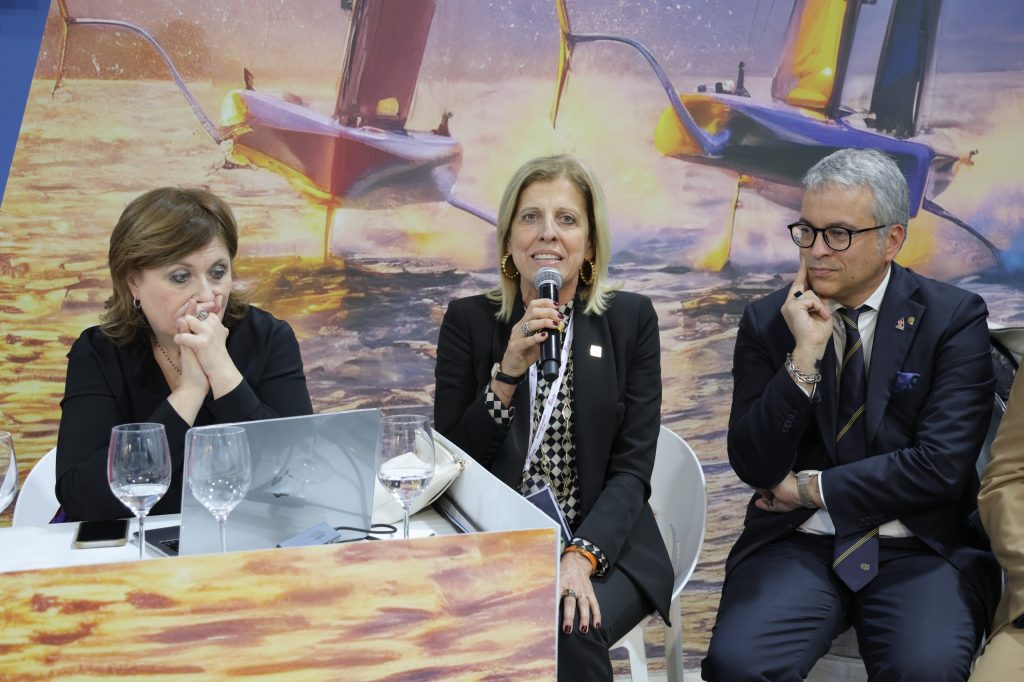
Equally powerful was the contribution of Teresa Del Giudice, Professor of Agricultural Economics at the University Federico II, who placed the issue within a broader framework: that of an agriculture-as-ecosystem, in which nature, society, and economy must be thought together. Her reflection was valuable because it moved the discussion beyond the perimeter of the individual enterprise, reminding us that supporting the leadership of women wine entrepreneurs means working toward an ecosystem of knowledge in which research, institutions, and businesses can build stronger, more generative connections.
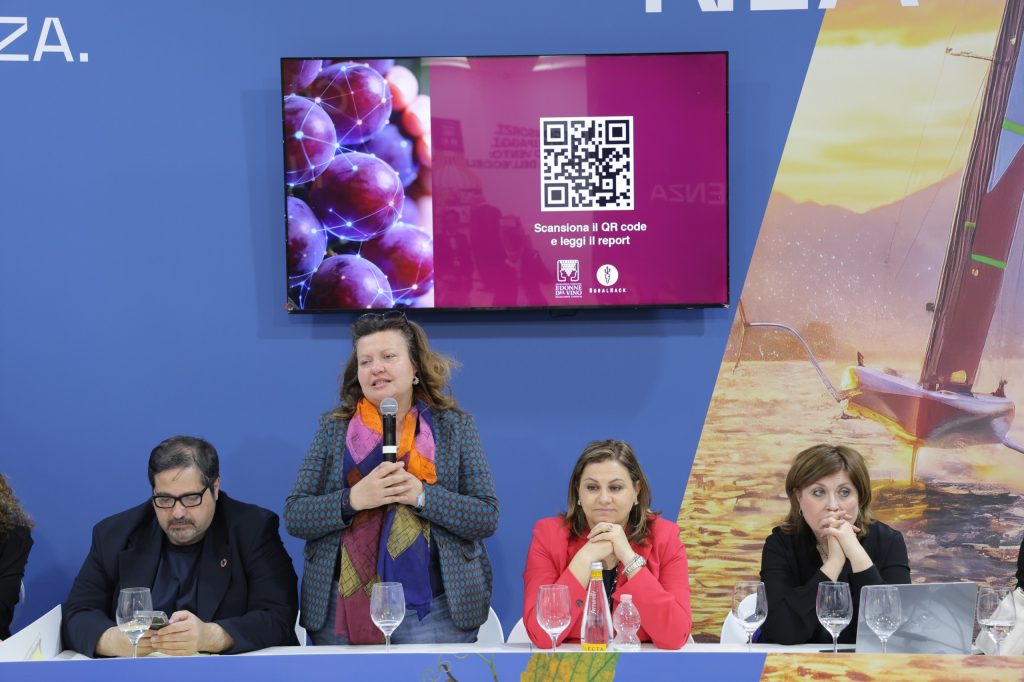
Maria Carmela Serluca, Councillor for Agriculture of the Campania Region, also insisted in her concluding remarks on a crucial point: innovation and identity can grow together, and it is precisely in this convergence that the future of Campanian wine is at stake. Her presence at Vinitaly was not only institutional in value. It also signaled a political willingness to read this research not as an isolated episode, but as a useful tool for shaping public policies capable of accompanying change. It also signaled a political willingness to read this research not as an isolated episode, but as a useful tool for shaping public policies capable of accompanying change.
The feminine not as quota, but as a way of governing uncertainty
And this is where the report reveals its most advanced point. Because the issue is not simply the protagonism of women. The issue is the meaning of that protagonism. The report’s conclusions state it without ambiguity: female leadership ceases to be a simple demographic share and becomes the engine of a paradigm shift. This is perhaps the most political sentence in the entire work. It means that the feminine enters wine not as symbolic representation, but as a different grammar for governing uncertainty.
At a time when wine must confront climatic instability, the contraction and selection of demand, the transformation of channels, and the cultural mutation of consumption, a model based solely on expansion and optimization is no longer enough. What emerges from Le Donne del Vino is a form of leadership that holds together care, relationship, quality, decision, vision, and rootedness. Not a market niche, but a possible systemic response to a complexity that can no longer be governed through the categories of the past.
A pact from which to begin again
For this reason, the final part of the report should not be read as a simple list of recommendations. It should be read as a framework of commitment with which we part ways at the end of this discussion. In particular, the proposal for a Permanent Observatory “Women, Wine and the Future” takes on a meaning that goes beyond the technical level. It is not merely a monitoring tool. It is the concrete form of a possible pact. A pact in which the world of research, represented by Rural Hack, the world of enterprise, represented by Le Donne del Vino Campania, and the world of institutions, represented by the Department of Agriculture of the Campania Region, with the presence of Councillor Maria Carmela Serluca, choose not to leave this research confined within the event, but to assume it as the basis for a shared effort around the future.
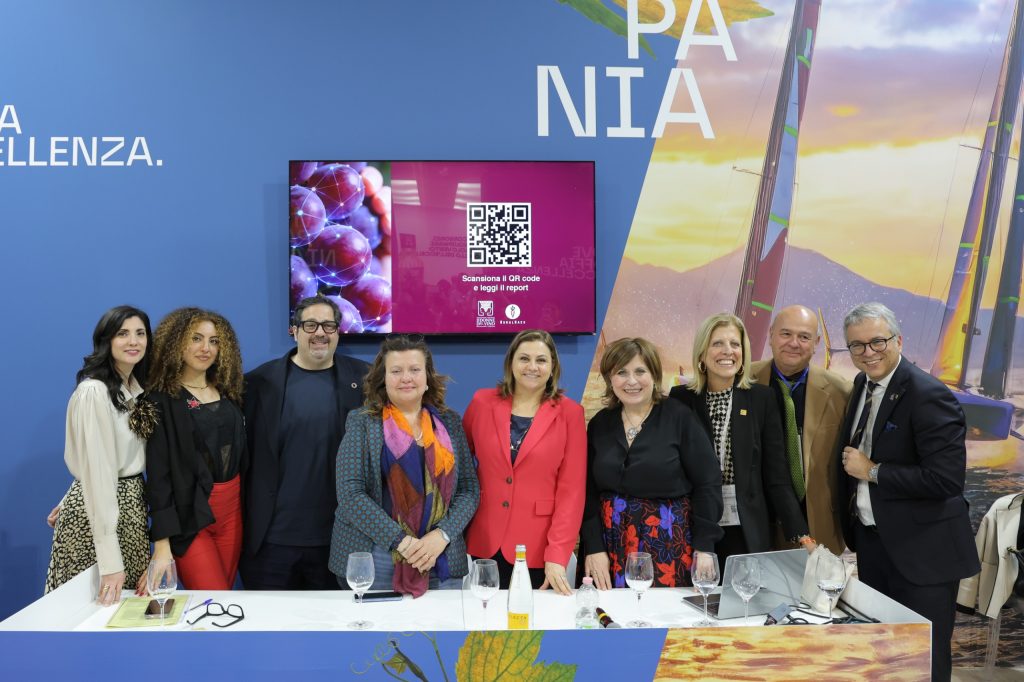
This is where we should begin again. Not from celebration, but from commitment. Not from the illusion that new technologies alone will be enough, but from the awareness that what is needed are skills, accompaniment, networks, public policies, and new forms of cognitive cooperation. Campanian wine has a complex phase ahead of it, but for that very reason it can become a political and cultural laboratory before it is simply a productive one. A place in which to learn how to govern transformation without separating innovation from measure, identity from openness, territory from the future.
The future of wine will not depend on how fast it can accelerate, but on how much trust it can generate without betraying the complexity that keeps it alive.
Download the full report, “Women, Wine and the Future,” to explore the data, analysis, and trajectories that emerged from its presentation at Vinitaly.