

Recently, the organization Navdanya International published an in-depth study titled “Making Peace with the Earth”, which underlines the connection between the protection of biodiversity, human rights, and the integrity of the Convention on Biological Diversity, inviting collective action to safeguard our planet.
Biodiversity crisis: origins and main threats
Biodiversity is a complex and interconnected network in which every species is essential for natural balance. However, this network faces an unprecedented crisis, fueled by practices such as industrial agriculture, the massive use of reductionist technologies, and the commodification of natural resources. According to the latest assessment of the State of Nature in the EU (2013-2018), only 27% of species and 15% of habitats are in a favorable conservation status. Most remain in critical condition, highlighting the urgent need for more incisive actions to safeguard biodiversity.
These threats fragment and destabilize ecosystems to the point of compromising the health of the Earth. With the intent of remedying this, organizations like Navdanya International warn of the urgency of rethinking our relationship with nature.
Founded on the principles of agroecology and food sovereignty, this organization promotes models through the formation of local communities, the dissemination of traditional knowledge, and the adoption of sustainable practices that respect biodiversity. The approach used invites us to rethink our interaction with the Earth, in order to reach a balance that allows us to recognize it as a living being with its own rights.
Direct Threats: Biopiracy and Exploitation of Natural Resources
From Navdanya’s point of view, these practices—biopiracy and the exploitation of natural resources—not only constitute a form of economic exploitation but also represent a direct invasion of food sovereignty, understood as the right of communities to manage their own resources and their own food production systems. These dynamics are strictly connected to threats to biodiversity, linked to commercial practices and the use of digital technologies that alter ecosystems and destabilize traditional knowledge. A critical case, addressed by the same organization, is the violation of Article 8, letter j, of the Convention on Biological Diversity (CBD), adopted in 1992 during the Earth Summit in Rio de Janeiro under the aegis of the United Nations, which tutors and protects the rights of indigenous communities and their cultural traditions.
A critical case, addressed by the same organization, is the violation of Article 8, letter j, of the Convention on Biological Diversity (CBD), adopted in 1992 during the Earth Summit in Rio de Janeiro under the aegis of the United Nations, which tutors and protects the rights of indigenous communities and their cultural traditions. Technologies such as the digitalization of genetic resources facilitate the extraction and storage of these resources in global databases, without the consent of local communities and without guaranteeing them any benefit. This phenomenon, known as “biopiracy,” establishes a centralized and highly lucrative control over these resources, causing the impoverishment of those who have historically guarded them.
On the other hand, the financialization of nature—that is, the process of transforming biodiversity and ecosystems into tradable financial goods, often to the detriment of common goods and local communities—promotes the ability of institutions to appropriate areas rich in biodiversity without respecting the sovereign rights protected by Article 3 of the CBD, through instruments like “biodiversity credits” and digital access to genetic information.
A practice of this kind not only increases inequalities but also damages the ecosystems and cultures that sustain biodiversity
Navdanya underlines that to the preceding is added the lack of control over Genetically Modified Organisms (GMOs), in violation of the precautionary and safety measures established in Article 19.3 of the CBD. By allowing their use without adequate evaluations, the health of ecosystems is put at risk and the commercial interests of companies are privileged over the rights of communities and the protection of the environment.
Technologies and Sustainability: Innovations at the Service of Biodiversity Protection
Navdanya promotes a form of resistance that protects ecosystems and pays homage to the cultures of the communities that take care of them, through innovative and determined proposals with the aim of preserving biodiversity and guaranteeing a more equitable and sustainable future.
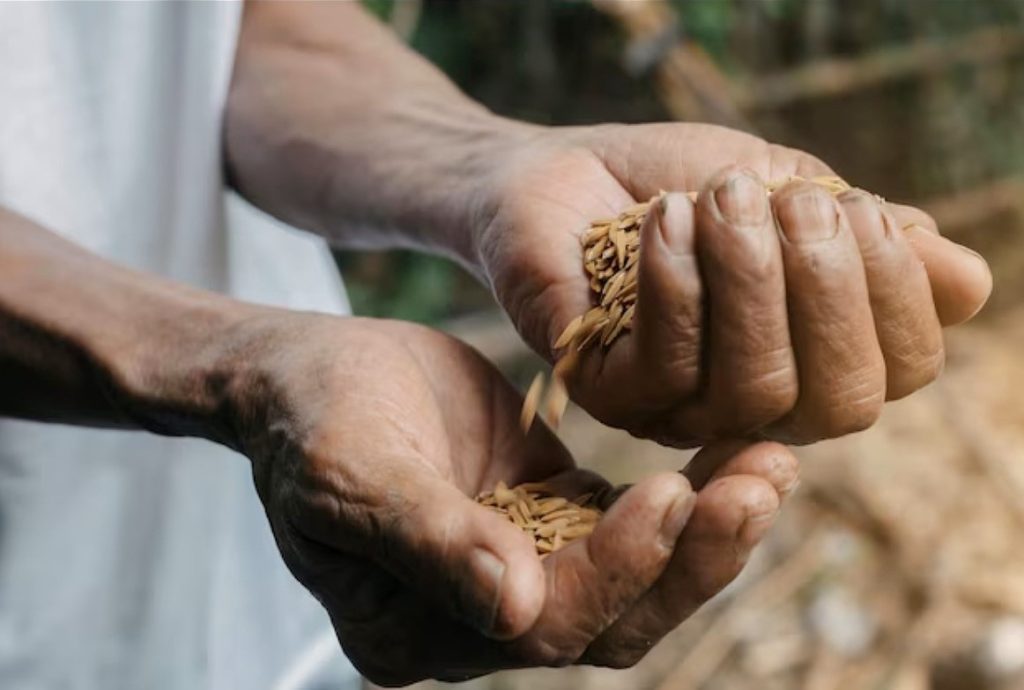
One of the main initiatives is the creation of local and indigenous seed banks, fundamental for conserving traditional varieties and strengthening food sovereignty, moving us away from dependence on large multinationals. These living reserves play a crucial role in maintaining agricultural biodiversity and in the ability of communities to adapt to the challenges of climate change and globalization.
Furthermore, Navdanya promotes agroecology, a model that combines ancestral practices with sustainable methods. This approach not only protects ecosystems but also offers a valid alternative to the industrialized agricultural system, returning control over their natural resources and their own food production to communities. In the same way, it supports measures that strengthen local economies and self-sufficient communities, promoting diversified agricultural systems. These actions aim to strengthen the ability of communities to face global challenges and to implement an inclusive and just model of biodiversity.
Deepening the theme, it should be warned that, while challenges remain, digitalization can reveal itself as a key tool for strengthening conservation initiatives, offering innovative solutions bringing us closer to a more inclusive world in terms of biodiversity.

Solutions For the Future: Restoring the Balance between Man and Nature
In light of the constant evolution and changes of our planet, projects also arise that demonstrate how technology and tradition can unite to protect biodiversity and strengthen local communities. Initiatives such as the Open Source Seed Initiative (OSSI) are a clear example of how technology can support biodiversity. This initiative promotes the free circulation of seeds through the use of open source licenses, similar to those used for software. Its purpose is to prevent seeds from being privatized through intellectual property rights, which could limit access to local or traditional varieties. OSSI helps farmers to conserve agricultural biodiversity, allowing them to freely grow and share seeds without legal restrictions that favor large companies. Furthermore, it revitalizes traditional knowledge about sustainable agricultural practices adapted to local conditions.
Another example is the Sonosylva project, an initiative of the National Museum of Natural History (MNHN) and the French Office of Biodiversity (OFB), which aims to monitor French forests through the installation of sound recorders in protected areas. These devices capture the sounds of nature over long periods, allowing the creation of a sound inventory of biodiversity, identifying the species present, studying their interactions, and evaluating the levels of noise pollution caused by human activities. The analysis of sound data also occurs through artificial intelligence tools.
The necessity to act to protect biodiversity is clearer than ever. This essential network that sustains life on our planet is facing a historic crisis caused by the excessive exploitation of natural resources and the disconnection from traditional knowledge such that adopting measures to safeguard biodiversity proves to be of crucial importance. Over the centuries, human actions have damaged ecosystems. Unfortunately, the great capacity of ecosystems for natural regeneration has been ignored.
Unfortunately, the great capacity of ecosystems for natural regeneration has been ignored. Digitalization, when employed strategically, can become a precious tool to combine technological innovation with bioprotection and collective well-being, laying the foundations for a peaceful interaction with nature. In fact, the fusion of digital tools and conventional techniques would offer a unique opportunity to revitalize ecosystems and strengthen communities
Such an approach, applied in an ethical and responsible way, has the merit of expanding traditional learning, guaranteeing a harmonious coexistence between the human and the natural. It is necessary to identify the urgency of the situation and act, finding a path in which we, the large industries, and the digital platforms commit to promoting and spreading a sustainable future.
Living in a world where respect for biodiversity is at the base of an inclusive and sustainable development should be the key to the future. Since 1970, wildlife populations have decreased on average by 69% (WWF, Living Planet Report), highlighting the urgency of a profound change in our relationship with nature. “Regenerate the Earth” should be the new slogan: a commitment toward future generations through the search for a balance that aims to preserve life and OUR planet, of which we often forget.
What daily actions do you suggest to protect biodiversity? What solutions do you think can help us build a more sustainable future?
Share your experience and your advice with us!Condividi con noi la tua esperienza e i tuoi consigli!