

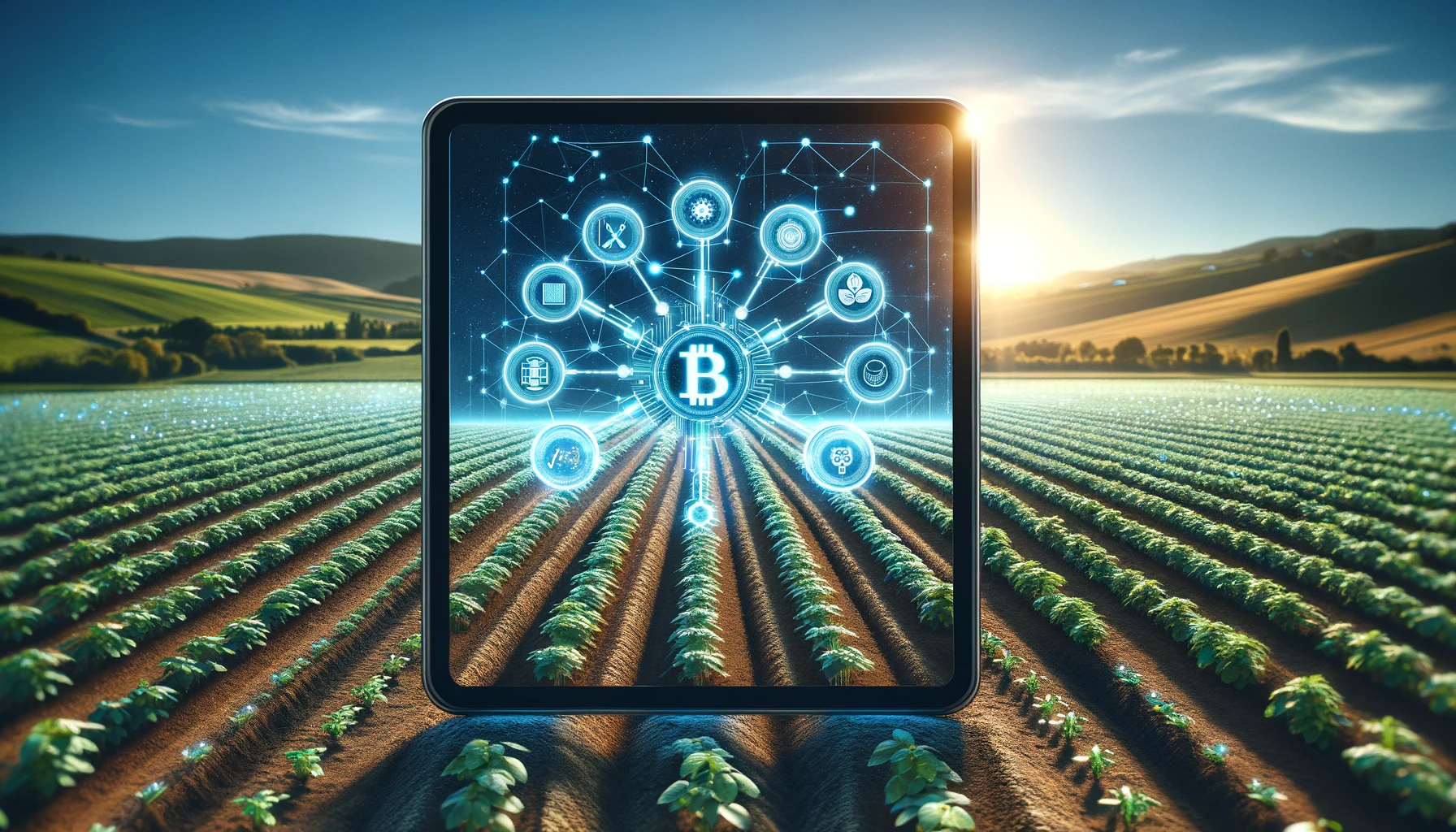
The study “Emerging Opportunities for the Application of Blockchain in the Agri-food Industry” by the FAO, together with other academic research, highlights the growing importance of blockchain technology in the sector of agri-food. This technology is not only a means of ensuring safety and quality of products, but also a catalyst for greater sustainability.
What is the blockchain and how can it be useful in the agricultural and agri-food sector
The blockchain is a digital record-keeping technology that enables data to be stored securely, transparently and immutably. It consists of a chain of blocks of information, where each block contains a number of verified records or transactions linked together in chronological order. This structure makes it virtually impossible to retroactively modify the data without altering all subsequent blocks.
In the agri-food sector, blockchain can be used to track the entire life cycle of a food product, from farm to fork. This includes details such as the origin, processing, transport and distribution of food products. Improved traceability helps to ensure product quality and safety, reducing the risk of food fraud and improving the management of food-related health emergencies.
Report by the FAO and practical applications of the blockchain
The FAO report explores how blockchain can be used to tackle some of the key challenges facing the agri-food sector. For example, the technology can help combat counterfeiting and food fraud, as highlighted in the study by Antonucci et al. (2019). Through blockchain, it is possible to create a secure digital ledger of every transaction or movement of a product, making it easier for consumers and regulators to verify the authenticity and compliance of food products.
Integration with IoT: When integrated with IoT (Internet of Things), can simplify the transport and storage processes. IoT sensors collect data such as temperature and humidity during the transport or storage of products, whilst the blockchain provides a secure and immutable platform for storing this data and making it accessible to all stakeholders in the supply chain.
Furthermore, as discussed in studies such as that by Stranieri et al. (2020), the blockchain can improve the efficiency of agri-food supply chains. The sharing of real-time information between the various stakeholders in the supply chain can reduce delays, prevent losses and optimise stock management.
Blockchain and the agri-food sector: transparency and simplification
The benefits of blockchain in the agri-food sector are numerous, as highlighted by George et al. (2023) and Chandan et al. (2023); the technology can increase transparency, improve consumer confidence and reduce operational costs. However, there are also challenges to consider, such as the need for standardisation and resistance to change on the part of some industry stakeholders, as discussed by Tiscini et al. (2020).
Economic benefits: The blockchain speeds up transactions and payments, reducing price pressure and retroactive payments, which are common in the food industry.
![Figure 1. (A) The current model of the agricultural supply chain as a linear model from producers and imports to retailers and to catering services ; (B) supply chain including the blockchain architecture and multi-agent systems. [Source: Antonucci et al.. (2019)]](https://www.ruralhack.org/wp-content/uploads/2026/05/Immagine1-1-1.jpg)
Examples of implementation of blockchain in the agrifood sector
- Barilla: Leverage the blockchain for the traceability of basil.
- Consortium for Sicilian Red Oranges (PGI): It has developed on blockchain a tool to thwart fraud in the food sector and to enable consumers to verify the origin and authenticity of the citrus fruit with a simple scan using a smartphone of the PGI label present on every crate a22> found on every crate or net bag of oranges. It is possible to check the field of production, the date of the harvest, the methods of storage and distribution.
- Carrefour Italia: It was the first large-scale retailer in Italy to use blockchain to track products on its shelves. The information is also available via a smartphone app. The project began with chicken in 2018 and was extended to citrus fruits in 2019.
- Trusty: uses Blockchain technology to provide consumers and stakeholders with transparent and reliable information on the origin and quality of products, to ensure their safety, and to promote a more sustainable supply chain.
- Peroni Beer: is the first Italian beer-based product to use blockchain technology to disclose information about ingredients and production methods.
- BRINDO: is a service designed to meet the needs of production and distribution companies in the wine sector.
| Food | Scope |
|---|---|
| Coffee | To accompany the coffee with a record that is reliable, tamper-proof and a guarantee of absolute transparency from the plantation to the cup. |
| FIsh | To trace the catch using verified claims of social sustainability, from the sea to the tins of tuna. |
| Beef | Develop and implement technologies based on blockchain in their supply chains to eliminate food fraud in their supply chains. |
| Beer | Peroni beer is the first product from Italy made with beer which uses blockchain technology to reveal information on ingredients and methods of production. |
| Product organic and DOCG | Ensuring traceability throughout the entire supply chain of the agri-food sector [per i prodotti bio e DOCG (Denominazione di Origine Controllata e Garantita)]. |
| Pork from a pig | To ensure the protection and security of the brand. |
| Fresh food | Information on the product’s origin, including sensor data, which ensures data transparency by tracking it from farm to fork. |
| Milk | Combating food fraud in the food supply chain by automating the collection and recording of information. |
| Pasta | Identify the entire supply chain (i.e. the producer, the products and flours used, the drying method, and transport). |
Table 1. Commercial applications of blockchain in the agri-food supply chain
Conclusions
The blockchain has the potential to transform the agri-food sector, making it safer, more efficient and more sustainable. Whilst the path to its full implementation presents challenges, the benefits it offers in terms of traceability, safety and transparency are invaluable. The FAO report and related research provide a solid foundation for understanding and capitalising on the opportunities offered by this revolutionary technology.
article edited by Gabriele Sapienza