
I took part in the Hackathon held during the global Fablab conference in the Czech Republic last July, where two major open-source projects worked together to integrate.
Last July, the global Fablab conference took place between Prague and Brno, in the Czech Republic. The entire maker galaxy moved there for the event, from Shenzhen to Boston, passing through India, Australia, and Africa.
I wasn’t able to attend in person, too caught up in other projects I was taking around Europe this summer (specifically, the use of Meshtastic at Transformative Festivals, which I talk about in this article regarding the Fusion Festival in Germany, held just the week before Fab25).
I couldn’t be there physically, but I was involved in the Seeedstudio Rangers team during the Hackathon aimed at integrating Meshtastic into Smartcitizen.
But let’s go in order.
What is Smart Citizen?
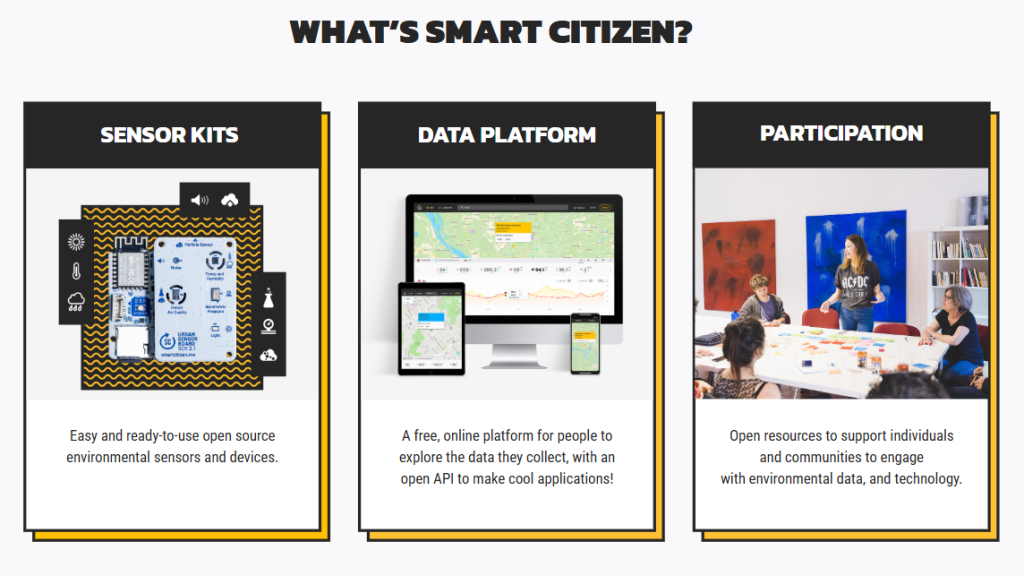
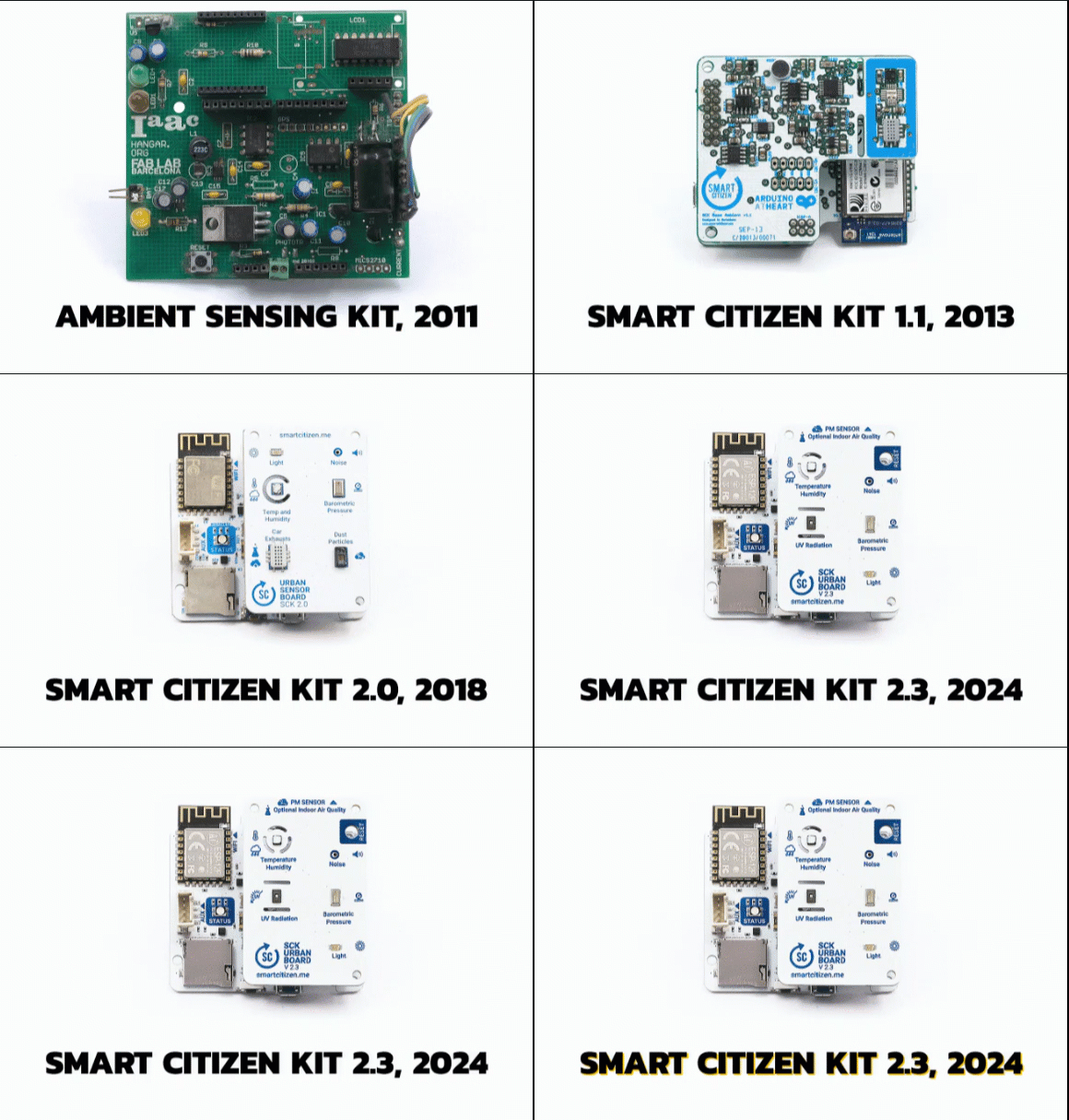
Smartcitizen is an old project from Fablab Barcelona, one of the reasons I became friends with Tomas Diaz. The aim of the project – now actively carried forward by Óscar González and Guillem Camprodon – is to provide citizens with a tool to monitor air quality (and also water in some sub-projects), along with a platform to share their readings.
I’ve crossed paths with the Smartcitizen experience countless times over the years, in Scotland, Portugal, the Netherlands, and Germany. The project has undergone numerous iterations and settled on extremely competitive hardware in 2024.
A connectivity problem
Despite being a major open-source project used in over 70 countries around the world, co-produced with Seeedstudio – a truly global project – in 2024–25 it faces a big question: how to overcome the limit of Wifi?
The device has Wifi connectivity, so it needs a router to send data online. Not only that: the chip with Wifi consumes a lot of electricity, which brings another design limitation – Smartcitizen boards are not easily portable, as they require large batteries or large solar panels plus backup batteries.
The major innovation in the IoT world over the last two years: Meshtastic
The author is a user who adopted Meshtastic over two years ago and shares a presentation about this protocol as a cultural phenomenon, a wave that has swept the LoRa frequencies (868 MHz in Europe) of cities and countryside alike. But what exactly is Meshtastic?
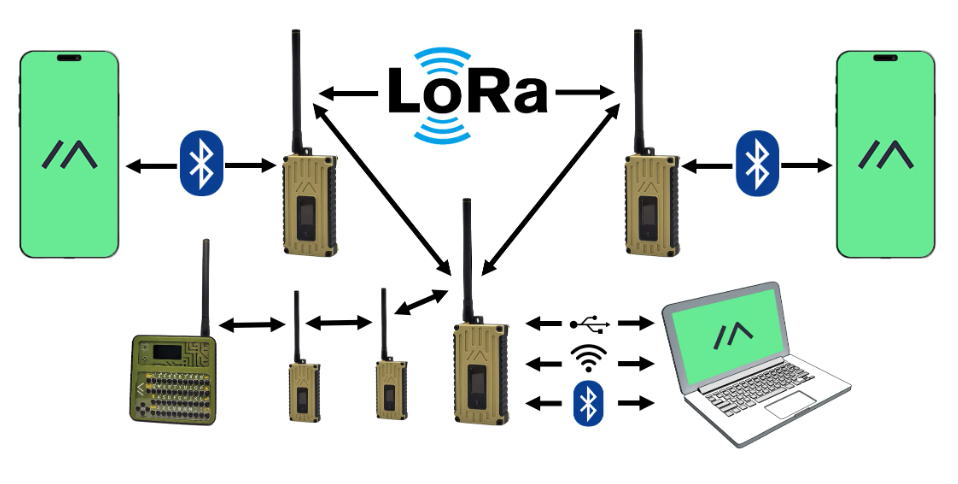
As the website says: “An open-source, off-grid, decentralized mesh network designed to run on inexpensive, low-power devices.”
In practice, it’s an encrypted, private chat between devices in a mesh network. Each message has a life of seven “hops,” but between one node and another there could be an internet connection, so you could use Meshtastic from Italy to chat with a friend in Australia.
Since it’s a mesh network, each node plays a similar, equally important role – there’s no server.
It’s been used in various situations, from hiking to managing large emergencies, or to handle communication during extremely crowded events far from 3/4/5G antennas (like the major Transformative Festivals worldwide such as Fusion, Boom, and Ozora in Europe or Burning Man in the USA).
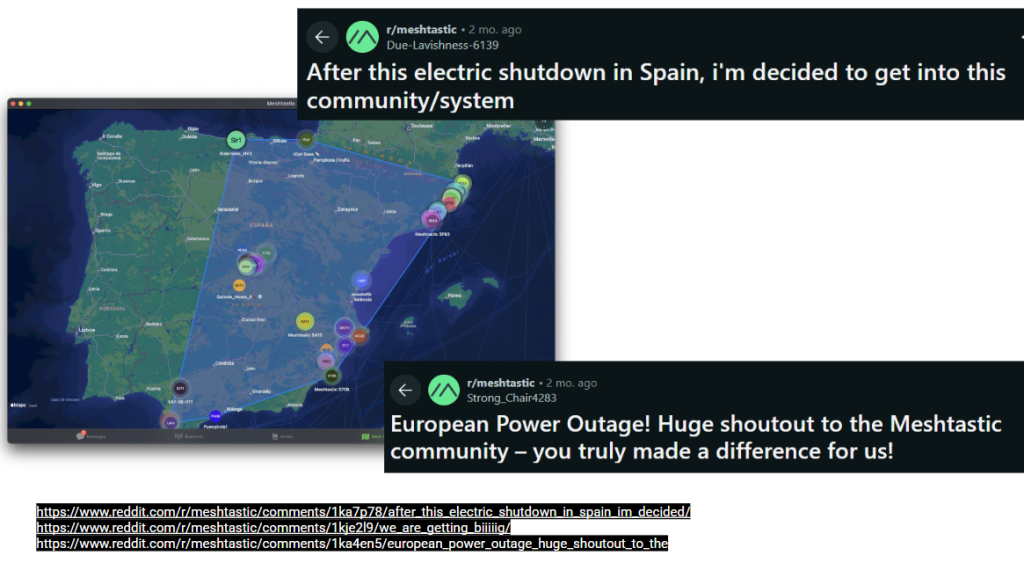
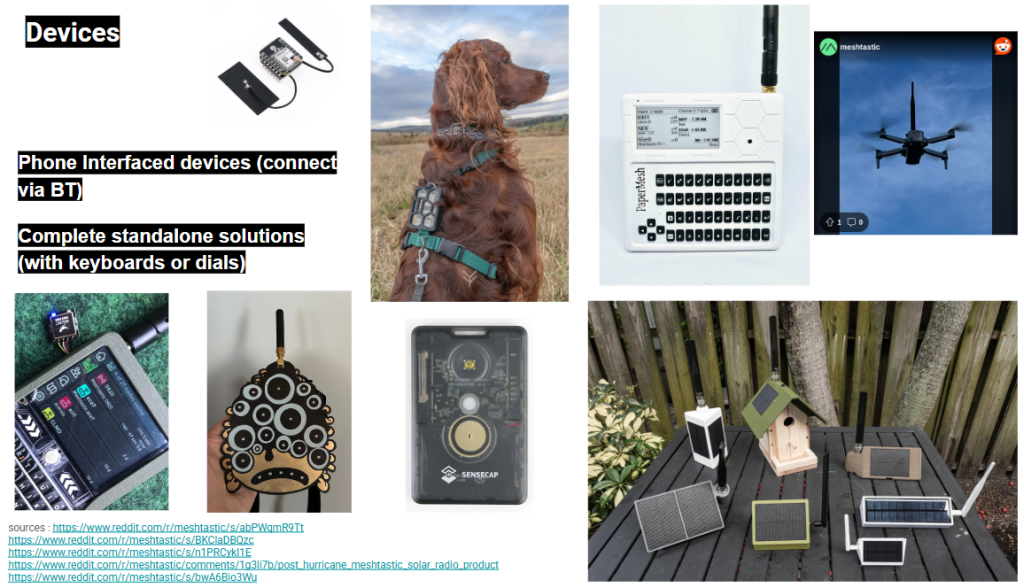
Meshtastic nodes and radios are an expression of the greatest user creativity. There are solar nodes, or ones integrated into watches, or resembling Blackberry phones.
We were therefore involved in gathering the Meshtastic experience and bringing it into the Smartcitizen platform.
Meshtastic is a chat, but it can also send data. I myself created this tutorial where I explain how to control and automate things with Meshtastic, or how to read sensors.
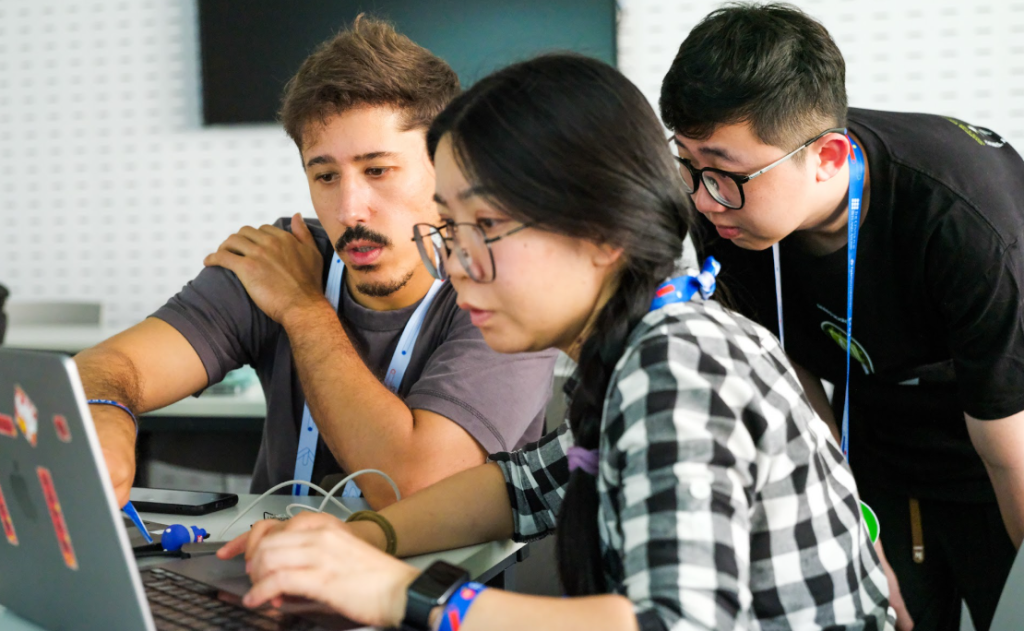
Óscar González with my dear friend Violer Su, and application engineer Hongtai Liu in Brno a few weeks ago
In short, exciting things are coming!
Here are some links if you want to stay updated on the topic.