

Why Drones, Why Now
Across Kenya, smallholder farmers are experimenting with drones to confront a pressing dilemma: how to produce more food with fewer resources. Rising input costs, unpredictable weather, and labor shortages shape each planting season, leaving traditional methods under strain. Into this fragile equation enters a new tool: drones.
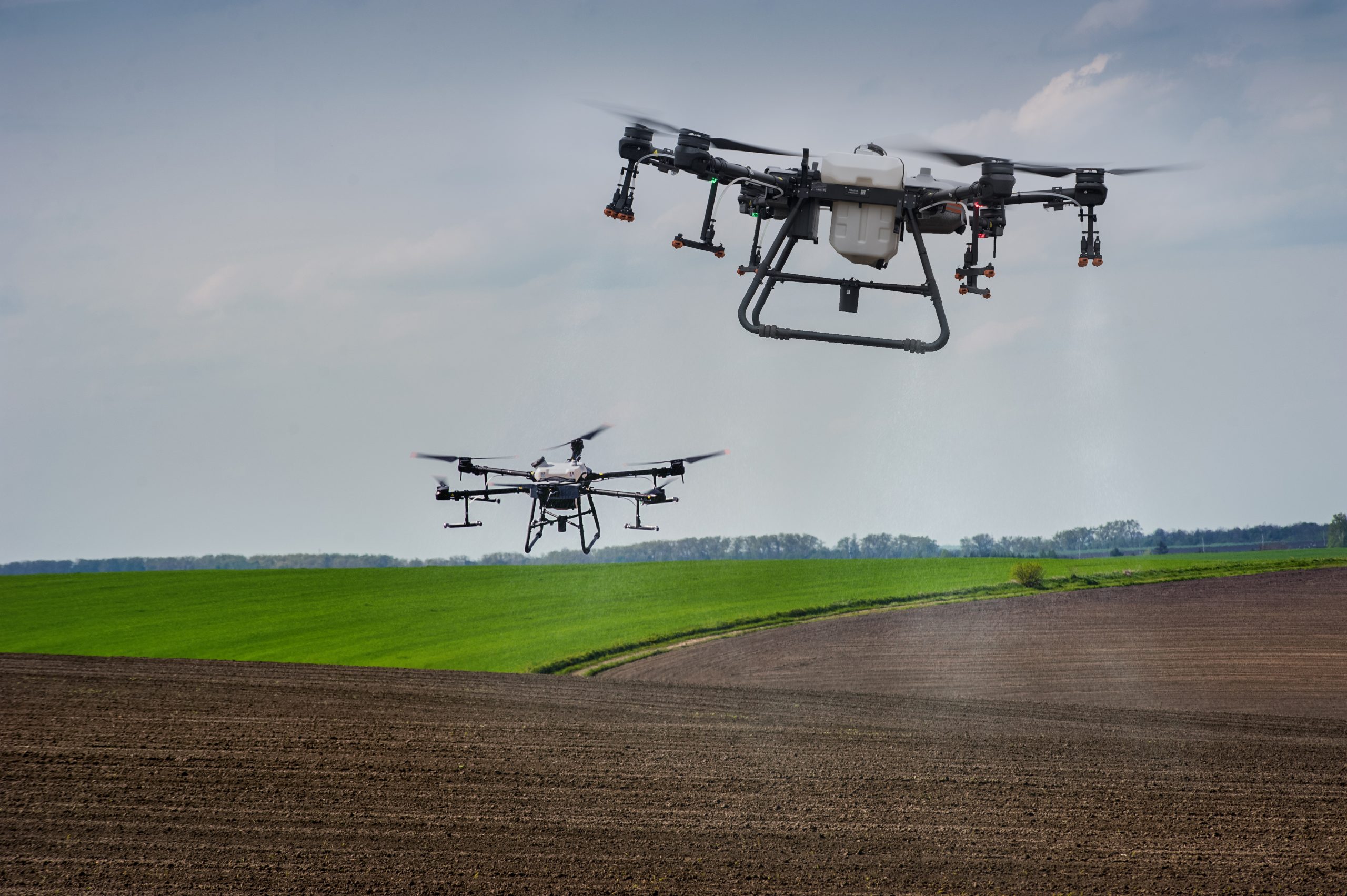
Once linked to surveillance or commercial photography, drones are being reimagined for agriculture. Farmers report that drones cut pesticide use by up to 30%, reduce water needs by 40%, and compress spraying time from several days into a few hours (Daily Nation, 2023). A drone can cover 10 acres in an hour—ten times faster than manual labor—and fertilizer applied more precisely can save KES 1,500–2,500 per acre. The Kenya Civil Aviation Authority (KCAA) already counts more than 2,000 drones licensed for agriculture. Demonstrations have shown a drone spraying a hectare of wheat in just eight minutes, saving both labor and inputs (KIPPRA, 2024).
The efficiency is clear. But what do these numbers hide? If drones reduce chemical use while increasing reliance on digital inputs, is the balance still ecological?
Territories and Service Models
Adoption is unfolding unevenly across Kenya’s diverse landscapes. In Nakuru, maize and potato cooperatives pool resources to hire drone services, cutting costs collectively. In Kisumu, rice farmers along Lake Victoria use drones to monitor water and fertilize evenly across flooded paddies, connecting harvests with school feeding programs. In Kiambu, drones track soil conditions in tea fields and horticulture plots, protecting high-value crops. And in Nairobi, while not a major farming hub, the city is where regulations are drafted, training programs emerge, and agri-tech startups forge partnerships (FAO & World Bank, 2021).
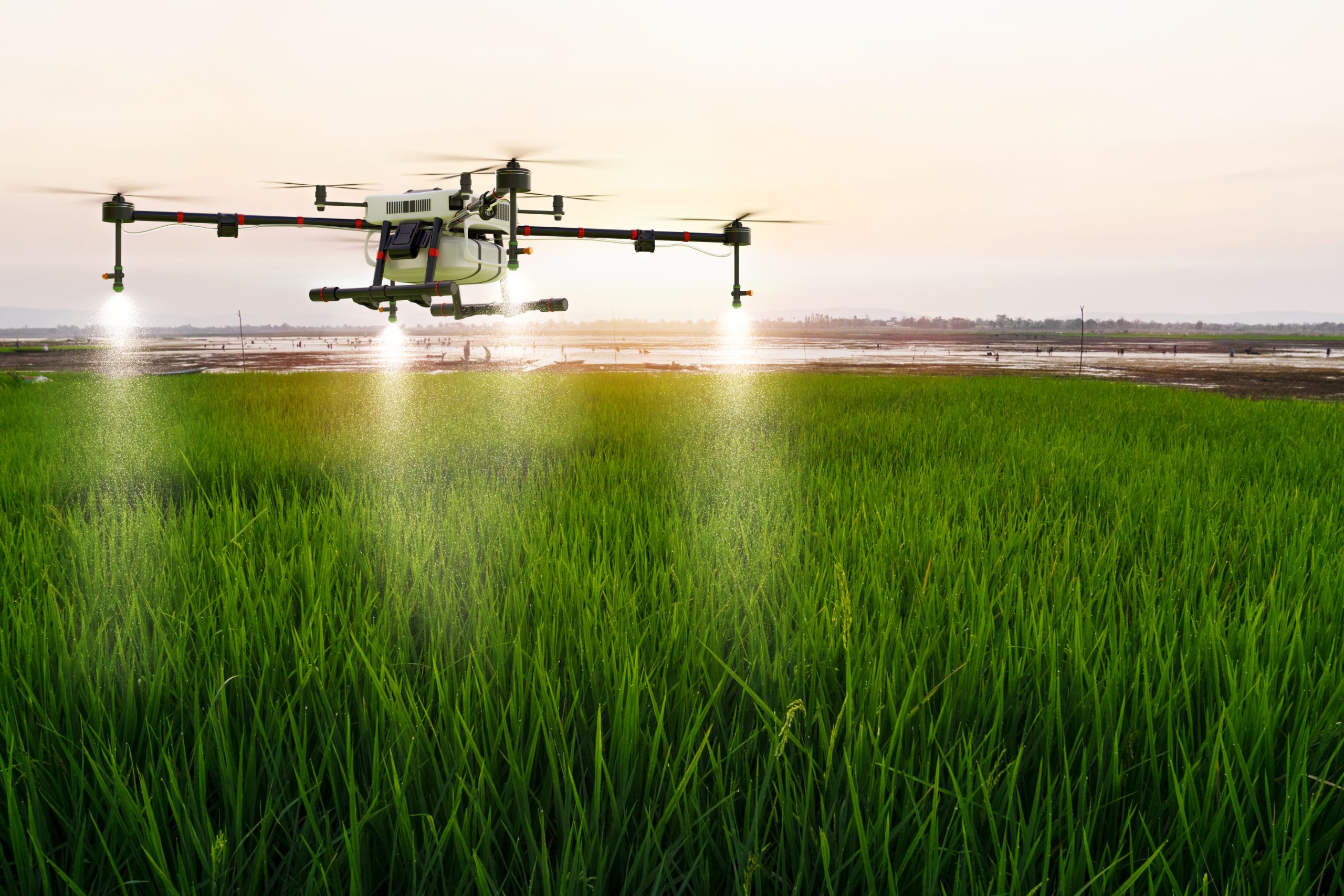
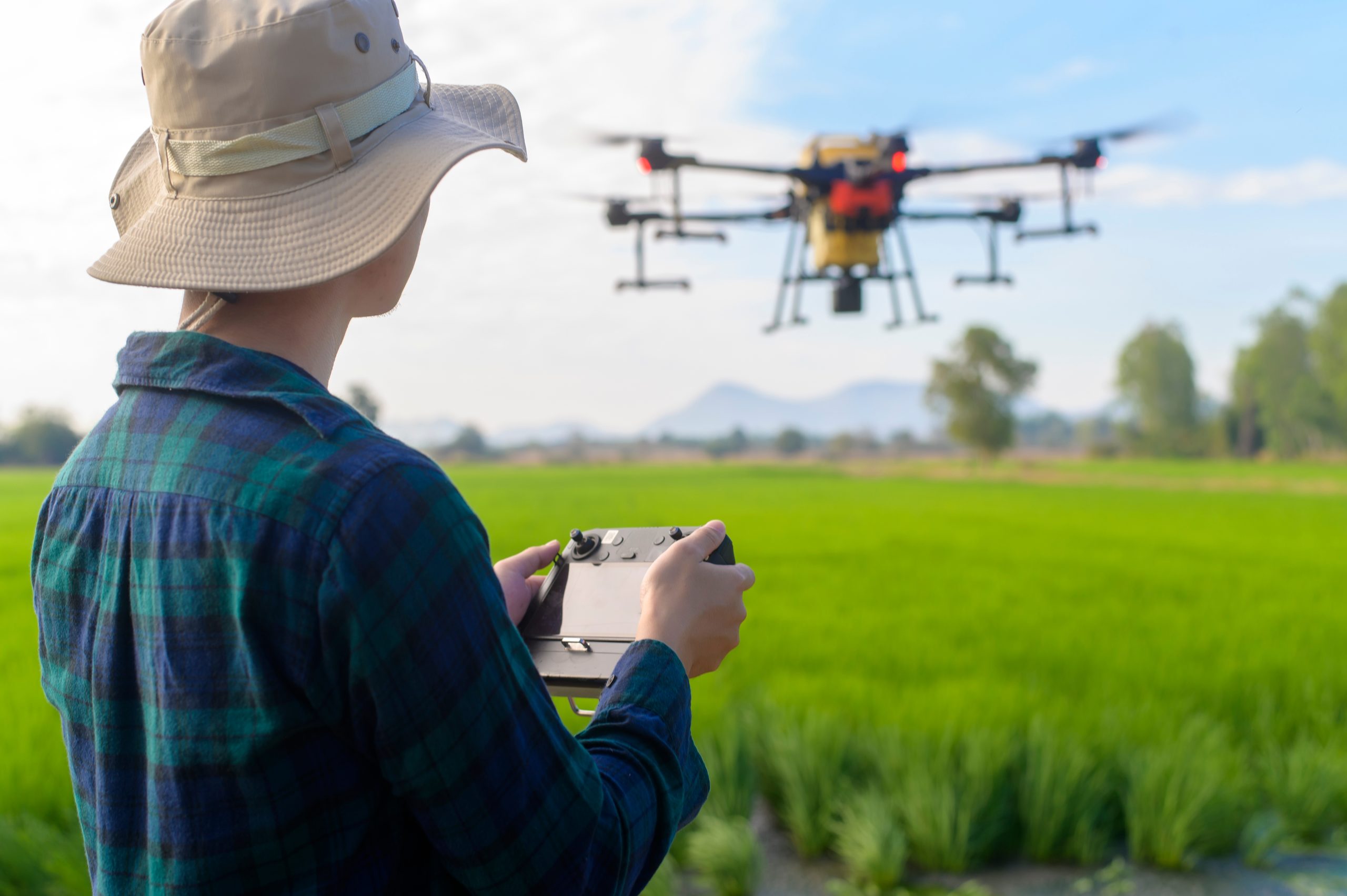
Yet drones rarely belong to individual farmers. Service providers dominate, charging KES 500–1,000 per acre. Cooperatives negotiate group deals; portable solar kits recharge batteries in off-grid areas; and young Kenyans find work as drone pilots. Youth programs—like the Kenyan Agri-Drone Business Competition—have trained dozens of young entrepreneurs, awarding licenses and equipment to set up new rural services. Women farmers, often excluded from heavy manual spraying, now see drones as a way to expand their role in cooperatives (University of Eldoret, 2025).
Here, technology is not just hardware—it is a social arrangement. But questions remain: what happens when farmers depend on providers they do not control? Who owns the data gathered by cameras flying over their fields? Perhaps the real issue is not how drones fly, but who governs their flight paths.
Beyond Yields: Social Value and Contradictions
The value of drones extends beyond yields. In Kisumu, women-led cooperatives translate efficiency into more reliable supplies of rice for local schools. In Nakuru, potatoes sprayed by drones carry fewer pesticide residues, making them more appealing in Nairobi’s urban markets. For younger farmers, drones signal that agriculture is not obsolete but an industry where digital skills meet ancestral knowledge (Alliance for Science, 2023).
And yet, contradictions are unavoidable. Only about 5–7% of smallholder farmers currently access drone services (KIPPRA, 2024), leaving many excluded. A single drone costs KES 600,000–1.5 million—prohibitive without external support. Regulations remain unsettled: are drones aviation equipment, agricultural tools, or ICT devices? Communities sometimes mistrust them, associating drones more with surveillance than solidarity (The Standard, 2023).
Environmental outcomes are also double-edged. Drones can reduce pesticide residues, cut water use, and lower fossil fuel demand by replacing tractors for some tasks (IFPRI, 2025). They were even deployed against desert locusts using bio-pesticides, protecting crops while minimizing ecological damage (CABI, 2023). Yet improper calibration risks chemical drift into neighboring fields, and most recommended dosages are still designed for backpack sprayers, not aerial systems. Without updated guidelines, efficiency could come at the expense of biodiversity and soil health.
The paradox is stark: drones offer efficiency and new opportunities, but also dependency, inequity, and contested trust. Can they truly be tools of empowerment if the majority of farmers remain outside their reach?
The Broader Meaning
Kenya’s experience shows that drones are not neutral instruments. They embody choices about access, equity, and control. They reduce labor strain and pesticide use, but they also raise new dependencies on service providers and digital infrastructure.
The open question is not whether drones work—they clearly do—but whether they will contribute to a food system that is fair, regenerative, and digitally inclusive. This is the horizon of FoodSystem 5.0: technology rooted in territory, aligned with community values, and attentive to who benefits, not just what is produced.
Kenya is showing that the sky can become a field too—but whose field it becomes remains undecided (Africa Renewal, 2024; ADF, 2025).
References
- Kenya Civil Aviation Authority (KCAA), Civil Aviation (Unmanned Aircraft Systems) Regulations, 2020.
- Food and Agriculture Organization (FAO) & World Bank, Kenya Digital Agriculture Profile, 2021.
- KIPPRA (Kenya Institute for Public Policy Research and Analysis), Adoption of Drone Technology in Precision Agriculture, DP 331, 2024.
- Daily Nation (Seeds of Gold), How use of drones can transform food production, 2023.
- The Standard, Teaching youth drones tech for food security, Kennedy Gachuhi, March 2023.
- The Star, 10 youths undergo training to infuse drones into agriculture, Evelyne Syombua, March 2023.
- University of Eldoret, Drone Awareness Training at Kuona Mbele Farmers’ Society, July 2025.
- FutureWater/Egerton University, Using drones to attract youth into agribusiness, OKP Project, 2021.
- Africa Renewal (United Nations), Africa leading in next-gen drone technology trials, November 2024.
- Africa Defense Forum, Kenya and Rwanda Lead Africa’s Drone Revolution, January 2025.
- Alliance for Science (Cornell University), IT transforms how Kenyan farmers manage crops, Joyce Chimbi, April 2023.
- International Food Policy Research Institute (IFPRI), The global drone revolution in agriculture, David Laborde, September 2025.
- CABI, Drones for desert locust control in East Africa, project brief 2023.