

When Rete Semi Rurali invited me to write the editorial for issue 44 of its newsletter, the feeling I experienced went well beyond simple professional satisfaction. It was, above all, the recognition of a relationship that has developed over many years—one shaped by meetings, exchanges, collaborations and, as often happens when working on issues that concern profound transformations, moments of intense discussion.
I have known Rete Semi Rurali for a long time. Over the years we have shared research initiatives, projects and reflections. Some collaborations were straightforward; others were decidedly more turbulent. But this kind of relationship, when it is not superficial, is often a sign of a deeper common ground. It means taking seriously the fact that agriculture today is not simply a productive sector or an economic domain. It is one of the decisive arenas in which the relationship between human societies and living systems is being renegotiated.
For this reason, I consider Rete Semi Rurali one of the most important organizations within the Italian and European agroecological landscape. Not only because of the concrete work it carries out around agricultural biodiversity, seed stewardship and participatory research, but also because of the cultural posture it has cultivated over the years: a rare capacity to embrace radical agroecological visions while maintaining a rigorous engagement with scientific research.
This combination is far from obvious. In many contexts, debates around agriculture tend to polarize between two opposing positions. On one side, a technocratic approach that reduces the complexity of agricultural systems to questions of efficiency and technological optimization. On the other, a nostalgic narrative that idealizes the agricultural past without confronting the ecological and social transformations currently unfolding across the planet.
Rete Semi Rurali has chosen a different path—more demanding, but also far more fertile: the path of inhabiting complexity.
Agroecology and Research: A Rare Posture
To understand why this organization is so important, one must begin with a fundamental point: agricultural biodiversity is not merely a heritage to be preserved. It is a structural condition for the resilience of food systems.
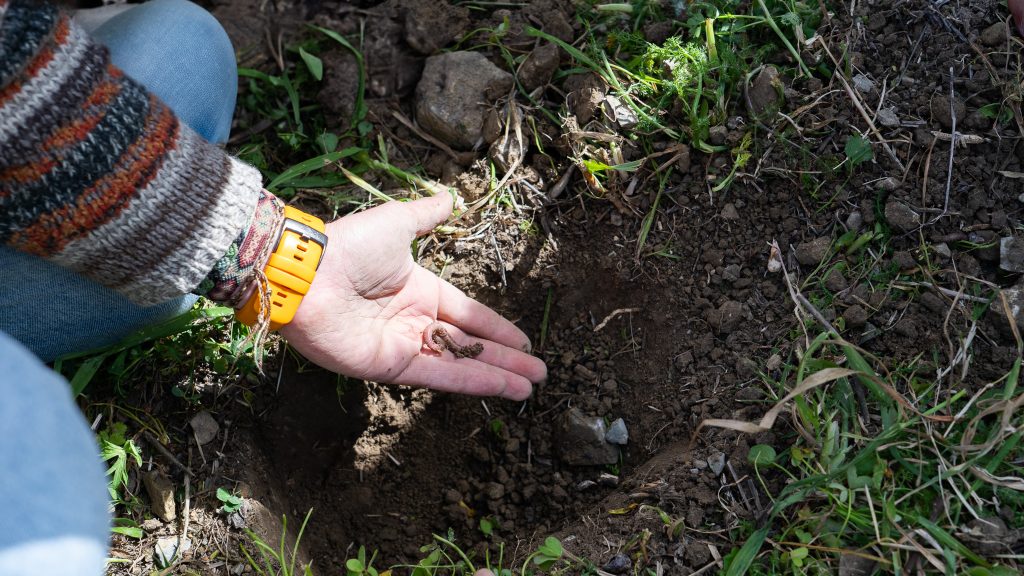
Within the work of Rete Semi Rurali, biodiversity is never treated as a folkloric or nostalgic element. Instead, it forms part of a broader scientific and cultural project concerning how we imagine the future of agriculture.
In this sense, the newsletter has for years represented a valuable space for reflection. It is not simply a technical publication; it is a place where scientific research, agricultural practice and cultural reflection intersect.
Issue #44 is particularly compelling because it places at its center a perspective that will become increasingly relevant in the years ahead: the One Health approach.
The idea is both simple and radical. Human health, animal health and ecosystem health cannot be treated as separate domains. They are dimensions of a single living system.
This perspective carries profound implications for how we think about agriculture. It means recognizing that agricultural practices do not merely produce food. They also generate deep effects on ecosystems, biodiversity, soil quality and, ultimately, the health of human communities.
Soil as a Living Ecosystem
One of the most fascinating themes explored in this issue concerns the soil microbiome.
For a long time, industrial agriculture treated soil as little more than a physical substrate for crops—a surface to be managed through chemical inputs and increasingly sophisticated technical interventions.
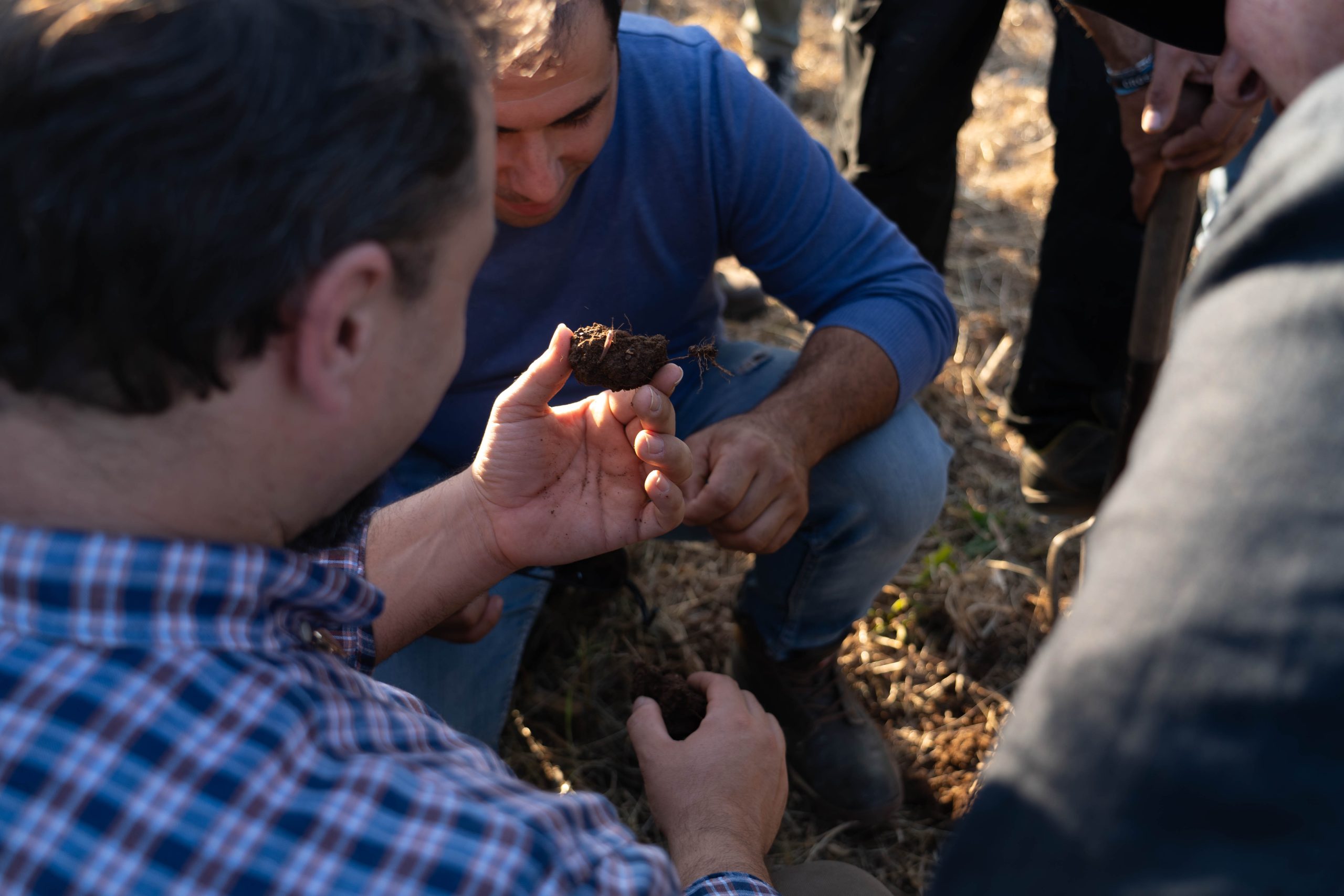
Scientific research in recent years has revealed something very different. Soil is a living ecosystem inhabited by extremely complex microbial communities that play a fundamental role in the functioning of agroecosystems.
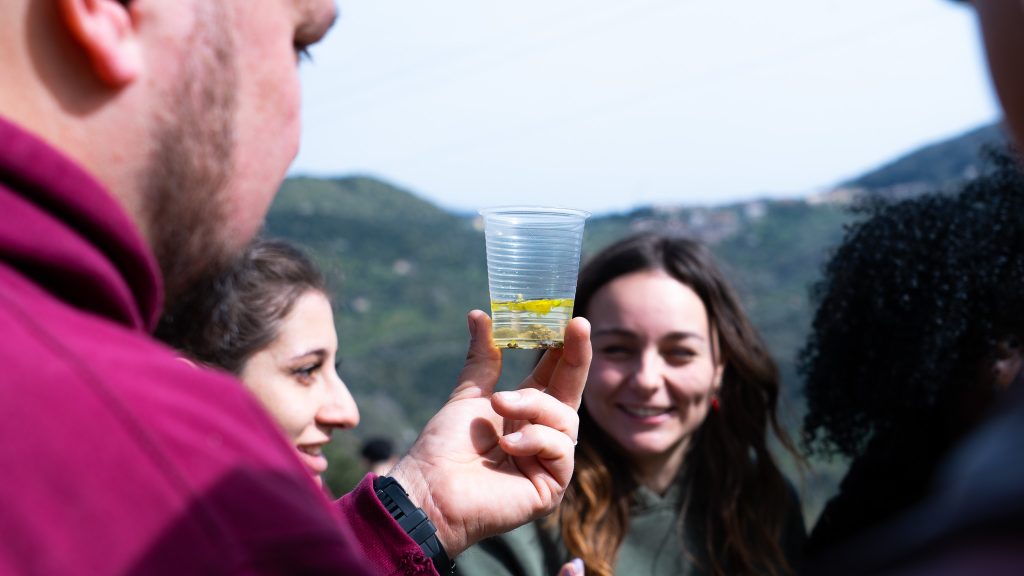
Research initiatives such as TRIBIOME, discussed in the newsletter, clearly demonstrate that soil fertility is not an input that can simply be added from outside. Rather, it emerges from intricate biological relationships between soil, plants, microorganisms and the environment.
This shift in perspective is far from marginal. It means recognizing that agriculture cannot be reduced to a system of production governed by isolated variables. It is instead a complex living system made of relationships and interactions.
And it is precisely this idea of complexity that I tried to place at the center of the editorial opening this issue.
Against the Oligraphic Image of Food
The starting point of my reflection was the recent recognition of Italian cuisine as an intangible cultural heritage of humanity.
This is undoubtedly an important recognition. Yet it also carries a certain ambiguity that deserves attention.
The risk lies in transforming food into a reassuring and picturesque image—an oleographic representation detached from the living processes that make it possible: territories, soils, seeds, agricultural practices and the communities that sustain them.
When cultural heritage is narrated as something static, something to be preserved within a museum of traditions, we lose sight of its most important dimension: the fact that it emerges from dynamic historical processes.
Italian cuisine is not authentic because it is pure or immutable. It is authentic because it has always been a hybrid process.
Tomatoes, maize, potatoes, agricultural varieties and culinary techniques entered our history through migrations, exchanges and ecological adaptations. Italian food culture is the result of continuous negotiation between environments, species and human communities.
The phenomenon sometimes described as gastronationalism, when it reduces food to a symbol of identity, ultimately betrays this history.
Rethinking the Relationship Between Technology and Agriculture
From here emerges a second reflection that I consider crucial.
We live in a time in which the future is increasingly imagined as a technological problem: more data, more control, more automation.
Agriculture risks being absorbed into this narrative, transformed into a sector to be optimized through increasingly sophisticated technological solutions that are often detached from ecological and social contexts.
For this reason, I tried to shift the question that dominates discussions about agricultural innovation.
The prevailing question today is: how much can technology give to agriculture?
But perhaps a more interesting question would be: how much can agriculture teach us about rethinking the very idea of the future?
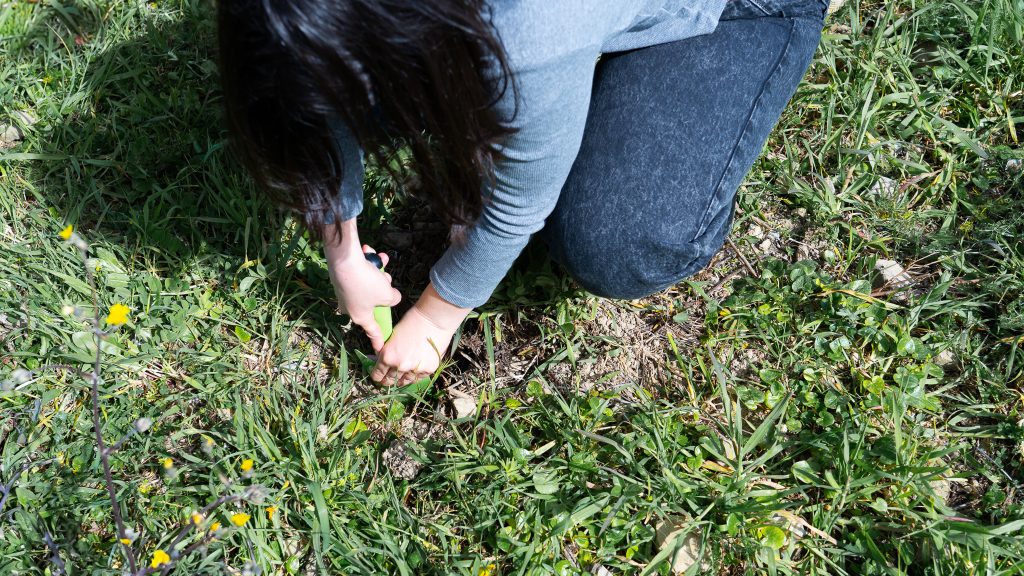
An evolutionary, participatory and territorially rooted agriculture is not a remnant of the past. It is one of the most advanced places where we can learn to understand complex systems.
It is a space where knowledge emerges from the interaction between mind, hands and body—between science and experience—between human and non-human actors.
Technologies That Know How to Listen
This does not mean rejecting technology. Rather, it means rethinking its role.
Technologies can play an important role in the agriculture of the future, but on one condition: they must be domesticated within a new cosmology.
Not technologies of domination and extraction, but tools capable of listening to living systems and making their relationships more intelligible.
Technologies that do not seek to replace diversity, but to make diversity practicable.
Many of the experiences presented in the newsletter demonstrate that this path has already been explored for years within the work of Rete Semi Rurali. From participatory plant breeding to research on soil microbiomes, a vision of agriculture emerges as a space of co-evolution between human communities and living systems.
An Invitation to Read
I strongly encourage readers to explore the entire Rete Semi Rurali Newsletter issue #44.
It is not simply a collection of technical contributions. It is a small laboratory of contemporary agroecological thinking.
More broadly, I invite readers to follow the work of Rete Semi Rurali closely. At a time when the ecological transition is often reduced to a question of technologies or markets, organizations like this remind us that real change emerges from the capacity to build communities of knowledge, to care for biodiversity and to imagine new ways of inhabiting the Earth.
To inhabit complexity.
And that is probably the most urgent challenge before us today.