

On May 14, 2026, Rural Hack will take part in the international dialogue “Four words, one system” in Rome, hosted at the Ministry of Foreign Affairs and International Cooperation. The event will bring together researchers, diplomats, and experts to explore how food systems are becoming the new strategic infrastructures of international relations.
At the heart of the discussion lies a question that is both urgent and far-reaching: can agrifood excellence be transformed into a structured instrument of foreign policy?
For a long time, the agri-food sector was viewed primarily through the lens of production volumes, trade flows, and consumption patterns. That traditional perspective, however, is no longer sufficient to navigate the profound transformations of the 21st century. Today, food systems occupy a critical junction where food security, technological innovation, and international diplomacy converge.
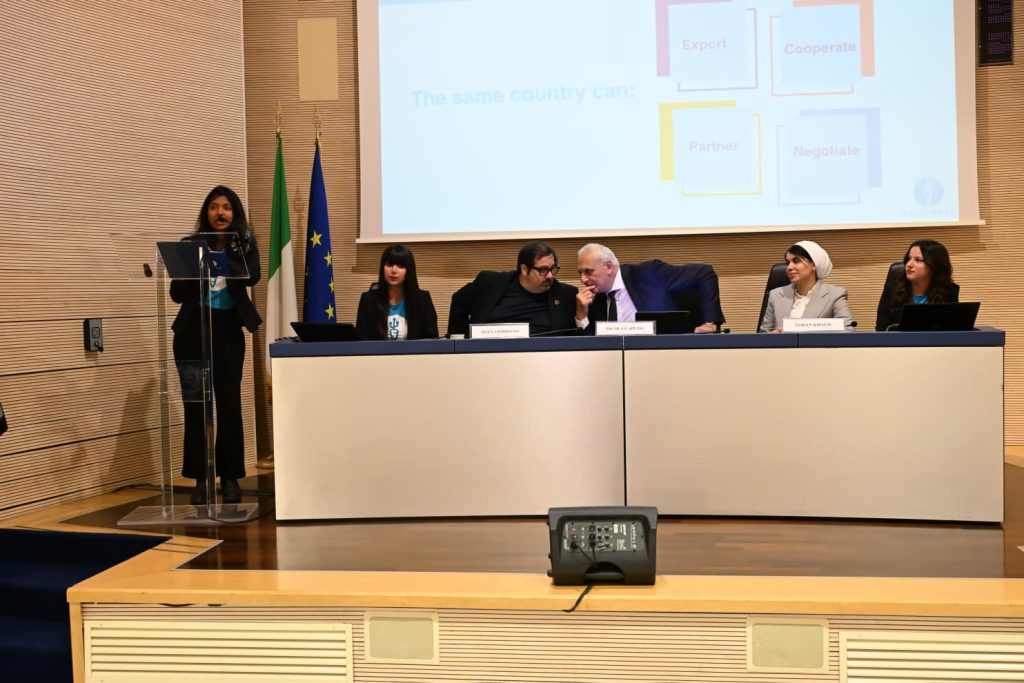
Italy, powered by the immense symbolic capital of “Made in Italy,” stands at the forefront of this shift. Research conducted by the Rural Hack task force for the Ministry of Foreign Affairs proposes a fundamental paradigm shift: viewing the agri-food chain not merely as an economic engine, but as a strategic infrastructure of foreign policy. This approach, promoted under the guidance of Nicola Caputo, Advisor to the Minister of Foreign Affairs and International Cooperation for the export and internationalization of the agri-food chain, moves beyond treating exports as uniform commercial data and instead reads them as a differentiated system of geopolitical relations.
The Four Strategic Clusters: A New Geopolitical Map
At the heart of the strategic framework developed by the Rural Hack task force for MAECI (Ministry of Foreign Affairs and International Cooperation) lies an unprecedented segmentation of global markets into four macro-clusters. This categorization allows Italy to move beyond a one-size-fits-all export strategy and adopt instead a differentiated internationalization approach, calibrated to the specific economic, structural, and institutional variables of each region.
Cluster 1: Premium Culture and “Made in Italy” Identity. Here, Italy operates as a premium exporter of culture and lifestyle. Growth in these markets is driven by the “price effect” rather than volume.
Cluster 2: Technological Partnerships and Agritech.
In this context, Italy does not simply export food; it exports the knowledge needed to produce it. By providing Agritech solutions, digital traceability, and advanced food processing machinery, Italy fosters a virtuous form of industrial interdependence.
Cluster 3: Scientific Diplomacy and Resilience. In regions facing structural vulnerabilities, the agrifood sector takes on a role of scientific diplomacy and cooperation. Working alongside international organizations, Italy focuses on transferring agronomic expertise and sustainable water management practices to build systemic resilience.
Cluster 4: Regulatory Influence and Global Governance. Here, the goal is to shape international standards on food safety, sustainability, and labeling. Under the strategic vision coordinated by Nicola Caputo, Italy aims to export its regulatory model, ensuring that global standards align with the quality and transparency requirements that define the Italian system. In this latter area, the goal is to help shape international standards on food safety, sustainability, and labeling. Under the strategic vision coordinated by Nicola Caputo, Italy aims to export its regulatory model, ensuring that global standards align with the quality and transparency requirements that define the Italian system.
Technological Innovation as a Geopolitical Enabler
In this redefined landscape, technological innovation is no longer a matter of operational efficiency alone, it is a strategic enabler of influence. Advanced tools such as digital traceability, blockchain, and precision farming serve as a “common language” through which Italy can transfer its methods and organizational models to the rest of the world.
As the report underscores, the role of MAECI is essential in bridging the gap between economic excellence and geopolitical effectiveness. The study calls for a Permanent Control Room (Cabina di Regia) to unify the productive, technological, and diplomatic dimensions of the country’s agri-food system. This systemic vision ensures that every euro of agri-food export also generates a return in terms of political influence and international prestige.
A New Set of Metrics for Success
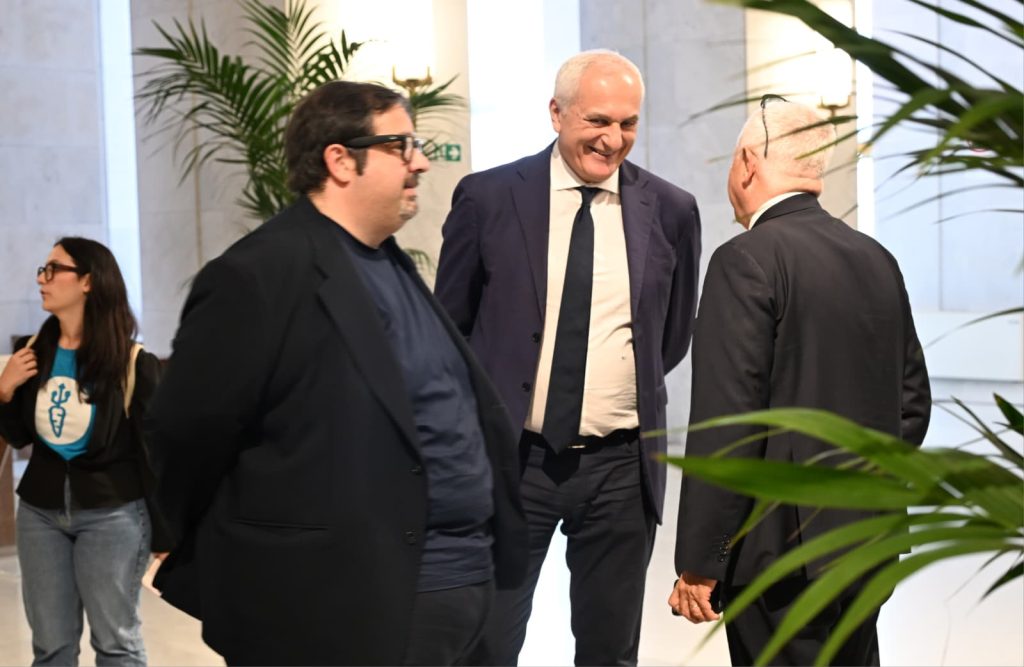
To measure the success of this strategy, Nicola Caputo and the team at Rural Hack argue for the need to move beyond the trade balance as the sole indicator.
Success should instead be assessed through multidimensional metrics, including:
- The degree of adoption of Italian technologies within foreign production chains.
- The weight of Italian participation in international regulatory processes.
- The impact of scientific cooperation projects on regional stability and food security.
4 worlds: A Work Just Beginning
The message emerging from this research is clear: food is no longer merely an agricultural matter, but a pillar of national security, international cooperation, and foreign policy.
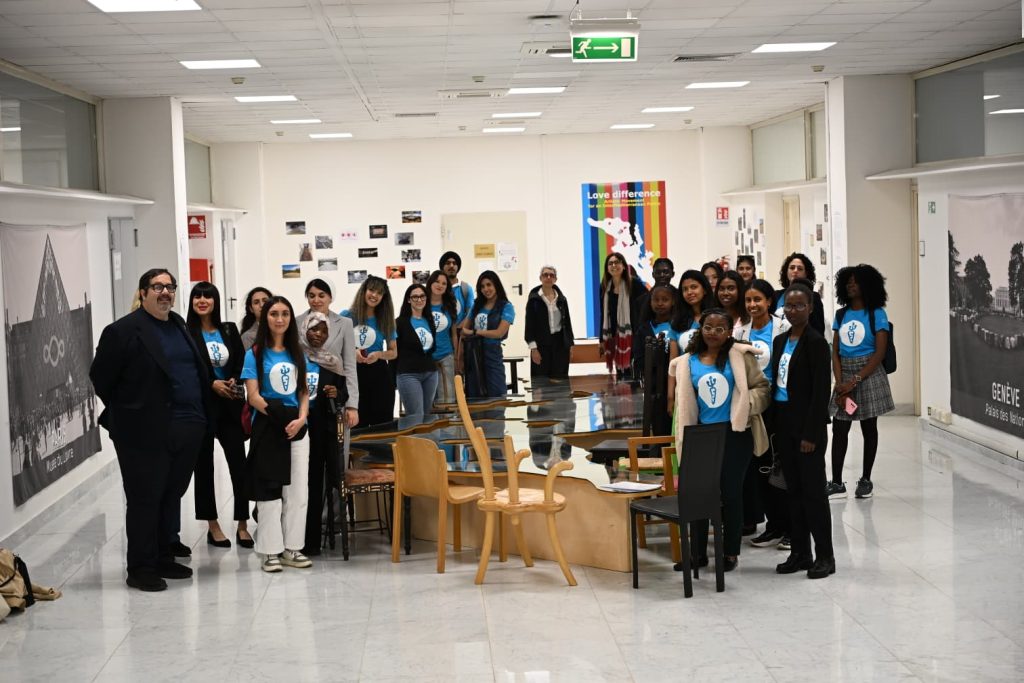
Yet the work behind the report is only just beginning. In the coming months, with the support of the international community of young scholars, researchers, and scientists gathering around the partnership between Rural Hack and the Italy Chapter of the World Food Forum, this initial framework will be enriched with concrete proposals, case studies, and operational recommendations.
The goal is to turn the report into a true policy-oriented document for a new food diplomacy: a tool capable of informing policies, scientific alliances, and international cooperation strategies. The work will be presented in October within a global institutional framework, as an open contribution to the development of an international agenda for the future of agri-food systems.
Anyone wishing to submit a contribution, share a reflection, or take part in this process can contact the Rural Hack task force.