

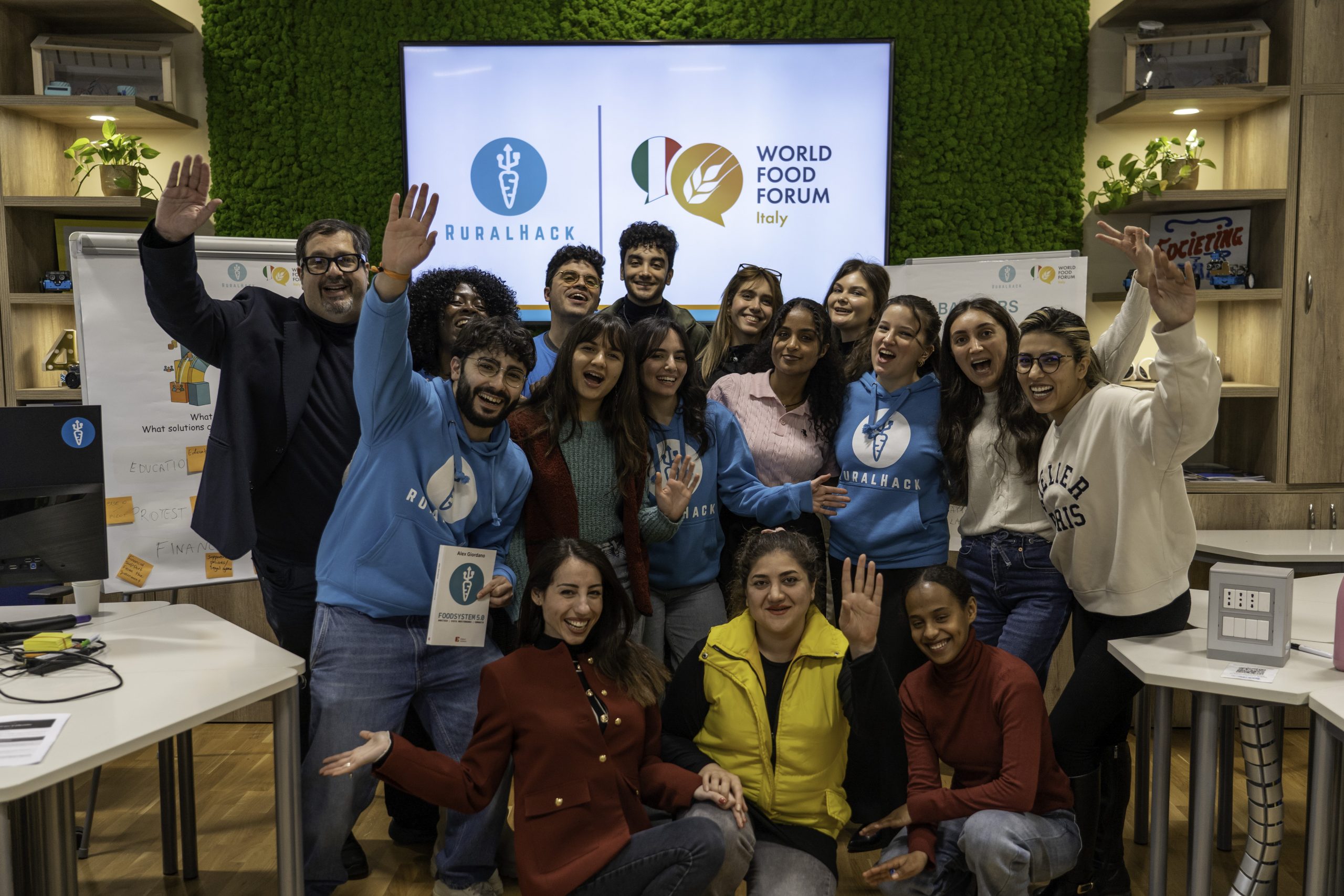
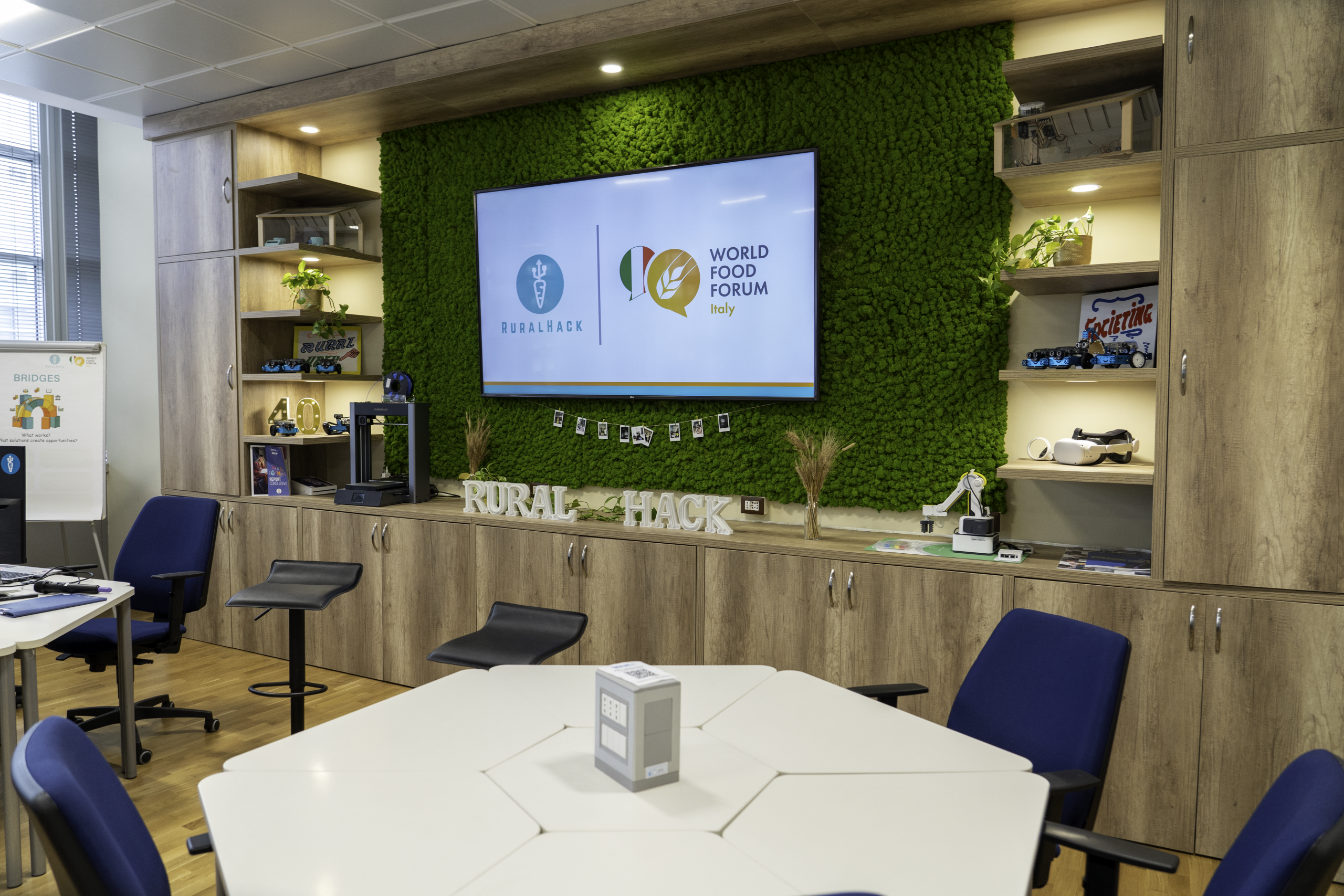
On April 2, 2026, the University of Naples Federico II campus in San Giovanni a Teduccio became the crossroads for a fundamental international dialogue on the future of the agricultural sector. At the Societing Lab, a group of young people from diverse cultures gathered to discuss women’s and youth empowerment within agrifood systems. The event was designed as an innovative satellite workshop, capable of transforming the global launch of a FAO strategy into a local and deeply intercultural conversation.
The institutional framework: the FAO event and the Empowerment Kit
The day kicked off via a live link with the Lebanon Room at FAO Headquarters in Rome. Following the opening remarks, the spotlight turned to the Empowerment Kit for Youth in Agrifood Systems. Far from being a simple manual, the Kit is a strategic operational compass—the result of two years of work developed by the Gender Equality and Rural Women’s Empowerment Working Group of the World Food Forum (WFF) Italy Chapter.
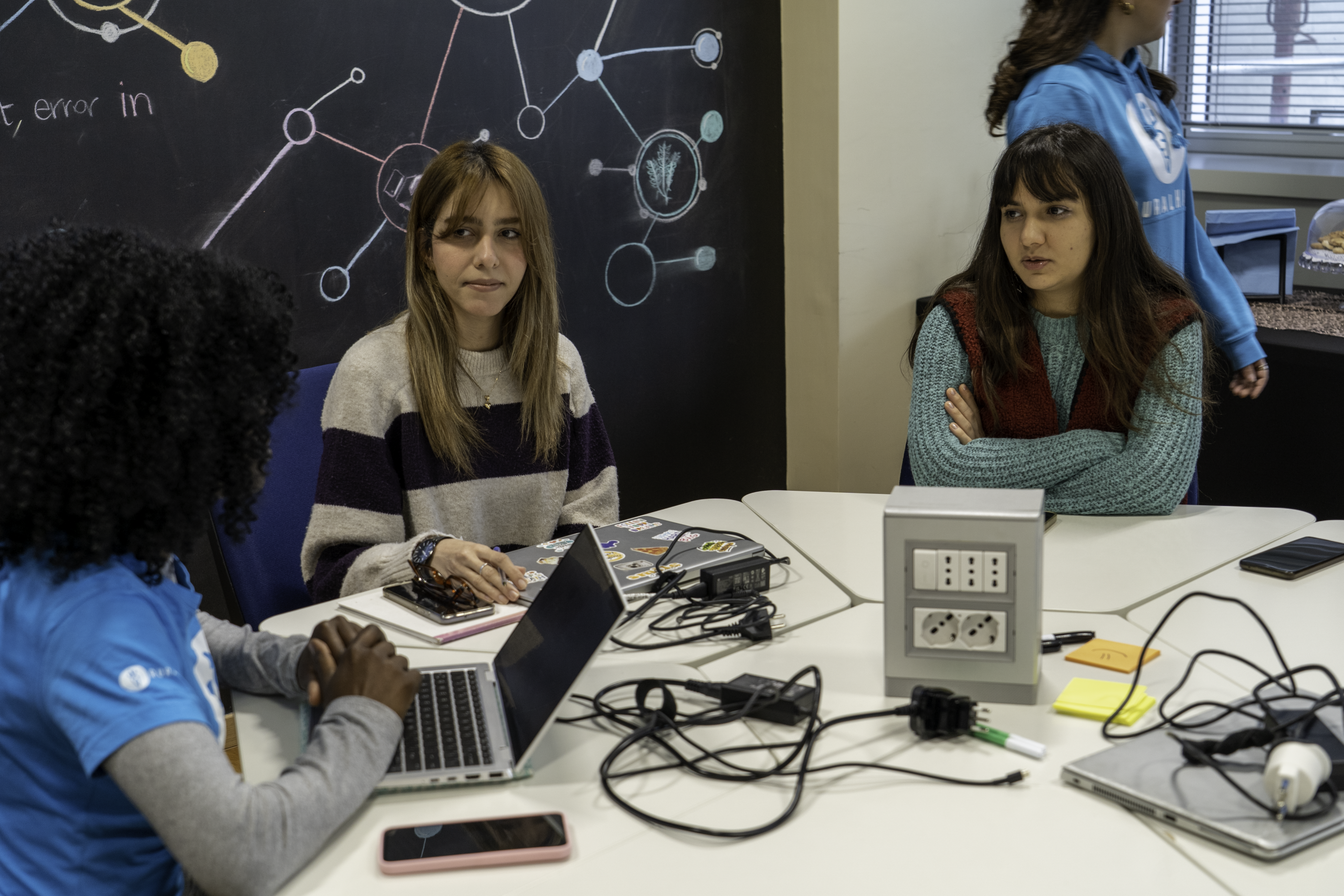
Building on the insights gathered during the 2025 Global Youth Consultations, the kit addresses a form of “double discrimination”: young people in the Italian agrifood sector face structural age-related barriers (such as limited access to land and credit), obstacles that are multiplied for young women due to their gender. Structured into five practical modules — ranging from educational opportunities and financial literacy to leadership and advocacy tools — the kit is also designed to be integrated into schools through PCTO (Paths for Soft Skills and Orientation) programmes.
Voices from the panel: education, networks, and imaginaries
The morning session, moderated by Francesca Antonucci (lead author of the Kit), came to life thanks to a panel rich in insights.
- Davide Agretto · Youth Education Expert, FAO Youth and Women’s Office – WFF Youth Initiative: Agretto focused on the Kit’s potential as an educational tool, particularly within PCTO (Paths for Soft Skills and Orientation) programs. His argument was both structural and cultural: literacy in food sustainability must enter classrooms not as an elective, but as a fundamental lens, and the Kit provides the necessary framework to do so. Beyond the content itself, Agretto spoke of the profound educational shift at stake: the need to change not only what young people know about agriculture, but how they relate to it and whether they can envision themselves as active participants within the sector.
- Ilaria Pizzolato · Provincial Delegate of Vicenza, Coldiretti Giovani Impresa: Pizzolato’s contribution was grounded in the concrete mechanics of institutional support. As a representative of Coldiretti Giovani Impresa — the branch of Italy’s largest farmers’ association dedicated to under-35 agricultural entrepreneurs — she spoke to what young people can actually access when they enter the sector: training, advocacy, access to funding, and above all a network. Community, unity, and network were the concepts she returned to most consistently. Her message was that no young farmer should have to navigate the system alone, and that Coldiretti’s role is precisely to make sure they don’t have to.
- Enrico Parisi · Presidency Council, Consiglio Nazionale Giovani: Parisi addressed a tension that sits at the heart of much of this work: for too many young Italians, agriculture is still perceived as a fallback — something you end up in, rather than something you choose. Reversing that dynamic, he argued, requires deliberate intervention at multiple levels: policy reform, narrative change, and the dismantling of the cultural assumptions that place agriculture in a hierarchy below other professions. Making agriculture a primary option, not a secondary one, is both a political task and a generational one.
- Brigida Di Meglio · Agricultural entrepreneur, founder of Fattoria al Boschetto: Di Meglio offered something the other speakers could not: a working example. Her interactive farm is built around hands-on workshops for children — activities designed to close the distance between people and the food they eat, to make agriculture tangible at an age when perceptions are still forming. In her account, education doesn’t wait for secondary school and doesn’t happen through a manual; it happens in a field, through direct experience with soil, seeds, and process. Her presence on the panel was a reminder that the most enduring advocacy often doesn’t announce itself as such.
Methodological Synergy: The Kit as a Catalyst for the Workshop
The connection between the Empowerment Kit and the Societing Lab workshop represented the crucial shift from theory to action. The Kit was not used as a mere text to be read, but as a methodological framework for managing non-formal and experiential learning spaces.
While the document presented in Rome provided the theoretical framework and the diagnosis of inequalities, the Naples workshop activated that “Radical Inclusivity” (Inclusion by Design) advocated within the Kit itself, where every contribution is not merely heard, but becomes a technical validation of the final output.
The canvas exercise was, in fact, the practical translation of the Gender Transformative Approach described in the document. While the Kit invites us to question the root causes of inequalities — such as social norms and power dynamics — the debate at the Lab allowed these dynamics to emerge in real time. This interaction demonstrated that the Kit is a living tool: its guidelines on advocacy and stakeholder mapping were given substance by the life stories of the participants, transforming the youth from mere listeners into true “Change Makers.” Ultimately, the Kit provided the institutional framework for the conversation, while the workshop offered the empirical proof that equality is built through the practice of dialogue.
Naples as a Space of Translation: The Barriers and Bridges Workshop
Once the institutional connection ended and the cameras were turned off, the afternoon at the Societing Lab transformed into a participatory workshop. The formal, front-facing setup made way for the voices of a genuinely international group, which included Lab alumni such as Sally Elizabeth Ofisi (Kenya), Sanaz Asadi, Zahra Zare, Parsa Salimi, Sahar Manouchehri, and Ana (Iran), Olena Mariukhnych (Ukraine), and Saraya Abdurrahimli (Azerbaijan).
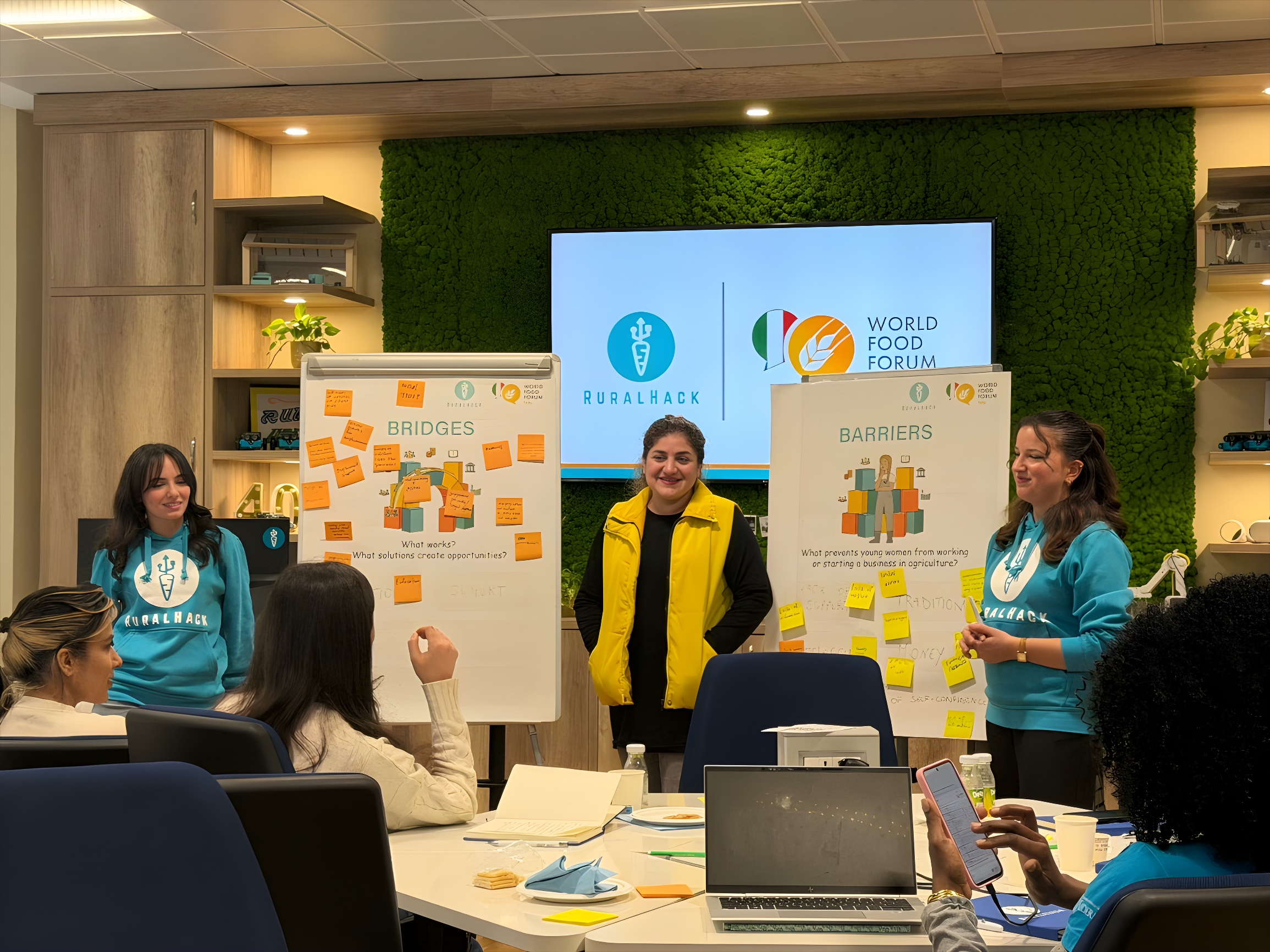
Through two large interactive canvases set up in the space, titled Barriers and Bridges, the participants translated their own experiences into keywords on post-it notes, mapping out obstacles and solutions.
On the barriers side, the discussion quickly moved past the obvious. The most persistent obstacle, participants agreed, is not a law or a policy but something harder to legislate against: the internalization of gender roles. Social norms do not only limit women’s access to external opportunities — they shape women’s own perception of what they are entitled to pursue, creating what the group identified as a self-efficacy gap that operates long before any institutional barrier is reached. The idea that a woman’s income is supplementary rather than foundational — a contribution rather than a right — surfaced as one of the subtler but most consequential expressions of this dynamic.
Financial access was identified as a second major structural barrier, and the group examined it with some precision. Parsa Salimi identified that the problem is not simply that women lack capital; it is that access to credit is mediated by social trust, and social trust is still distributed unequally. When institutions do not recognize women’s entrepreneurial vision as credible — or when land titles, the most common collateral, are not held in women’s names — the financing system reproduces the very inequalities it could theoretically help dismantle. Sahar Manouchehri noted that this dynamic is compounded in rural areas, where weak infrastructure, limited childcare, and geographic isolation make the cost of participation in the formal economy disproportionately high for women.
The theme that cut across several contributions was the cultural positioning of agriculture itself. The group noted a significant divergence in how the sector is perceived across different national contexts:
- In both Italy and Iran, agriculture carries a degree of social stigma — associated with physical labor, low status, and limited professional prospects — which pushes young people, and especially those with educational opportunities, toward other fields. Sanaz Asadi noted how the pressure to pursue medicine or engineering over farming is not simply a matter of individual preference; it reflects a hierarchy of prestige that is actively reinforced by families, schools, and public discourse.
- By contrast, as noted by Sally Ofisi, in many African contexts, agriculture is taught from childhood as a strategic economic asset and a source of innovation — a framing that makes it an aspiration rather than a fallback.
Repositioning agriculture as a high-value, technology-intensive, entrepreneurially rich field is not just a marketing challenge; it is a precondition for attracting the next generation of talent, regardless of gender..
On the bridges side, the conversation was equally rich. Community and peer networks emerged as the most consistently named resource — not programmes or institutions in the first instance, but people. The importance of the presence of other women who have navigated similar paths, the existence of spaces where experience can be shared without judgment, the possibility of mentorship that is informal rather than bureaucratic: these were described by Zahra Zare, Saraya Abdurrahimli and Olena Mariukhnych as the mechanisms through which self-confidence is built and sustained. Networking, in this framing, is not a professional tool but a form of social infrastructure — one that needs to be deliberately constructed in contexts where it does not yet exist.
Lastly, Giovanni Salvatore, Researcher for Rural Hack, shared the story of Nicoletta, an 80-year-old lady from Palo del Colle, who started her own Tarallo factory in the 80s and whom we had the pleasure of meeting during the three-day Tarallo Lab workshop in Apulia. She didn’t just start a business; she launched a factory against her husband’s will in a culture where such defiance could lead to physical harm or being ostracized.
Nicoletta is an example of being a pilot for change because she defeated her fear. Once a woman successfully navigates the odds and establishes herself, she becomes the reference point that dissolves the fears of those who follow. She proves that the barrier is a shadow, and once you walk through it, you become a cornerstone of the local economy.
Tradition and transformation: an intercultural perspective
The intercultural dialogue represented one of the most significant elements of the entire day. Perspectives from across the globe provided a complex reading of tradition, understood not merely as a constraint but also as a resource, depending on the ways in which it is navigated.
Italian participants, through this exchange, have the opportunity to question some implicit assumptions, creating a space for mutual learning.
What emerges is not an alignment of positions, but a shift in perspectives. And it is precisely this kind of transformation that the Societing Lab, together with the Rural Hack task force, seeks to activate: not events to consume, but processes to inhabit.
Beyond the event: toward transformative practices
The collaboration between Rural Hack and the WFF Italy Chapter that shaped this event is set to grow. A summer school planned for September 2026, developed jointly with WFF and hosted in Salerno, will bring together international participants with full scholarships — an opportunity to deepen the work begun on April 2, and to move from analysis to action.
The day in Naples was, among other things, a proof of concept: that connecting a room in Naples to a room in Rome — and to five countries’ worth of lived experience — can produce something that neither room could generate alone. The Empowerment Kit gave the conversation its structure. The people in the room gave it its substance.