

For World Fisheries Day, a day with the fishermen, colatura producers, and Rural Hack fellows. The work that sustains a place, the perspectives that help us recognize it, and the responsibility of accompanying it into the future.
Learning the work that comes next
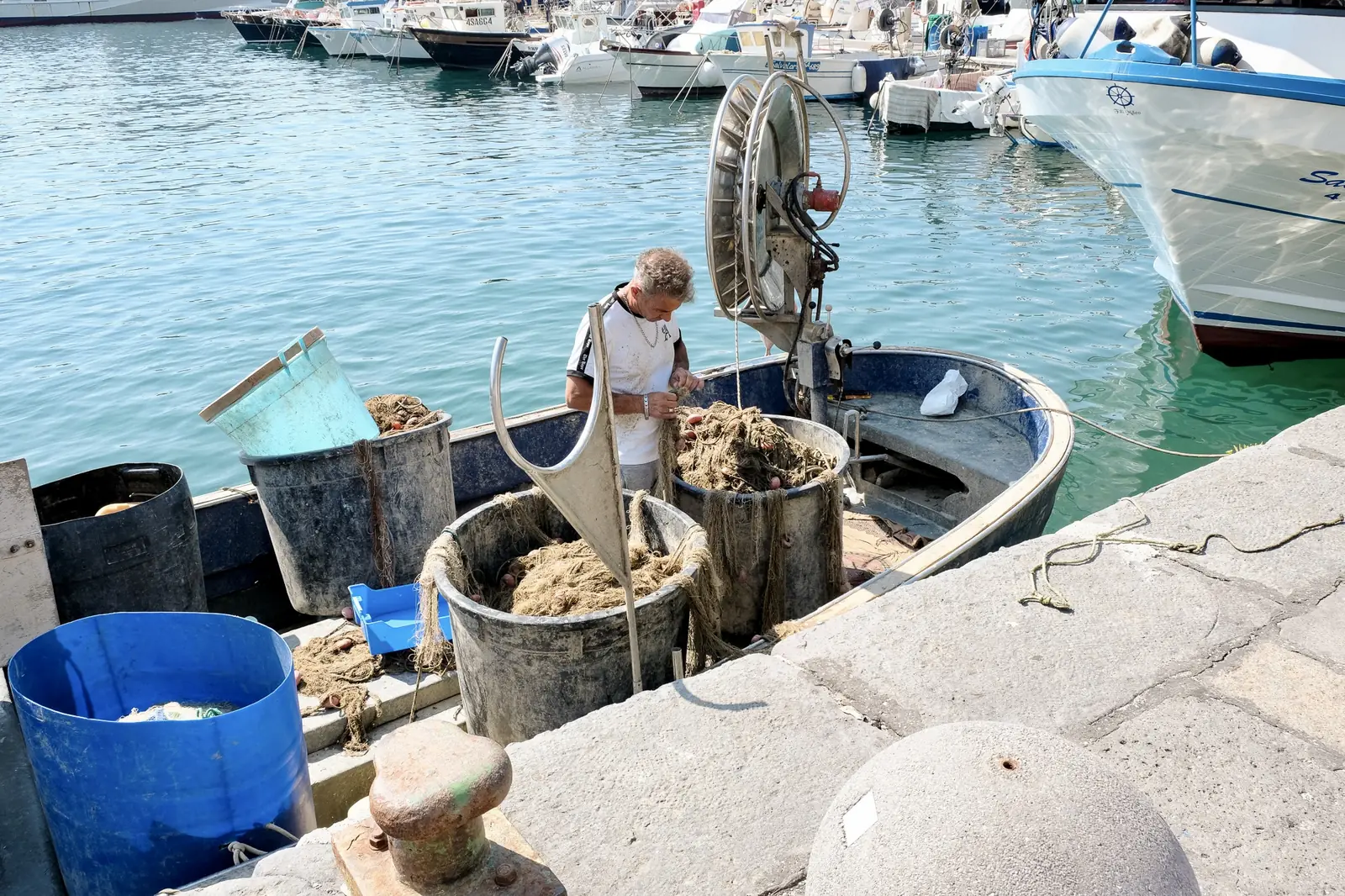
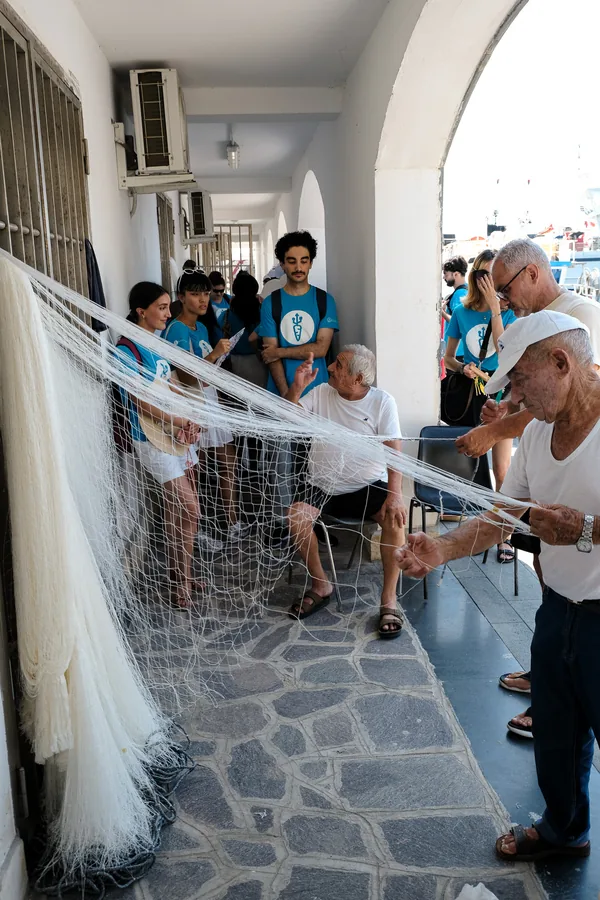
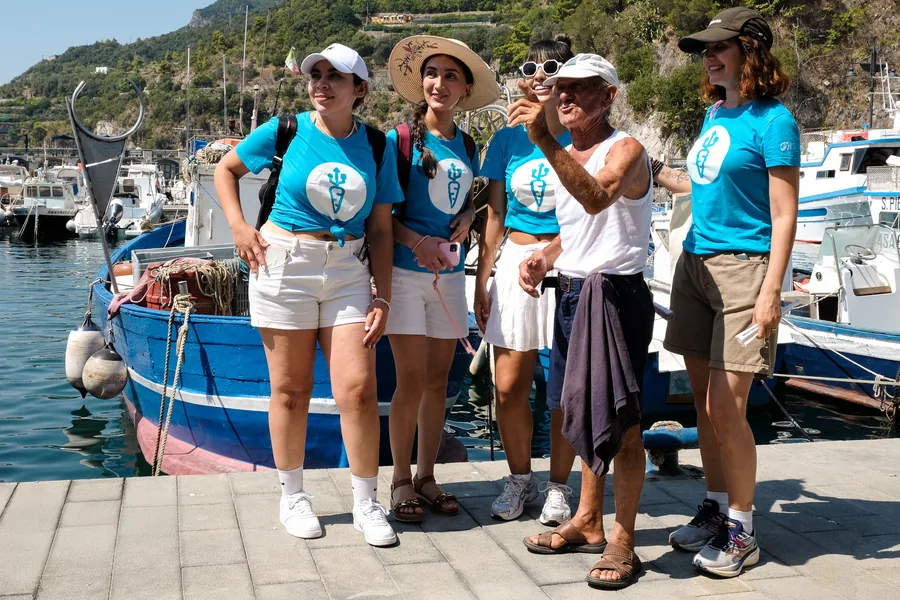
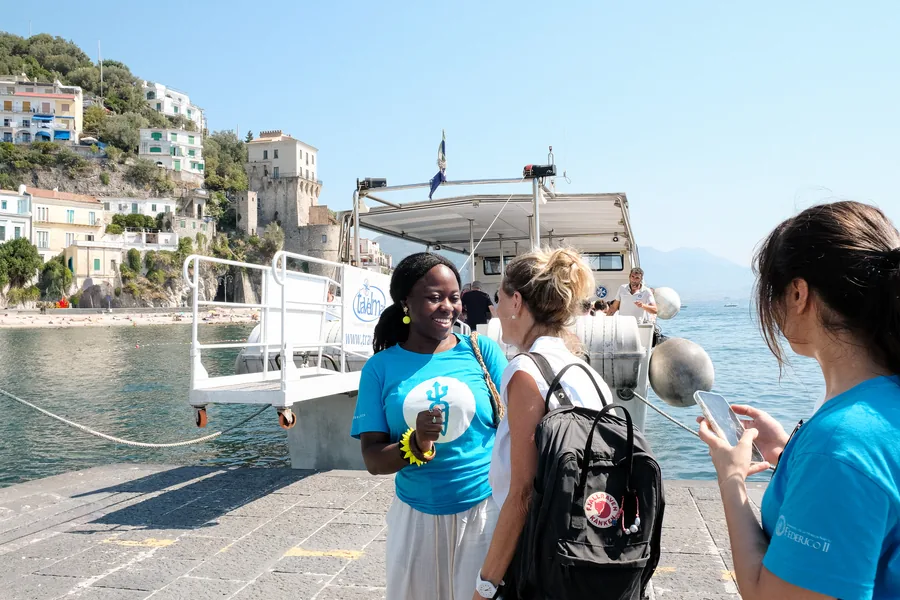
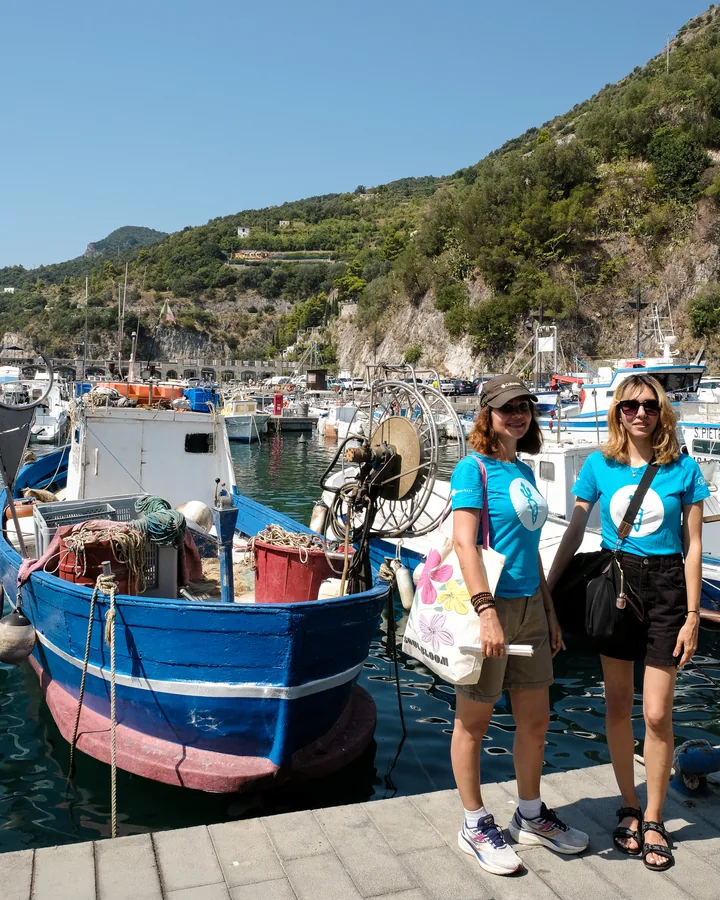
Maral Talati, a young Iranian scholar from the Rural Hack fellowship network, asked Alfonso Pellegrino, a fisherman with Cetara’s fishermen’s consortium associated with Miglio Zero Cetara, how many kilos of fish he brought ashore in a day. He said it might be fifteen, sometimes ten, sometimes twenty. He had told us he went out at four and returned at nine. As he spoke about his father and uncles, the idea emerged of a school where young people could learn to tie knots and go fishing with a purse seine. It was August 5, in a heat I can still remember, and we had arrived at the harbor with eighteen young scholars from different countries and disciplines. Zio Pasquale had welcomed us. Chiara Frallicciardi interpreted, pausing whenever an expression needed a gesture or an object to make it understood.
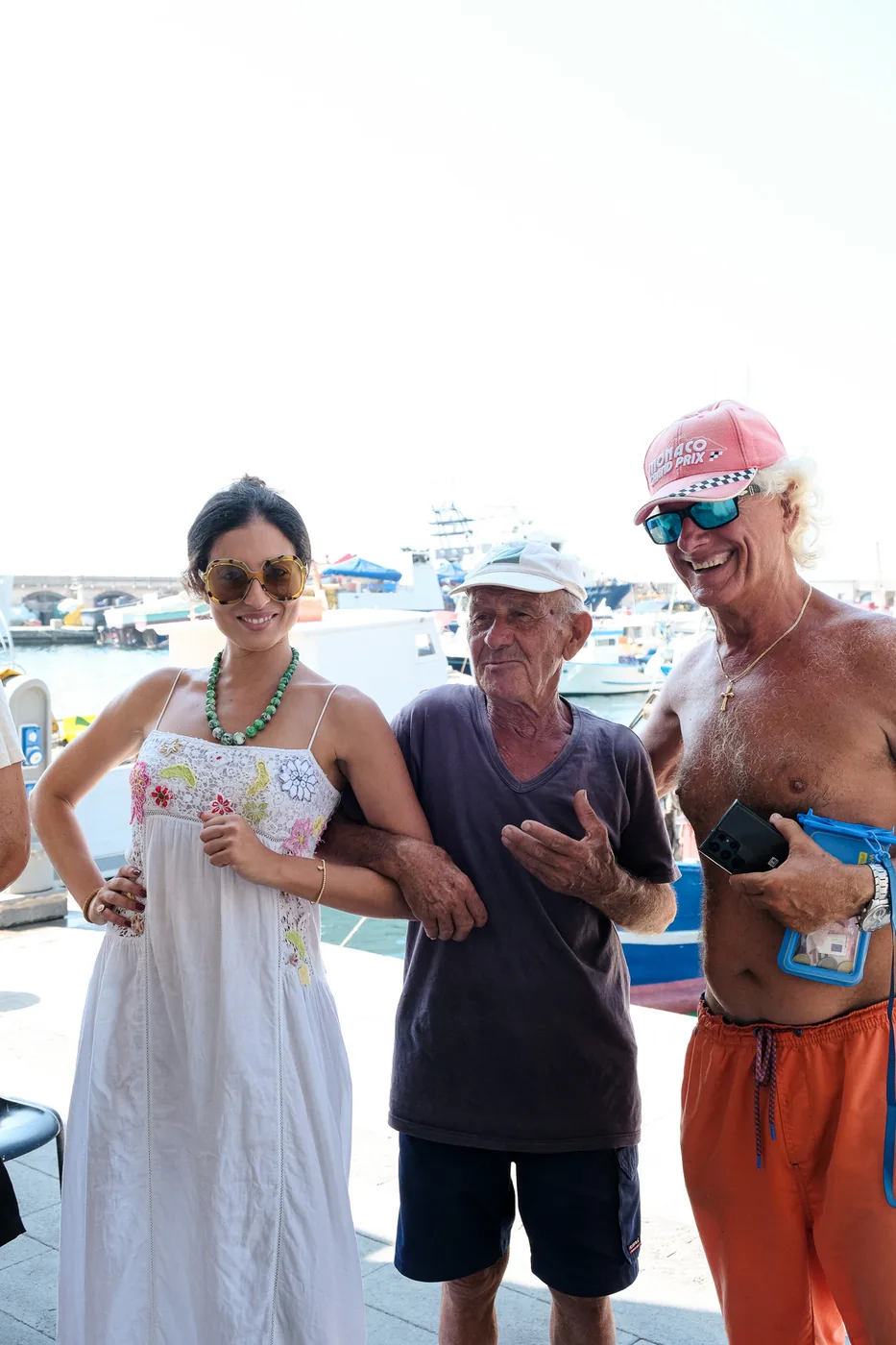
I return to that question for World Fisheries Day on November 21 because, in Alfonso’s answer, the weight of the catch eventually meets the question of who will carry on the work. How does someone enter this occupation, who teaches them, and under what conditions might someone still choose it? Those kilos belong to his experience, to the account he gave us that morning. Around that number, however, are relationships without which the work would become impossible. The school he imagines gives concrete form to a concern familiar to many food communities. Knowledge can receive recognition and public attention at the very moment when the material conditions for passing it on are narrowing.
In the reflections he shared after the visit, Parsa Salimi dwelled on the preparation of fishing nets. He had noticed how much work precedes the use of a tool that an outsider might imagine comes ready-made. That is a good reason to look for longer. When a purse seine closes beneath a shoal of anchovies, each person’s movements depend on everyone else’s. Learning to be aboard and to read the sea happens within a collective organization, at a pace a manual can only partly describe. If a crew breaks up, the skills its members retain preserve some of what the group knew how to do. Something else is lost in the separation.
Tradition includes this intelligence developed through working together. For it to continue circulating, people need time to teach, and others must be able to afford to learn. On the day we celebrate fishing, the possibility of entering the occupation deserves at least as much attention as its history.
The harbor within the landscape
Elina Heidari wrote that what surprised her in Cetara was finding a living, working village. Her words bring fishing and local knowledge back into everyday life, after their brief separation from the image one might have of the Amalfi Coast. Her observation matters to me because it concerns those of us who have known these places for a long time, too. Familiarity with their beauty can lead us to overlook the activities that helped shape it and still make these places habitable.
Cetara grew in the narrow space between the sea and the mountains. Fishing organized the village’s time and provided work for people who might never have stepped aboard. Once landed, fish passed through the hands of those who bought, cleaned, sold, or learned to preserve it. The harbor was where the community encountered a resource on which it depended and over which it had limited control. Relationships between people also helped distribute the consequences of that uncertainty.
The beauty of the Amalfi Coast has become an important source of income. The way that income changes the use of space deserves the same attention we give the landscape. A quay is a workplace, and a workshop needs people who can continue living close enough to reach it every day. When demand from visitors makes other uses more profitable, the continuity of these occupations also depends on how much power the community has over the future of its own places.
Thinking about that future, Glory Ishaku Mallo wrote that protecting local production should take precedence over increasing visitor numbers. Her reflection establishes priorities worth discussing. Cetara could welcome newcomers while maintaining an economy that continued to exist after its guests had left. That relationship can change until village life depends almost entirely on other people’s time. I want to understand how much fishermen, producers, and residents can decide how Cetara changes, which activities find room there, and how the value generated by their work is distributed.
Across the Mediterranean, productive activities have shaped many of the places we now wish to visit. The landscape retains the form of that work even as the work retreats. For years, it can continue to be sold as evidence of a life that has meanwhile become difficult to lead. In Cetara, the harbor and the workshops still allow us to meet the people living that life. I consider myself fortunate to know them and to bring others to meet them. That is also why I feel a responsibility in telling their stories.
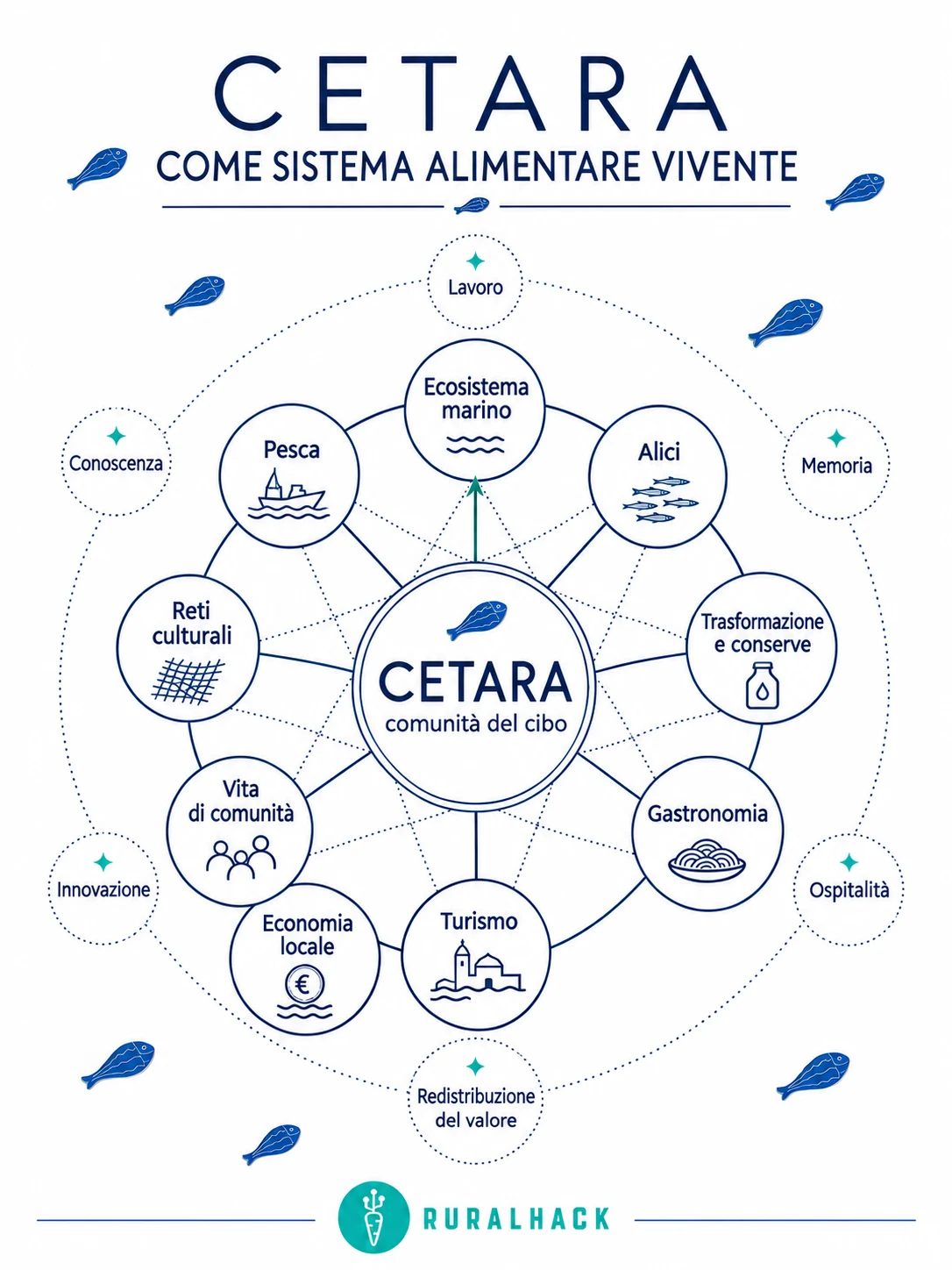
The map connects the marine ecosystem, anchovies, processing and colatura, gastronomy, tourism, the local economy, community life, cultural networks, and fishing. Labor, knowledge, memory, hospitality, innovation, and the redistribution of value run across the system.
The accounts of fishing and the costs of living
Asked who should benefit from the value created in Cetara, Ayushi Soni pointed to families and the wages of those who work there. She wrote that the wealth created through tradition should support local families. The move from celebration to the distribution of income is already present in the perspective of a young scholar asking what recognition of a heritage should mean for those who keep it alive.
World Fisheries Day allows us to take that question beyond Cetara. The FAO General Fisheries Commission for the Mediterranean’s 2025 report, based primarily on data through 2023, attributes 81 percent of the operating Mediterranean and Black Sea fleet and 13 percent of landings to vessels classified as small-scale fisheries. In practical terms, about eighty-one boats in every hundred belong to that segment, while their catch accounts for thirteen tons in every hundred landed across the region. These percentages describe vessel numbers and the weight of fish. Understanding income and working conditions requires further information. Purse seiners, including vessels using the cianciolo, are classified separately.
The report also identifies 52 percent of assessed stocks as overexploited. This refers to the fish populations examined within their respective fishing areas. The practical implication is that recovery efforts must continue despite regional improvement. For Cetara, this broader picture makes it all the more important to understand the condition of local resources and how management measures affect the people who depend on them.
These regional figures need to be read alongside different dimensions of coastal life. Catch volume measures only part of these activities’ contribution. Work aboard supports maintenance and processing, commercial relationships, and income for other families. When fish is scarce, processors buy less raw material, reorganize their day, and may have less work to offer. A restaurant changes its purchases and the prices of what it serves. Uncertainty travels along the supply chain, reaching people with very different capacities to absorb it.
Respecting the resource’s rhythms also requires economic conditions that make doing so possible. Marine protection and the future of the occupation meet in the lives of those who must earn an income from their catch within markets where they often have little bargaining power. On November 21, World Fisheries Day, celebrating a community such as Cetara means attending both to the health of the sea and to the working conditions of those who depend on it. If recovery requires fishing less or waiting, it becomes essential to understand who can afford that wait, and with what support. A community can know the sea intimately and still lack the means to face changes decided at scales far removed from its own experience.
Our day in Cetara gave us access to accounts and gestures, each with its own history. The words we heard are valuable partly because they retain the scale of an encounter. They help us ask more precise questions about sustainability and the conditions under which work can continue.
Time held in wood
Abdul Rehman Ukasha was struck by the containers that had been waiting for years in the workshop. In his reflection, he described his surprise at discovering the patience required to collect the liquid drop by drop. A visitor can arrive thinking of a finished product and instead find themselves facing the time needed to make it. Giulio Giordano showed us a vessel that had belonged to his grandfather. Through that object, he let us follow part of the work no longer visible in the bottle.
Anchovies and salt are arranged in layers inside wooden containers. A lid is placed on top, weights are added, and then comes the wait, accompanied by the ability to recognize what is happening during it. Giulio also described aging some of his production for years. Under the Colatura di Alici di Cetara PDO specification, maturation lasts nine months, after which further aging may take place. The designation was registered in 2020. Its fishing area covers the sea off the province of Salerno, within twelve nautical miles of the coast, while processing is tied to the province itself.
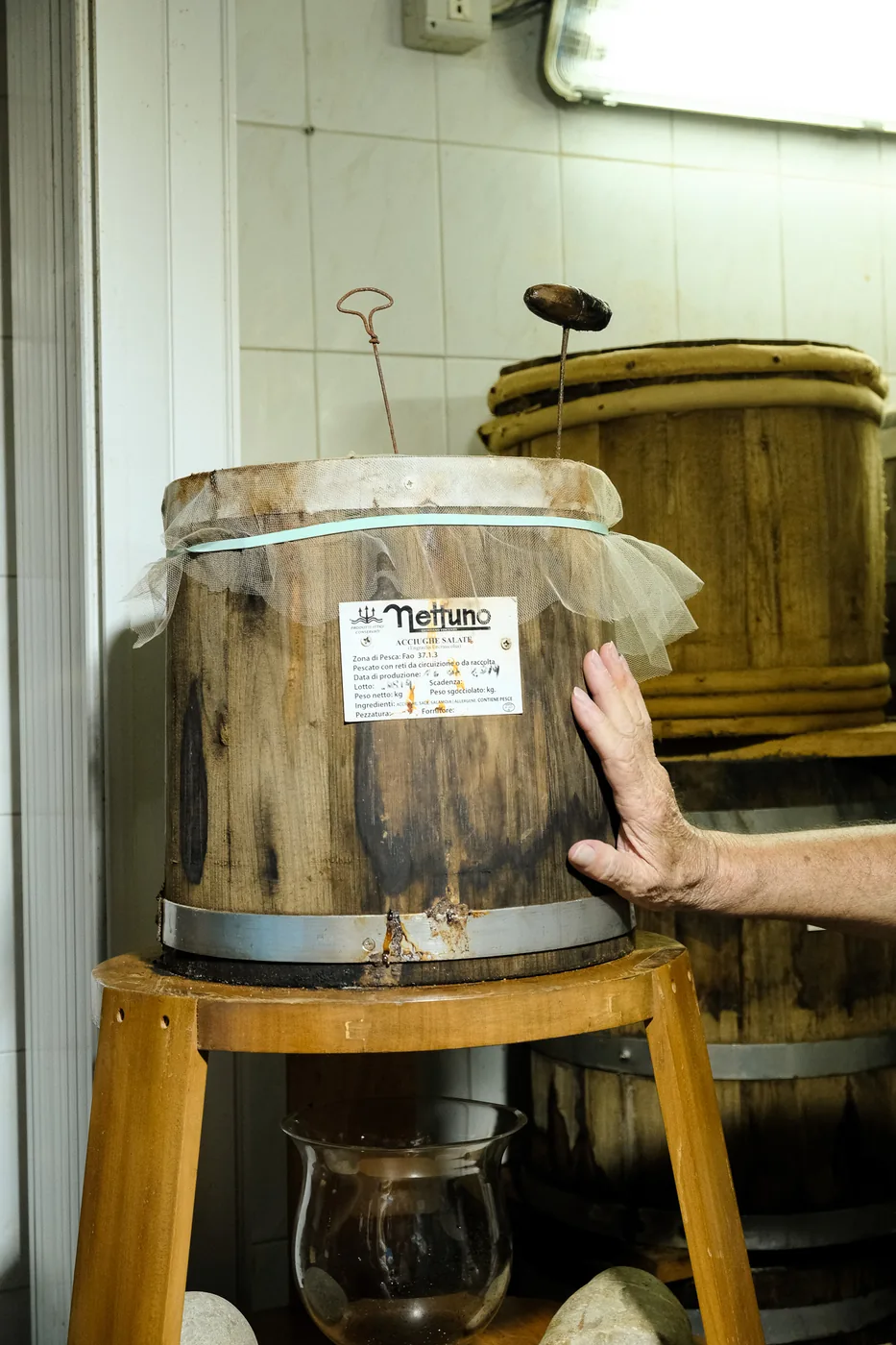
Anchovies spoil quickly and arrive in variable quantities. Preserving them in salt allowed families to free part of their sustenance from the urgency of the day. Preservation techniques also contain this capacity to act upon time, extending the availability of what nature provides intermittently. The reference to garum helps situate colatura within the long Mediterranean history of fish and salt, while following the changes in practices and the conditions in which they have been passed down.
Ayushi also paid attention to work in the workshops, to the hands preparing and carefully arranging the anchovies. The product that now reaches highly prestigious kitchens still depends on skills that can be compressed into the word artisanal, losing much of what that word ought to let us see. Preparation time, the effort of repeated gestures, and the ability to correct an error all enter into colatura’s value. Market recognition can return dignity and income to that work, provided those who perform it have a voice in the conditions under which its value is formed.
Anchovies were called poor people’s fish because they cost little and belonged to the everyday lives of families with less to spend. The value assigned to food also bears the marks of social hierarchies. A cuisine capable of drawing much from an ordinary ingredient can remain marginal for years, until the tastes of other publics and the attention of restaurants confer prestige on it. The people who kept it alive should be able to share in that recognition when it becomes bargaining power and the possibility of investment.
The anchovy’s composition also invites us to question the word poor. In CREA’s table for fresh fish, one hundred grams of edible portion provides 16.8 grams of protein and 96 kilocalories. It offers another way of seeing how price and social prestige can tell only part of a food’s value. When fish is salted or made into colatura, its composition and the quantities used change. Knowing a food system also means understanding these differences.
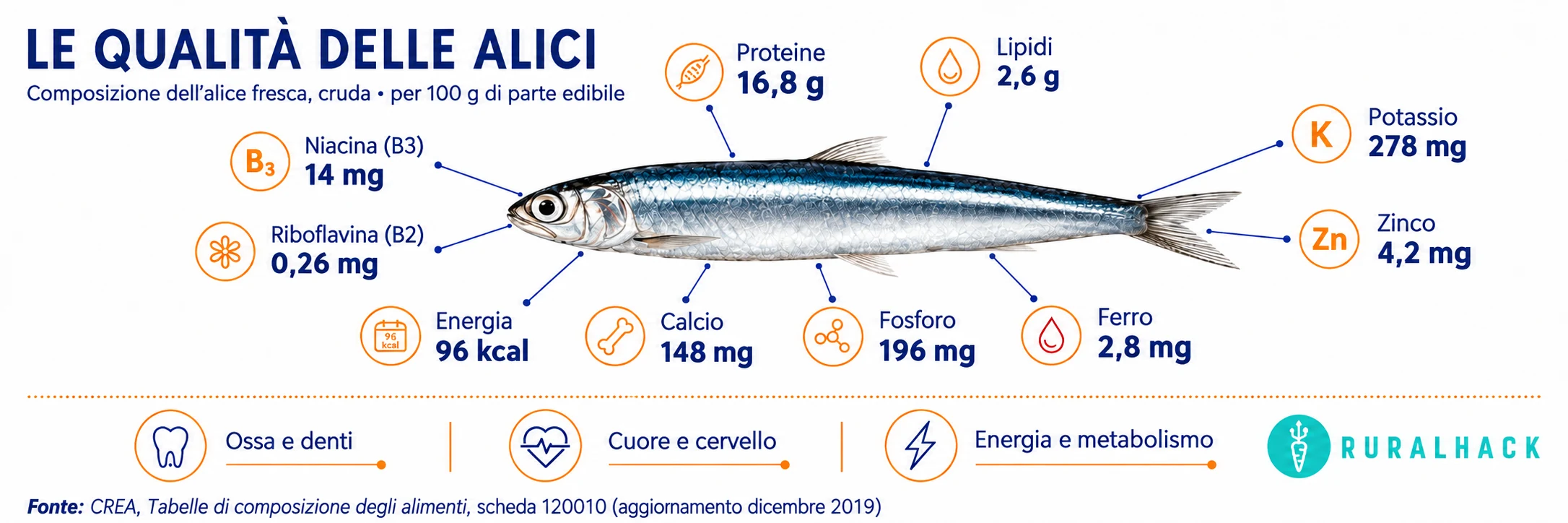
Per 100 g of edible fresh raw anchovies, energy 96 kcal, protein 16.8 g, fat 2.6 g, calcium 148 mg, phosphorus 196 mg, iron 2.8 mg.
What passed between the tables at Acquapazza
Reflecting on the visit, Glory connected colatura with food traditions familiar from her own experience, in which seasons are linked to rituals and shared memory. To me, this is one of the encounter’s most interesting outcomes. Something deeply rooted in Cetara becomes intelligible to someone from another history through a shared concern. How can we make what we have last, pass on its uses, and acknowledge the people from whom we learned them?
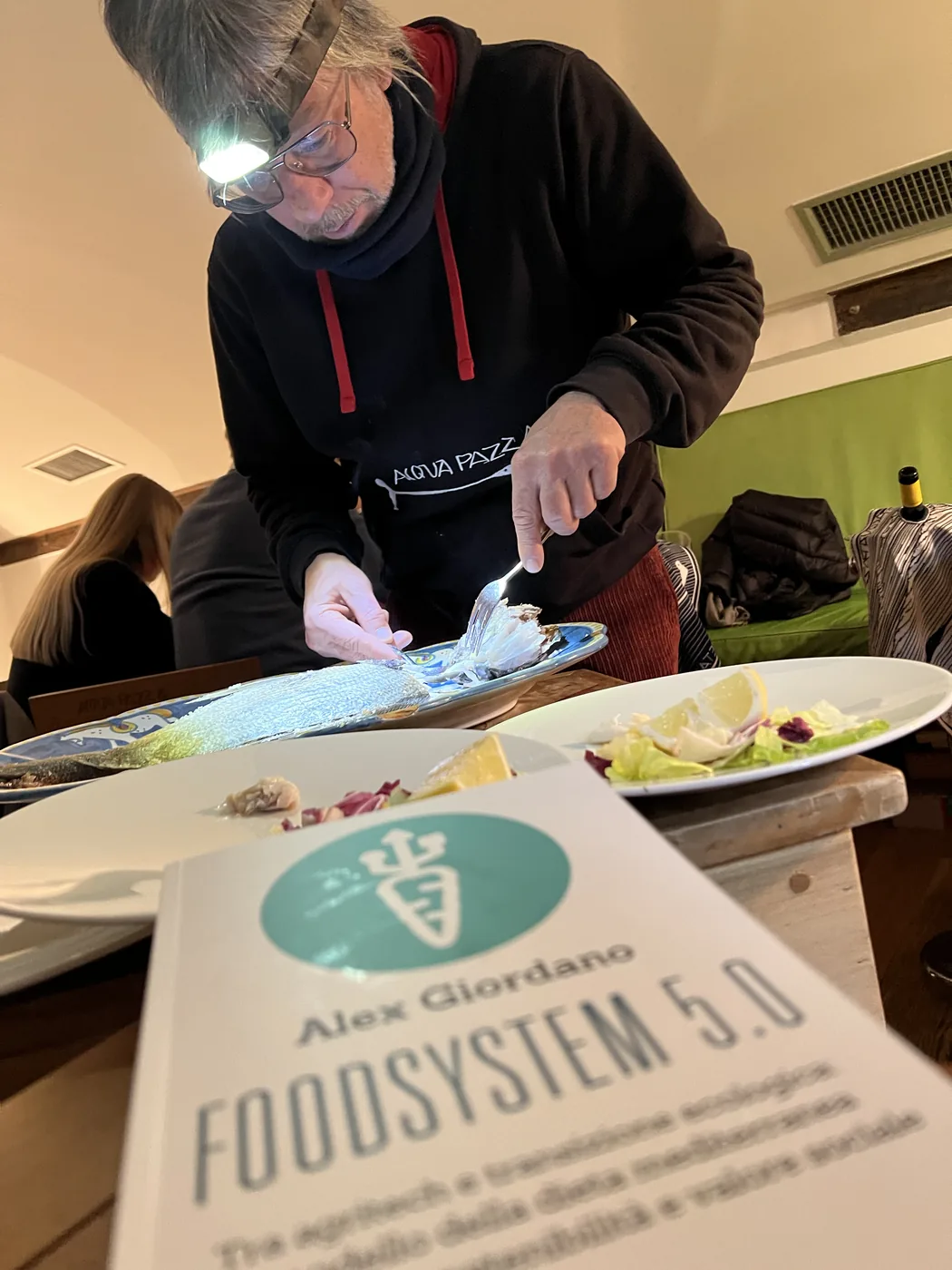
I have known Gennaro Castiello for a long time. At Acquapazza, I spent hours in conversations in which food led us to talk about the village, work, and the changes we could see around us. In the video, Gennaro remembers the three tables they had when the restaurant opened and the customers who began coming specifically for colatura. With his cousin Gennaro Marciante, he had recognized in that household condiment something that could interest chefs and people accustomed to looking elsewhere for gastronomic value.
Fishermen, winemakers, artists, designers, and scholars met around Acquapazza. Conversations continued beyond whatever occasion had brought each person to the table. Such places matter because they allow forms of knowledge that usually remain separate to enter into a relationship and reveal possibilities none could have developed alone. A place’s reputation also grows in these intermediate spaces, where a local experience finds interlocutors and begins to circulate while retaining its connection to the people from whom it comes.
Today, Gennaro has left the restaurant and, through Acquapazza Gourmet, devotes himself to the artisanal production of colatura, salted anchovies, and tuna. Many of the questions we discussed became part of my work on FoodSystem 5.0. A food’s success changes relationships among the people who bring it to the table. A higher price can create room to pay workers better and invest in their work. It can also be retained at stages where bargaining power is stronger. Those who helped build a collective reputation may discover that they have few means of turning it into an income.
Ayushi’s observation about families and wages returns to this very question. When we celebrate a food of distinction, we can ask what opportunities its success has opened for people wishing to continue working there. Value retained locally can become equipment, time to teach, or the chance to start a business. Through these consequences, giving value to a heritage acquires a meaning that can be discussed and assessed by the people who should benefit from it.
The perspective brought from elsewhere
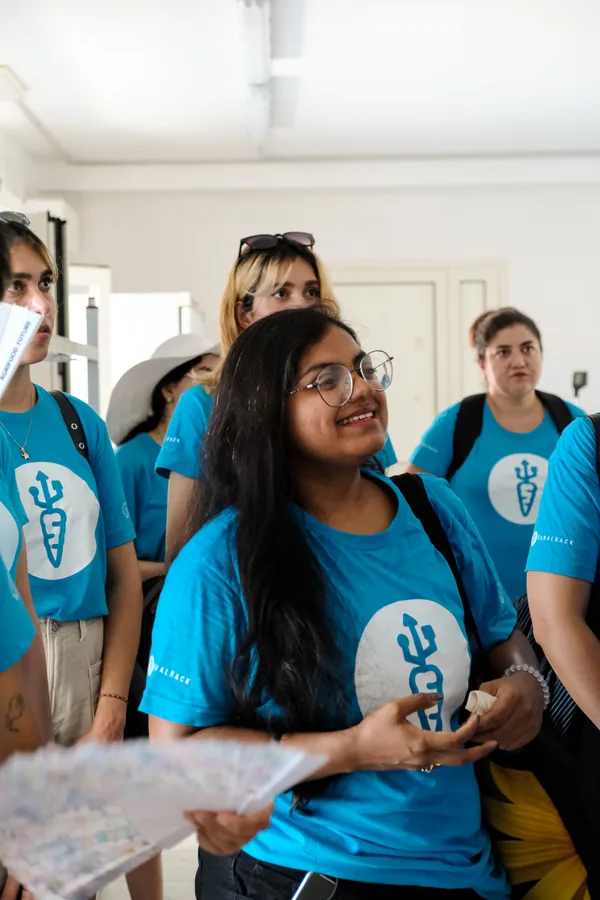
Before we left, I prepared a field guide for the fellows. I wanted to share something of the place and the people we would meet while leaving room for what they might see for themselves. Through Rural Hack, we visit territories in task forces of young scholars trained in different disciplines. Sometimes these encounters lead to longer work with food communities. The possibility of contributing depends first on the quality of listening, on a willingness to let a person or a gesture change the question one arrived with.
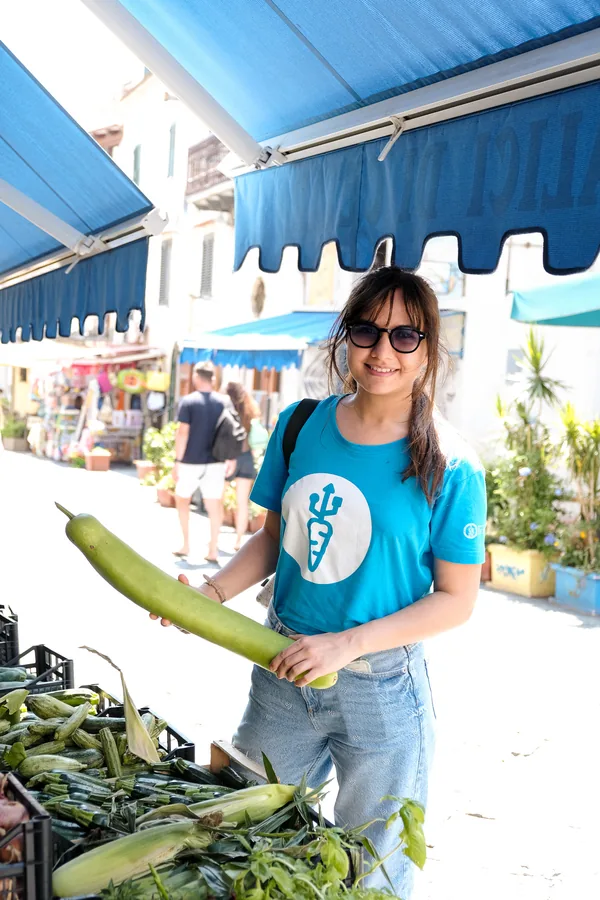
Parsa looked at the nets. Elina recognized a working village. In the relationship with the sea, Glory found something that allowed her to reconsider food practices familiar elsewhere. Their observations offer Cetara several perspectives on its own life. Someone who lives in a place may need another person to ask them to describe what habit has made self-evident. Those who arrive, in turn, need to encounter something that resists the categories through which they learned to look.
Sanaz Asadi, remembering the welcome she received, wrote that she had felt at home among people she had not known before that day. That feeling depends on work that can disappear inside the word hospitality. Someone gives their time, pays attention, and tries to understand what another person needs in order to take part. Chiara did that by interpreting for much of the day. Sometimes, for a word belonging to the trade, we had to wait for the gesture accompanying it. The possibility of knowing one another also depends on this willingness to pause.
I want the fellows to have room to say what they saw because their perspective belongs to the experience as much as that of the people accompanying them. What they notice can help us understand together how to work better with communities. World Fisheries Day can also help these questions travel among people living far apart who, after meeting, have another reason to care about one another.
Some of the fellows who shared their reflections on the day
The sea we bring to the table
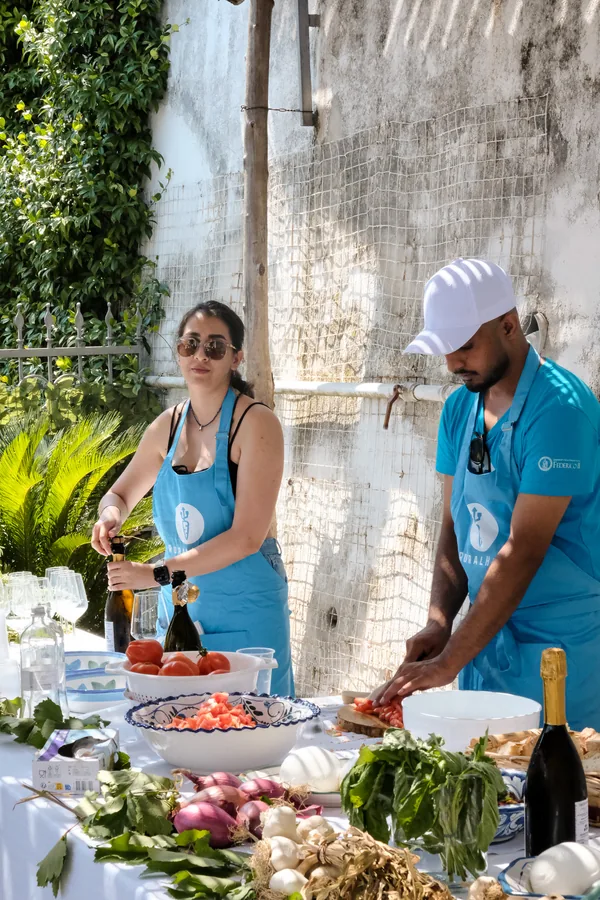
Another fellow remembered “especially the shared effort of setting the table and washing the dishes at the end.” Of everything she might have chosen, she returned to what we had done at Gennaro’s home. I was pleased because I had invited the fellows to enter Cetara as friends on a journey. In those gestures, the expression acquired a meaning each could experience. Preparing lunch meant taking on a small part of what made being together possible.
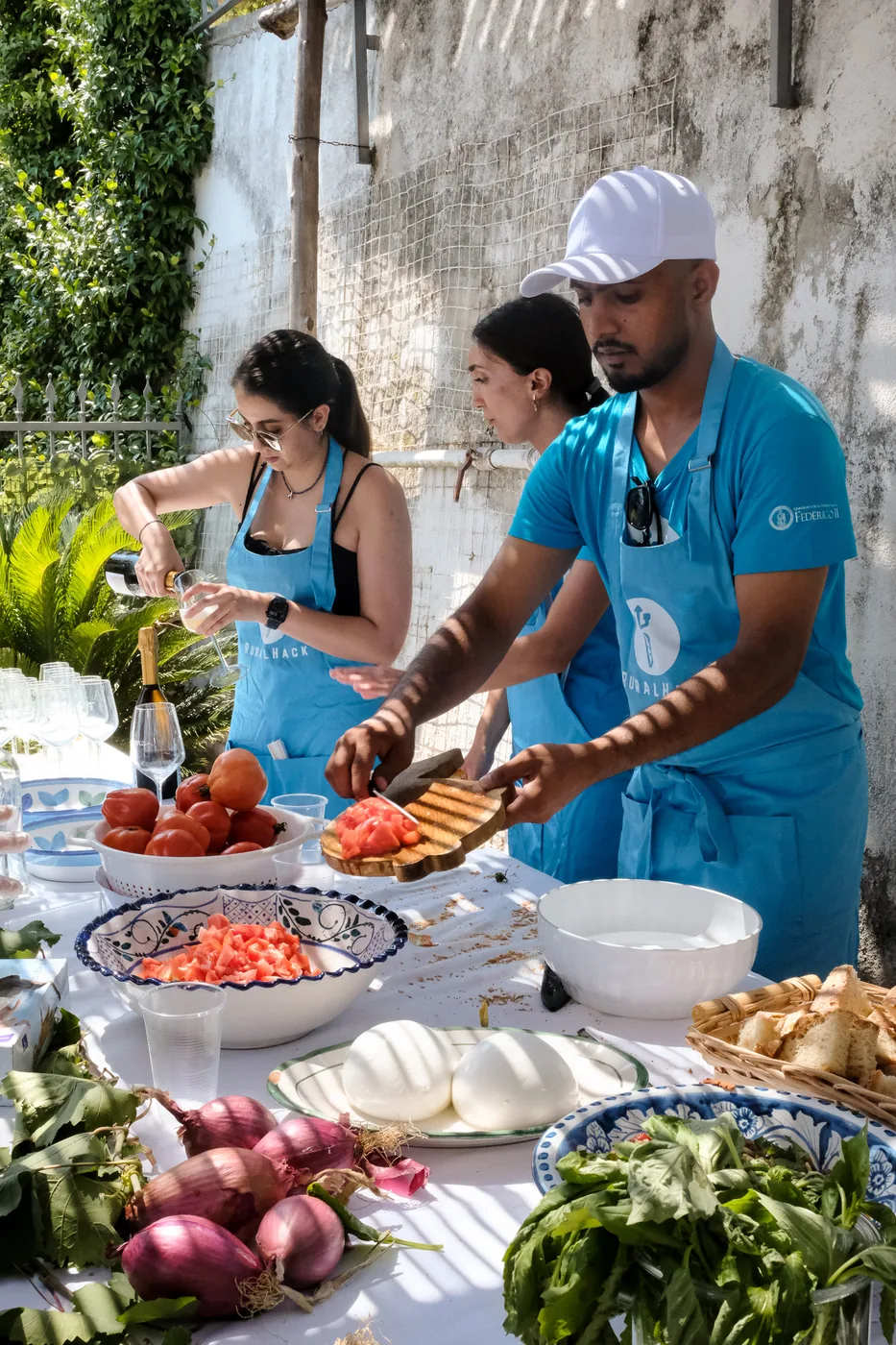
Spaghetti with colatura requires few ingredients and a sense of proportion learned through tasting. The fish is present even when its shape can no longer be recognized on the plate. After the morning at the harbor and in the workshop, that flavor carried other presences. The people we had met entered the way we ate and helped us recognize how food culture depends on relationships that begin long before the table and continue afterward.
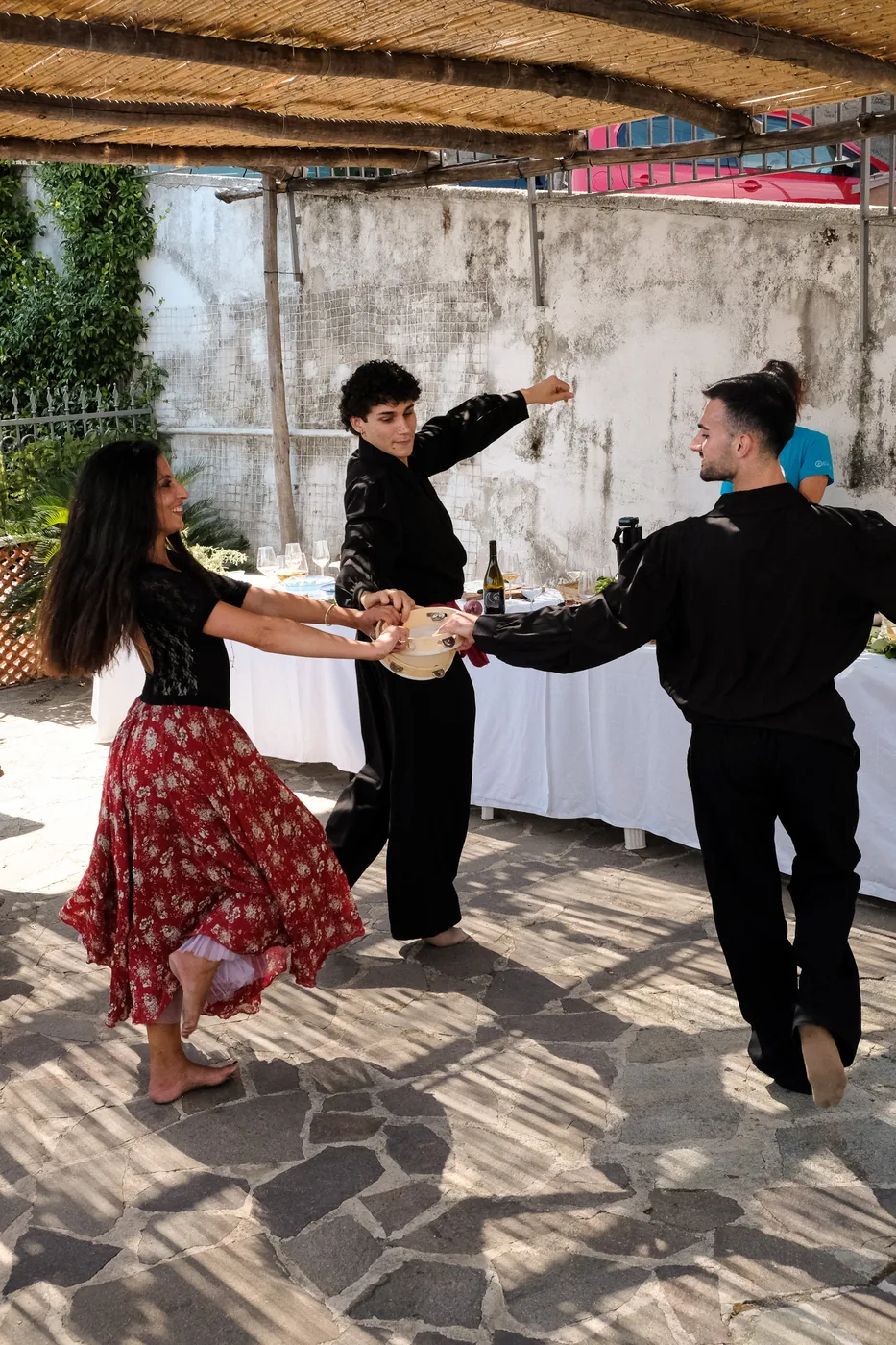
Then my dear friend Gaetano Genovese arrived, picked up the tammorra, and Chiara began dancing with her fellow dancers Mattia and Antonio. I remember the sensuality of that moment, its energy, and the pleasure of being together after the heat and conversations of the day. A fragment remains in the video of our day. Watching it, I think again of the trust required to let others enter something we value, accepting that they will also make an experience of their own.
A wish from Cetara
Cetara is one of the places closest to my heart. To the people who live and work here, I owe friendship, hospitality, and part of what I have learned to think about food. These conversations shaped me too, sitting at a table or listening to someone explain their work. Bringing the young people of our international network here was an act of love, a desire to share something precious and introduce people to whom, for different reasons, I feel attached.
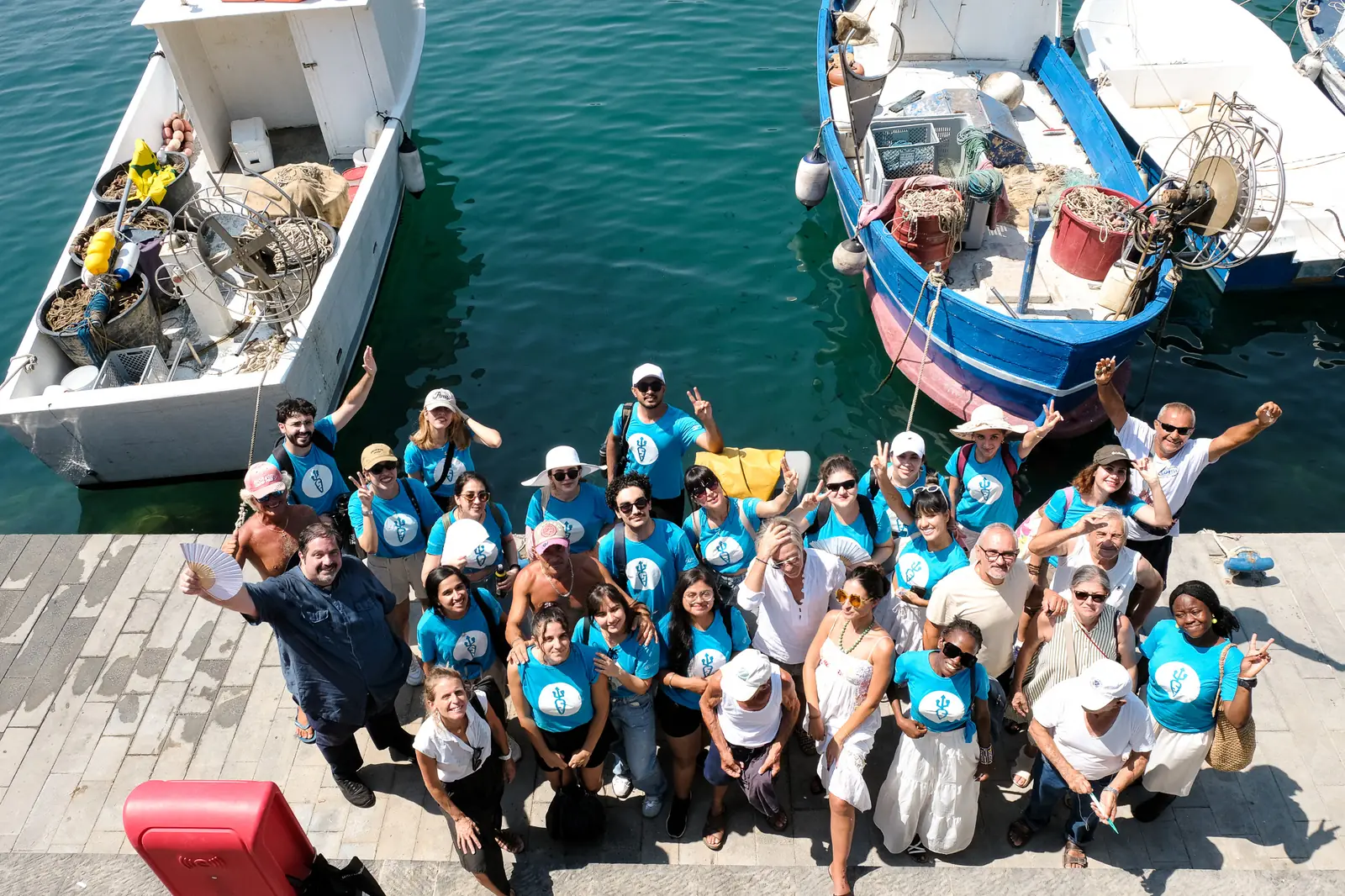
Rereading their reflections, I realize that the invitation also contained a request for help. I had hoped their perspectives might help us understand what future we could still build together for things we love and risk losing even as we learn to celebrate them. For anyone who has known a place’s generosity, its fragility touches part of their own life. You want to entrust it to someone knowing they will still be able to return, find people to talk to, and learn something that still has a use.
That is why I hope World Fisheries Day will be an opportunity, for Cetara and other fishing communities, to follow through on encounters. May Maral’s question still find someone willing to answer, and may Alfonso’s wish to teach meet someone who wants to learn, under conditions that allow both to live from their work. Between an occupation ending and one continuing lies a society’s capacity to care for the time of those who will come after us.
The sea has taught us how much each person’s life depends on what others do and on what no one can wholly possess. In Cetara, that knowledge still has voices, hands, and people to whom I can say thank you. My wish, on this day, is that the young people with whom I shared it may one day return with others, and that someone will still be there to welcome them by name.
Photos by Antonia Amato.