

In Italy one speaks of food often and willingly, it is one of the things that most intrigues tourists. The majority of us has, on food, an opinion, some form of expertise, memory, link, to assert.
But how often, instead, and with how much knowledge of the facts do we speak of agriculture? Here the frequency lowers by much and with it the interest on one side and the competence on the other.
If we try to approach this sector to try to understand something more of it, we are often overwhelmed by the quantity and by the complexity of the problems that afflict the sector of primary production, that of transformation, that of distribution and – not last – that of consumption.
The world of politics does not help: almost always the questions that concern agricultural production are treated only in the circles of the interested actors, with technical specialist registers that make those discussions substantially incomprehensible to the large public, assuming that they have access to it; alternatively the tones are those of the most superficial triumphalism (as often happens when one speaks of Made in Italy) or else it is a matter of equally superficial and passing flares of interest, when the news forces the institutions and the means of mass communication to deal with agriculture – usually on the occasion of some sector protest -, but once the emergency (or the novelty) is over, the interest also ends.
And yet it is of this that we speak, even without realizing it, every time we speak of food: of agriculture, of production, of sustainability, of income, of public health, of employment, of culture, of rights more or less denied to those who produce and to those who consume.
It is worth the while, then, to try, together with three experts, to give a concrete vision of the food systems that would be needed in Italy and not only: a chat on the so-called Food Policies, or Policies of Food. Those that in English are called, precisely Food Policies and which, as we do in our daily chats, start exactly from that which we eat, but unlike our chats do not stop there, rather, they expand involving not only all the actors of the supply chain, but also the many institutions appointed, besides the world of research and of education.
The three experts who have accepted to participate in this reflection are:
- Monica Di Sisto, journalist and expert consultant in international trade and vice-president of the Fairwatch observatory on world trade and on climate;
- Antonio Onorati, farmer of Associazione Rurale Italiana, member of the European Coordination of Via Campesina and honorary president of the Centro Internazionale Crocevia;
- Claudia Paltrinierifounder and president of Foodinsider.it, web platform dedicated to the world of collective catering. Foodinsider is accredited as a national observatory on school canteens and organizes various initiatives to promote a healthy, correct and sustainable diet.
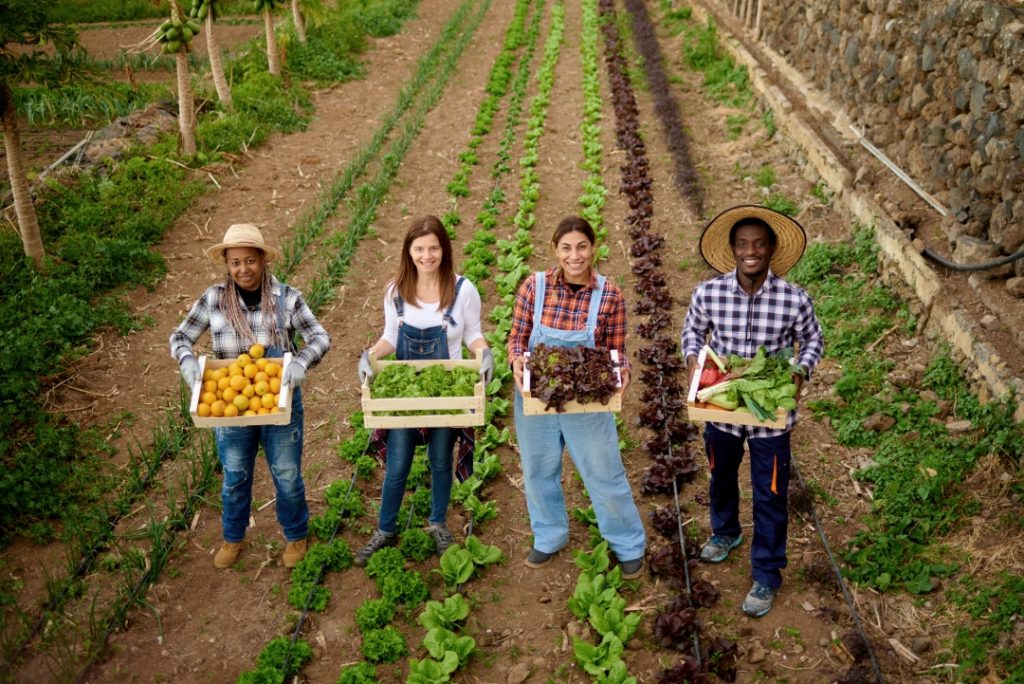
Which are the food policies that would be needed in this Country and that according to you are immediately achievable?
Let us begin with a daydream: if you could decide the political agenda of the Italian ministry of agriculture, obviously also with the power to concretize the proposed measures, which guidelines would you indicate? Or rather: which are the food policies that would be needed in this Country and that according to you are immediately achievable? Antonio, do you start? It seems right to me to start from who produces:
ONORATI Here, let us start exactly from this: the starting point of any agricultural and food policy, both at national level, and of the EU must be the recognition of the existence of “diverse” agriculture. Or at least of two large typologies of agriculture: one is characterized by a strong company capitalization, in search of profits that remunerate the invested capitals. This is necessarily a highly specialized agriculture, which functions on the basis of monocultures and with a use of dependent manpower in continuous reduction both numerically (recourse to contract work) and relative to the wage mass borne by the farm. Many examples are seen in the livestock sector, but not only.
The other, instead is that of the farms with high intensity of work, often diversified, not only within their own production plan but also with sources of income collateral to the agricultural activity or totally external. If I could decide which among these two agricultural models to support with public money I would keep in mind that the ecological transition is possible thanks to the intensity of work to dedicate to the care of the land and to the relationship between this and the production that one wants to obtain. Producing with nature and not against it is possible only if the work, competent, attentive, is capable of producing and realizing the processes of adaptation and contrast to climate change. The result – normally – is a raw material of better quality fundamental to obtain a food product of quality.
It is necessary therefore to give space and support with public funds that in your book you call “the peasant economy” which finalizes the productive result to the remuneration of the invested work. Monica, do you agree?
DI SISTO:
I agree, and exactly to be able to wisely direct the public money to the incentivization of an agriculture “of the second type”, or rather rooted on the territories, diversified and at high intensity of work, I think that first of all a public evaluation of the production, of the transformation and of national consumptions would be needed, crossing all the various data dispersed in the different research entities, to understand how to strengthen internal consumptions, and starting from which food policies, centering on an infrastructuring of City Food Policies, on the model of Milan and Rome, using the lever of the local municipal markets, of the farmer markets, and of public purchases.
I interrupt you because I already know that on the question of public purchases Claudia pricks up her antennas…
PALTRINIERI
Exactly! Because here the school canteens, of which I deal with Foodinsider, become strategic as an engine of food policy: they are not only social service, but a lever to change behaviors, stimulate the local economy, support the ecological transition and promote social cohesion.
Food is the meeting point between health, environment, culture, economy and social cohesion. Every food choice expresses a model of society: the way in which we produce, consume and share food affects the quality of life, the well-being of the communities and the sustainability of the planet.
Translated onto the school canteen, this vision shows how the service can become a strategic pillar of a national food policy capable of orienting the food system in a sustainable way. The canteen is no longer a simple accessory service or a line of expense to be compressed, but a high-impact public investment — economic, educational and environmental — and a true social infrastructure that generates shared value and strengthens the bonds between school, territory and citizenship.
In Italy there have followed one another normative commitments that push public catering toward a true ecological transition: the Decree on certified organic canteens (2017), the Minimum Environmental Criteria (2020), the Guidelines for school catering (2021) and the new LARN (2024). All go in the same direction — to shape the canteen in a sustainable way — but, although coming from different ministries and witnessing a shared sensitivity, a unitary direction and a long-period vision is still lacking.
In the last ten years our investigations on school menus show that many Municipalities have already translated the Minimum Environmental Criteria into concrete practices: more local ingredients, seasonal menus, lower recourse to red meats, greater enhancement of legumes and a wider variety of whole grains and vegetables. However, alongside excellent canteens that set an example, there are others still stuck at standardized models, held back by lack of resources, of competences — cultural and technical — and, above all, of vision.
Instead it is exactly here that the challenge is played: thinking of the school canteen as an integral part of a national strategy for food means putting back at the center the relationship between nutrition and citizenship, recognizing that the way in which we nourish the smallest ones tells the vision of the future that the Country chooses to build.
To do this there is needed the constitution of a direction for the elaboration of the national guidelines which must be entrusted to an interministerial body (Economy and Finance, Environment, Agriculture, Health, Education) that works together with the main stakeholders of public catering (Regions and Municipalities, ASL/hygiene services, school managers, representatives of canteen commissions and family associations, unions, third sector).
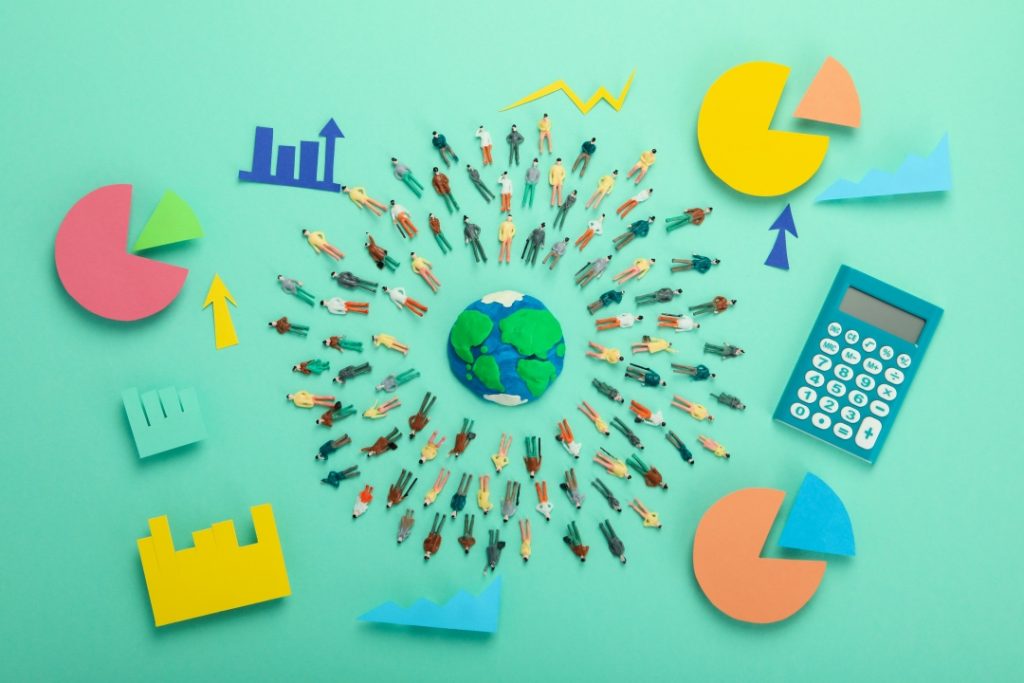
The necessity to integrate data
It would be already a good step forward if it were understood that dealing with food must be an interministerial question. Monica, we had left off at the investigation for the evaluation of production, transformation and consumptions and at the necessity to integrate the data that today are fragmented.
DI SISTO
Here, I would accompany this action with the analysis and the qualification of agricultural income, of the company and of the workers, agricultural and agro-industrial, evaluating the possibility of a compensatory integration of ecosystem services rendered to their own territories.
A third action, not postponable, is a mechanism of protection of producers from speculations and excessive price drops: there exist virtuous experimentations of a private type on the negotiated price – from Filiera Italia to the fair trade schemes – which must be generalized with public intervention and, in my view, a definitive judgment on the role of the local commodity exchanges, which determine the prices of important cereals starting from wheat, is no longer postponable. Is the market-based model truly the one that ensures food security and resilience in a complex time like this, or does it fuel concentrations and speculations? The choices of food policies of a country depends on the answer that is given to this question.
On the question of income I believe that Antonio has very useful information to clarify the picture even better.
ONORATI
In Italy, as in Europe the small companies (those up to 10 hectares and/or with an economic dimension that does not exceed 25 thousand euros of gross saleable production) are the absolute majority as testimony of an extraordinary capacity of resistance, considering that they receive nothing or crumbs of the financial support of the European or national public policies.
Then there are the structural limits. None of us has a pauperist aspiration. It is necessary to increase the size of the companies that have a dimension inferior to 5 hectares, it is necessary to multiply the total number of the companies in Italy and in the EU to fight both the aging of the sector and the limited productive capacities of the small and medium companies. In Italy there no longer exists a control of the market of agricultural land nor are there effective measures of safeguarding the agricultural use of the soil. A new redistributive agrarian reform of the use of the land is urgent and necessary, in line with the dictates of our Constitution. As well as a national legislation that blocks the consumption of agricultural land by completely reviewing the legislation relative to expropriation “for public utility”. An example of possible legislation is the proposal advanced by ECVC (European Coordination Via Campesina) of a new directive that favors access to the use of the land and guarantees its agricultural use.
The Green Deal and the Farm to Fork have become useless?
It seems to me that the agenda, to remain at national questions, is already rather dense. However, when one speaks of agriculture one must keep in mind that we are part of the European Union and therefore also on this plane we must try to imagine the food policies that we would want, or at least to identify the main problems that today are before our eyes and not always on the tables of politics. The Green Deal was “born old” and the strategy that concerns the agro-industrial [sector], the Farm To Fork, gave signals of fragility right away. Is it truly all inapplicable or useless? Can we save some little piece of it? Which are the most urgent restructurings? And in any case: at what point are we with that type of vision that aspired to the realization of sustainable food systems in Europe but without damaging third countries?
ONORATI
Certainly, the national vision is not enough. There are many other elements that require radical interventions, like the reorganization of the internal market of the EU, a policy of non-tariff barriers to counter neoliberal policies by protecting the internal market with barriers built on the quality of agricultural raw materials and of the food products that come from the global market or that European companies intend to export on the global market (fight European dumping in developing countries). Change strategy relative to innovation seen by current public policies as “digital technological jump” and return rigidly to a system of evaluation of the impact of innovations on agricultural systems on the basis of the precautionary principle. In particular for the sector of seeds and of multiplication materials (also the animals, then) maintain the current legislation relative to the old GMOs also for the new GMOs (NGT), forbid the patenting of characters and of digitalized information (DSI) in strict application of art 12 of the ITPGRFA.
However, to concentrate on your question, the approach can only be that which I have already described before: the “green deal” and, within it, the strategy “farm to fork” which concerns food systems, try to place remedy to the impact of industrial agriculture, but the true solutions to the problems posed by industrial agriculture are found in the promotion of a true peasant agroecology, which takes account not only of the ecological aspects of the production of food, but also of the social, cultural, economic and political ones. This requires a multiform and complex approach to agricultural systems in their whole, with the differences that exist within them and with elements of irreconcilability between peasant economy and industrial agriculture. That which is necessary cannot be a list of good practices.
An example to clarify: the European Commission presents carbon farming as a miraculous solution to face climate change, without recognizing the structural limits and the great danger that it represents for society in terms of food sovereignty and of inaction in the face of climate change. The foundations of this mechanism do not allow to solve the climatic problems: impermanence of the storage in the soil, impossibility to calculate such storage in a reliable way and almost zero global impact. Permitting private companies to pay farmers so that they compensate their emissions with carbon farming activities, will give to those companies too much power and they will not be forced to really reduce their emissions, or rather to modify their way of producing. This approach based on carbon-based agriculture strengthens the imbalances in the agricultural world: small and medium farms disadvantaged, purchase of lands by external actors, dependence on punctual and unfair payments, etc.
These “innovative” policies are in effect condemned to be sacrificed, in fact they have never taken the form of a directive or a regulation, they remain a political positioning – incomplete – to which national governments, in the drafting of their Strategic Plans of application of the CAP should have drawn inspiration. We know how it ended: the large agricultural organizations have demolished the rare measures that here and there have appeared in the community devices so much so as to return to use of chemical pesticides, to deregulation of NGT products (deregulation that one wants to expand to the whole biotech sector) or, with the excuse of the lightening of the bureaucracy of the CAP, in the programmatic document of the next CAP many measures of environmental conditionality become “optional”.
The central and conclusive sections of the programmatic document concern the new measures for farms, the “green” and innovation criteria, the “imposed” use of NGT biotechnologies. The Commission defines the new CAP as a policy «more targeted and less punitive», aimed to support farmers in the ecological transition, not to penalize them. Translated: we reward those who want to apply “good green practices” and let the others continue to do damage. No obligation to apply mandatory measures to advance in the ecological transition.
It must be said however that this forecast document of the new CAP will be discussed in the European parliament in 2026 and approved in 2027, there is time to counter it.
So everything to be redone? The Green Deal has no more hopes of recovering?
DI SISTO
The Green deal tried to conjugate the globalized market economy old style with the food, environmental and social security of our territories. I do not believe it is possible in this multipolar phase: for a long time the developing Countries, in the WTO ambit, have been asking for the possibility to use public stocks and the stop to exports in case of excessive fluctuation of prices, so as not to expose the poorest to rises that make base food commodities inaccessible. The USA, EU and the large countries have always opposed these instruments, but China, counting on its own dimensions and international weight has continued to practice these and other analogous public policies. The United States has contributed to build the rules of competition of the WTO to include among the admitted instruments their own anti-dumping measures and of subsidies to production. Europe, contrary to everyone, proposed itself as one among the most accessible and liberalized markets in the world, using as protection barriers of the internal market the non-tariff ones: food safety measures, social clauses and, with the Green deal, environmental conditionalities from the field to the table.
But by doing so it put itself in a trap by itself: if you do not give yourself the instruments of public policies of government of prices and of productions that all the others have, because you play the head of the class of the free-marketeers, the companies that operate in your market ask you to compete by saving on environmental, social and quality rules.
So for what concerns the Green Deal I would not look at the single measure but at the general model, considered that with framework-laws that accompany the policies of rearmament, the so-called Omnibus, a large part of the qualitative conditionalities of products and productions that we took for granted like the Good agricultural and environmental conditions (GAEC), even in protected areas, is being massacred.
Do we want to eat polluted food to allow companies – even foreign ones – that operate in our market to compete, rather, to adapt downwards to the standards of the multinational groups that have always judged our European Precautionary Principle a non-necessary obstacle to their business? Do we want to renounce even the basic request that “they do not create harm” (do not harm?). They are choices, and with the new CAP and the Omnibus it seems clear to me that the European Commission and Parliament are already choosing, perhaps we in Italy are the ones not being conscious of it or pretending nothing is happening.

The entry of Agriculture into the WTO has forever distanced it from the territories?
And we have arrived at the planetary dimension. It happens often when one speaks of agriculture it is like a matryoshka that forces it to pass to the wider vision. It comes therefore to ask oneself if it still makes sense to speak of European policies in a context of globalization of transactions, in a season of unilaterally decided duties and of treaties like the EU-Mercosur and all those that preceded it. Which policies not so much of protection as of prudence should be implemented at this moment and do the technical instruments exist to implement them? Or with the entry of agriculture into the WTO, over thirty years ago, have we substantially renounced the idea that agriculture must have to do first of all with the specificities of the territories?
DI SISTO
The WTO, which before Trump had threatened to defund, is the only international organization to have been refunded by the United States. The same support is being guaranteed by the Brics, China at the head. It is proof that, even in the current commercial brawl, all the large global players are conscious that a perimeter of rules for everyone is necessary so that exchanges continue to flow.
The point, in my opinion, is that, by choosing the direction of the WTO and its rules, especially for agriculture, one continues to persevere on a model of free market that leads to the compression of production factors, starting from raw materials and work. This has created the current polycrisis on which the question of arms has grafted itself. In the face of the enduring social and environmental crisis that has structured a middle class with scarce purchasing power, with the consequent potentially permanent economic stagnation, instead of pivoting on rights, at least on the essential package guaranteed by Conventions and UN agencies, the path of the war economy is attempted: a palliative that risks, however, to drug the GDPs of few nations diverting toward the production of death those funds that would be needed by us to straighten the climatic parabola.
Also the proliferation of bilateral treaties of liberalization is a special effect: any good entrepreneur knows that the planet has objective limits, it is not an infinite resource, and the number of the rich who can ensure for themselves export goods reduces before one’s eyes: there exist no longer new markets to be discovered, if not on Mars.
Therefore one can choose to change the model, or one can continue to earn in vintage ways, profiting at the expense of the environment, consolidating a new class of slave workers and replacing the resistant human factor with a docile AI, without possibility of future. I believe that a phase of redistributive planned economy, that finds new consensus around base principles like precaution, antitrust, territoriality, environmental, food and social security, in the widest perimeter possible, or rather that of the United Nations – even with all the limits of this institution – and certainly not that of Bretton Woods, is not postponable, on pain of the sharpening of the violations of rights and of current conflicts.
Certainly, if this new way of reasoning became the guideline, at that point one could begin again to ask that agriculture leaves the WTO. What do you think about it Antonio?
ONORATI
The idea that one could apply to the trade of agricultural products the same rules that are applied to the trade of the spare parts of the automobile industry, failed long before the current war of tariffs. In fact at the WTO the agreement on agriculture remains essentially on paper.
It must be noted anyway that the world trade of agricultural products concerns a modest part of the total production. One of the most traded commodities are cereals. According to FAO data (3.10.25) only 16% of the total production ends up on the world market. Therefore it is best to downsize the weight that we give to international trade where the only true problem is represented by the transmission of global prices negotiated with futures in the exchanges of Paris and Chicago on the prices paid by consumers in internal markets, as Monica rightly said responding to the first question. Transmission is evidently abusive given that the prices of global trade concern a residual part of agricultural production. Why must the price of pears be connected to the prices of those few pears that travel in the global market? Why is the price of flour anchored to the international price of wheat?
The policies of “protection” of internal food markets are not a scandal if the measures are not tariff but barriers defined through high standards of quality (environmental, social, sanitary, etc). Evidently the technical instruments exist for the EU, in particular way, since it is the most important operator on the global agro-food market (first importer, first exporter) and it could – adopting the logic of the “Trumpian” negotiation – impose quality standards both to export and to import. But it does not do it due to the total subalternity of the Commission and of the Parliament to the logics of a fistful of European multinational companies and in the respect of Atlantic loyalty and of neoliberal ideology.
Claudia, the focus of school canteens is only apparently far from the questions of intercontinental relations. The multinationals that govern the world of food, are the same ones that supply so many of the ingredients, when not of the finished products, that we find again in the canteen. Do even the menus of our schools suffer from the European and international political trend?
PALTRINIERI
Yes, but the strategic question, in this ambit, becomes the public administration, from which decisions and purchases start. In the current global context, it has sense to speak of European policies if we start to really use the instruments already available for concrete missions, starting from Green Public Procurement in school canteens. This approach allows to raise the standards for everyone and to mend the pact between school, territory and supply chains. Ten years of Foodinsider surveys confirm it: it works when the governance is public, the criteria are clear and the performance is measured.
In a world of global exchanges and “jerky” duties, the difference is made by the European instruments that act on public demand, on market rules and on environmental/social protections. School canteens are an immediate field of application: when public tenders ask for healthy, traceable and low-impact food, they really move the markets (not only the menus). The last 4 Foodinsider reports have highlighted the concrete impact of the Minimum Environmental Criteria: where the criteria enter into the tenders and into the management of the service, organic, plant variety and links with the territory increase; where they remain “on paper”, progress stops.
Therefore at European level one should use, strengthen European GPPs supporting them economically in every single Country.
Every euro invested in the school canteen – and here, regarding urgent and achievable policies, I include also the investments necessary in training of all the actors involved – generates public value. A value that translates into health for the users, social cohesion for the communities and sustainable development for the territories.