

A bright, warm, and intense day. A crossroads of stories, knowledge, and territories. A meeting between those who study the future and those who, every day, strive to build it in practice. It’s difficult to summarize everything that happened during the WFF Italian Chapter‘s visit to the Technological Center of the Federico II University of Naples, but we’ll try. We understand that certain encounters, rather than being recounted, should be experienced.
Where Cirio once was
The first moment of the day had a sense of roots. Professor Domenico Accardo, director of CeSMA (Advanced Metrological Services Center), welcomed the 30 young international scholars (from Vietnam, Africa, China, Iran, Sri Lanka, and other countries) with enthusiasm and great empathy. He went beyond an institutional greeting, tracing a true territorial genealogy of innovation.
The San Giovanni a Teduccio Technology Pole stands on the site of the former Cirio factory, one of the most iconic industries in Italian agri-food and Mediterranean exports. That site once produced tomatoes destined for markets around the world: a production chain that spoke not only of food, but also of local identity, work, the economy, and collective dreams.
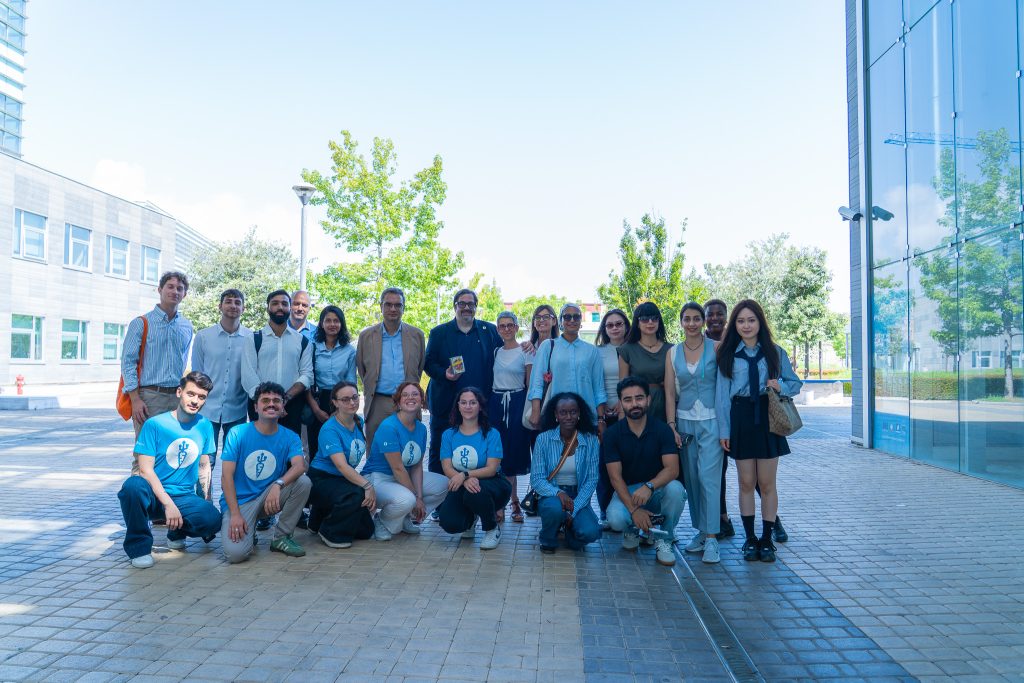
Transforming that area into an advanced center for technological research and development means not breaking a thread, but weaving it in new directions. It means recognizing that engaging in situated science—which begins in the local area and produces impact—is one of the most radical and necessary actions today.
A thirst-quenching research
The tour then continued through the CeSMA laboratories, starting with that of Professor Marco Trifuoggi, the Chemical Laboratory for Environmental Measurements (ACE). Among the many activities presented, the UNINACQUAM project, an advanced platform for the sustainable management of water resources, was particularly impressive.
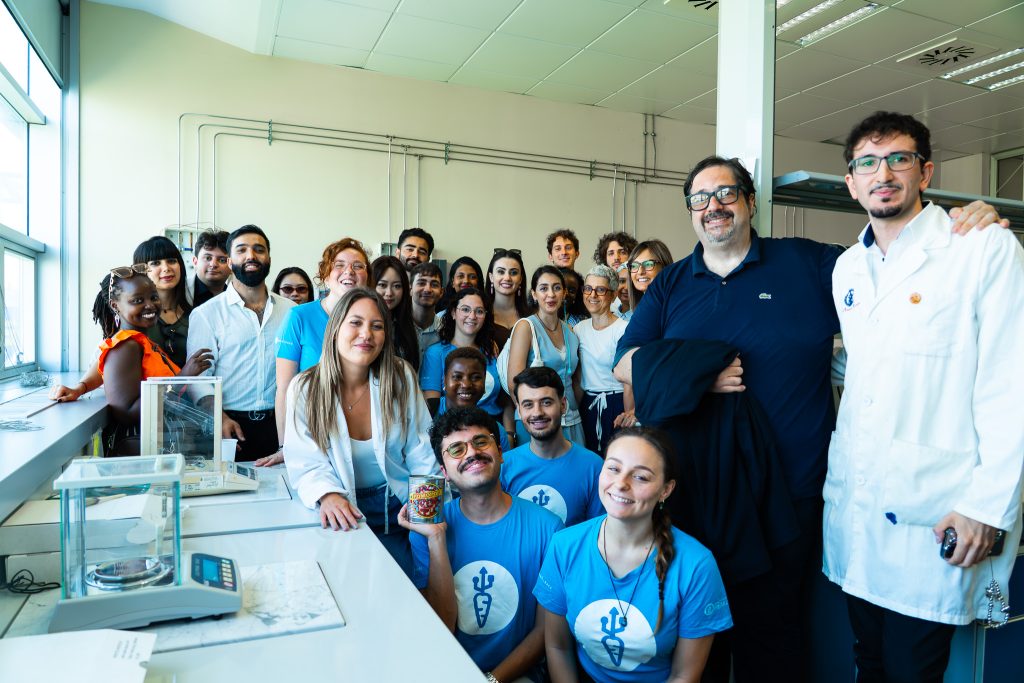
The concreteness of this project was perfectly coherent—and poetic—with a symbolic and playful gesture: a human chain, orchestrated by researcher Angela Belletti, to distribute glasses of water directly from the bathroom faucet. A small ritual that quenched thirst, refreshed, and made people laugh. But above all, it reconnected water to the body, to play, to healing.
Drones, aviaries, and sustainable agriculture
From micro to macro. In the LIFT Laboratory, Professor Giancarlo Rufino demonstrated the most advanced flight technologies to participants, with a particular focus on projects using drones to monitor and reduce the environmental impact of agriculture.
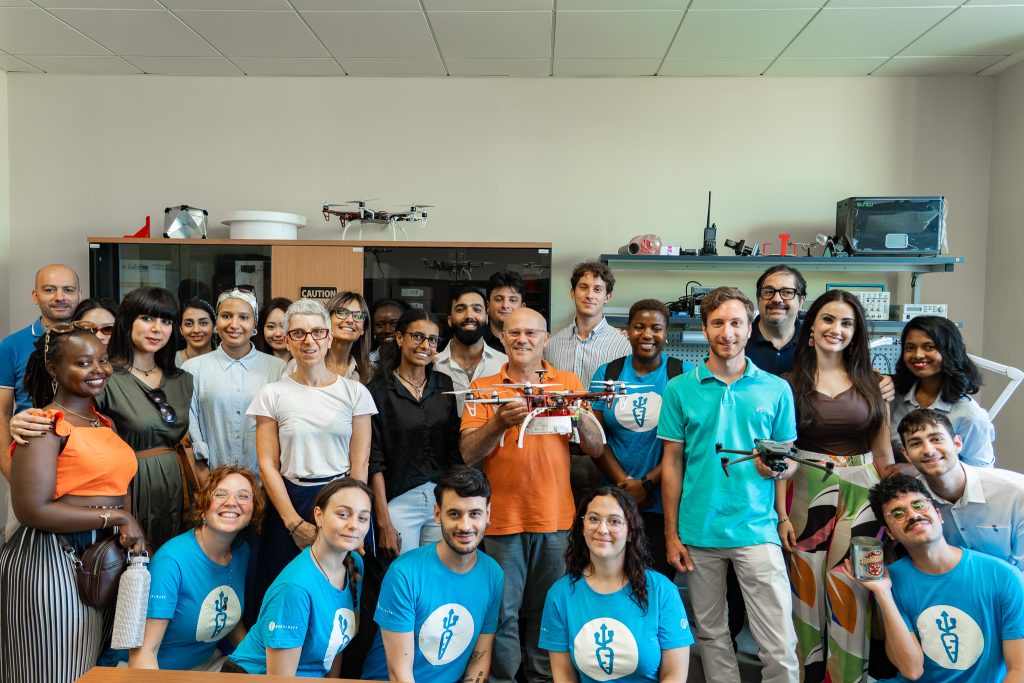
The large aviary for testing drones inspired wonder and amazement. The young people wanted to immortalize that moment with a group photo. Not just as a souvenir, but as a testament to the fact that innovation can (and must) also be sustainable, accessible, and rooted in the real needs of the earth.
Hands, silicone and ethical imagination
At MarteLab – Advanced Measurements in Virtual Reality Laboratory, attention shifted to another frontier: soft robotics and human interfaces. Researchers Roberta Flauto and Federica Resto, both young and highly skilled, presented several soft robotics prototypes, including a silicone hand that can also function as a SoftGripper for agricultural harvesting.
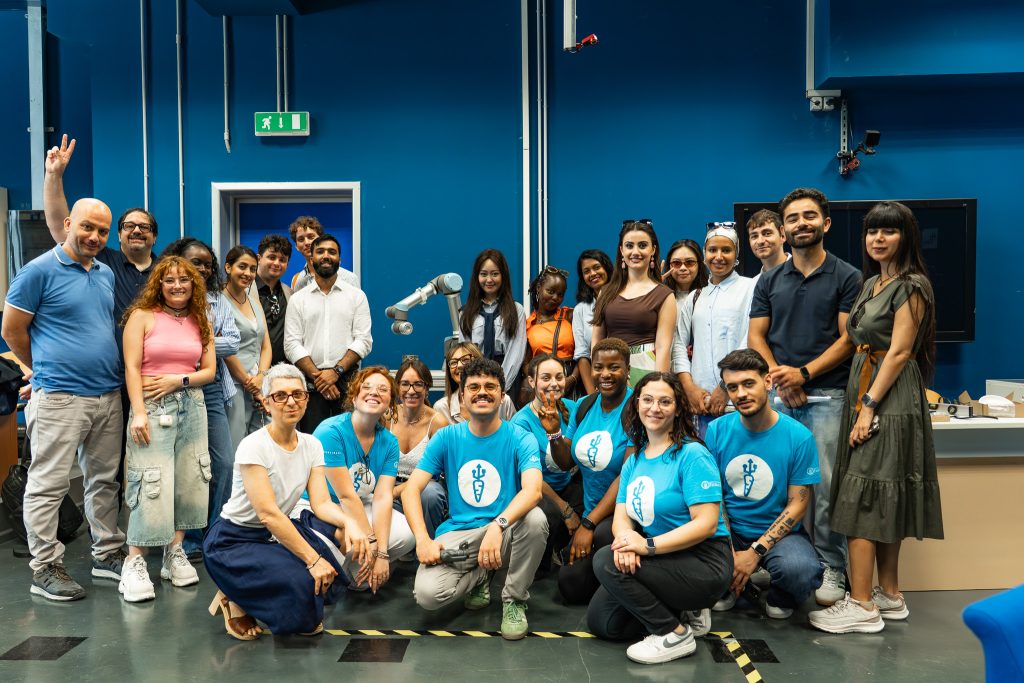
An innovation that raises profound ethical questions: who designs these tools? What relationships do they embody? What forms of human labor do they replace or enhance? What impact will they have on the age-old practices of sowing and harvesting? In an age of artificial intelligence and ecological scarcity, even the most technical objects become cultural actors. And they require responsible design imagination.
Apple Academy’s Digital Humanism
Thanks to the generosity of Professor Giorgio Ventre and the talented Matilde Cotroneo, we also visited the Apple Developer Academy, an international training center for digital developers. The spaces, the methods, the communities: everything speaks of a technological humanism that invests in people, ideas, and the ability to transform them into prototypes useful to the world.
Rural Hack and FoodSystem 5.0: from technique to vision
The morning concluded in the heart of our Societing Lab, a joint laboratory with CeSMA and the operational headquarters of the Rural Hack project.
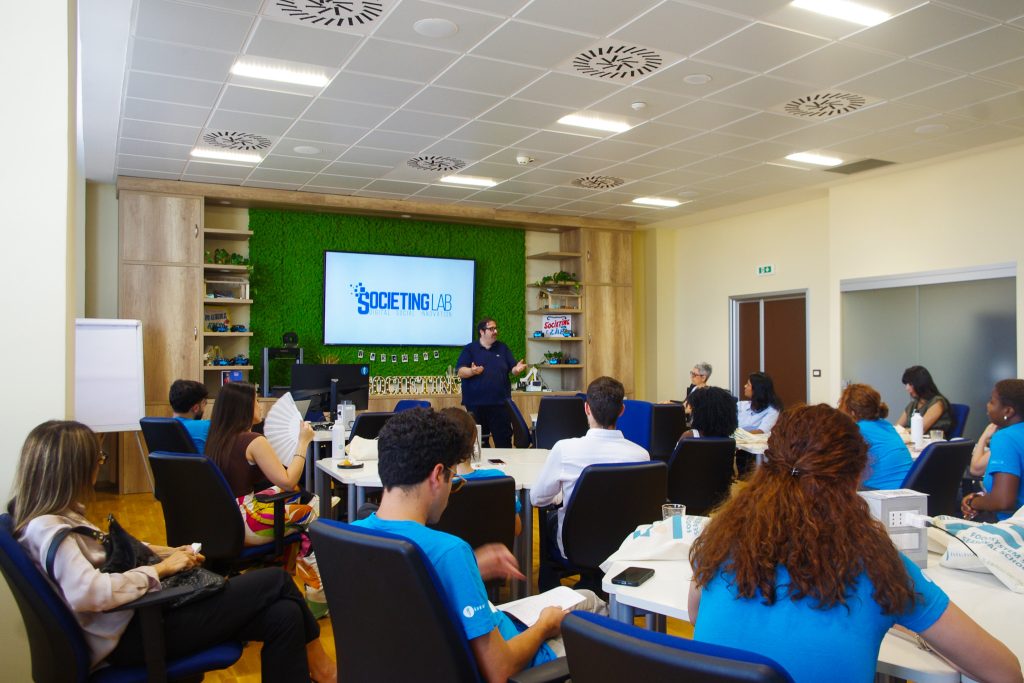
Here, Professor Alex Giordano shared with those present his vision of FoodSystem 5.0, a paradigm that transcends the Industry 4.0 approach (focused on automation and data) to embrace a relational, sympoietic, and regenerative dimension of food. In this model, food is a cultural infrastructure, a symbolic language, and a space for co-evolution between the human, natural, and technological.
Our researcher Peju Sokunle demonstrated how advanced technologies—from AI to blockchain—can be harnessed, that is, put to work for a just and inclusive agroecological transition. And Alessia Cicarelli, laboratory coordinator, explained how all this can be translated into facilitation and dissemination tools capable of increasing the potential of technology transfer.
The Map Game: geography of Emotions
One of the most intense moments of the day was the one curated by Annette Gitau, head of the international network of Rural Hack Alumni, and by researchers Lamiaa Chab and Peju Sokunle: a large map of the world on which participants placed three dots:
- one for the place of origin
- one for the place they would like to visit;
- one for the world cuisine that best represents them.
All facilitated with delicacy and depth by Professor Giordano and Annette Gitau.
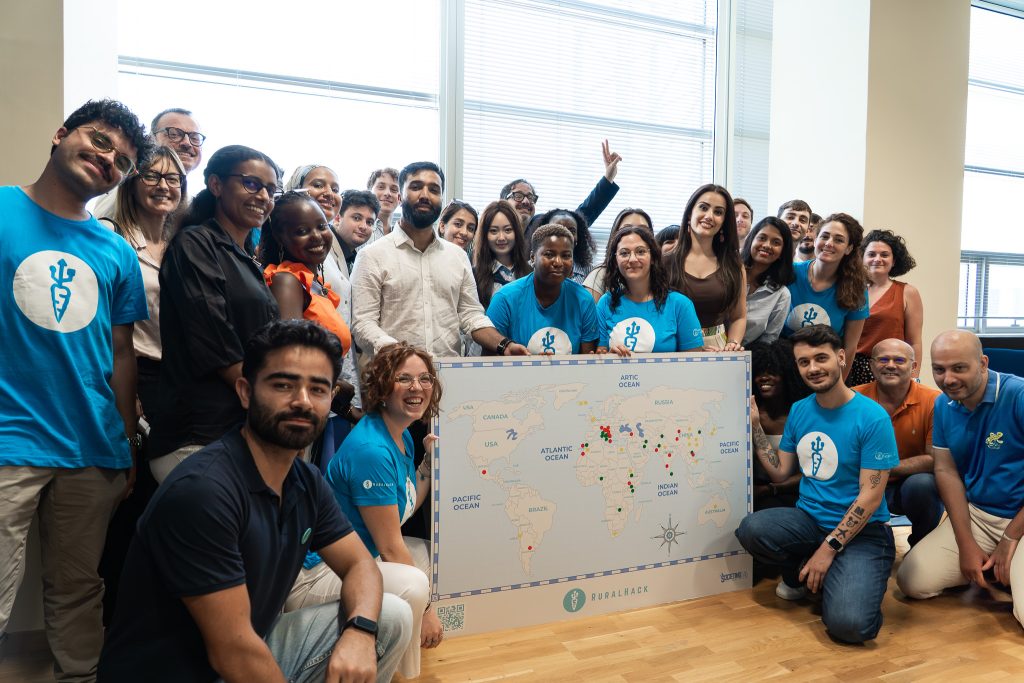
A simple gesture, yet one charged with meaning. Because it allowed us to reflect on what it means to talk about food today in the Anthropocene.
Not as a static heritage or an identity to be defended, but as a fluid space for contamination, listening, and transformation. A Mediterranean diet that isn’t a touristic simulacrum, but a bridge between cultures, a dynamic tale of wind, coasts, seasons, and hybridizations seen from an evolutionary, not a museum, perspective.
In times marked by climate crisis, political instability, and symbolic impoverishment, food can still be our common grammar. But only if we are willing to question ourselves, to allow ourselves to be contaminated, to invent new rituals. In a world of potential catastrophes, what we eat also becomes a form of resistance, a laboratory of possibility.
It’s not about choosing between local and global. It’s about inhabiting a dynamic balance between roots and routes, between memory and invention, between biodiversity and biotechnology, between age-old stories and open-source software.
In this sense, food isn’t just what nourishes us. It’s how we build communities, heal wounds, celebrate differences. It’s the code through which we can still imagine a worthy, shared, and fertile future.
And that’s why Rural Hack will continue to sow relationships, cultivate possibilities, and cultivate dreams. Starting today, we’ll do so with new and valuable travel companions.