

And yes, because wine, a product with deeply cultural roots, cannot remain behind in a historical moment that runs increasingly into the digital. At the same time, the communication of wine must be accurate and respectful of its complexity, since it represents a fascinating world, rich in history and skills. An error in its communication could compromise its perception. If managed with attention, however, online communication can simplify the understanding of a universe that, otherwise, could seem difficult to grasp.
For which, wine, despite being a product that is associated with tradition, must reinvent itself in the digital world and face new forms of communication. So, is digital a necessity or an opportunity for the wine sector? We asked “Mastercheffa,” the foodblogger Stephanie Cabibbo and the Sommelier Francesca Pace, two women who have made food and wine dissemination their mission and who know well how important it is to tell about wine without ever denaturing it.
“By now the digital is almost a necessity – According to Stephanie – “By now the digital is almost a necessity but it must not take the upper hand over the concept of being an opportunity because it is a tool that, if used in the wrong way, can turn against those who use it. It is fundamental to be there, but it is equally important to do it in the right way. “Better to be there little or not at all, than to be there badly!”
This thought is fully supported by Francesca, who instead argues: “It is essential to seize this opportunity. The digital realm is much more horizontal, allowing for the immediate dissemination of information, which flows naturally and rapidly.” In this context, the ‘Storie di Futuro’ (Stories of the Future) project stands as a concrete example of how storytelling and the vision of the future can be powerful tools to navigate this change.
A new frontier of promotion in the face of new challenges.
“Farmer and artist, worker and dreamer, hedonist and masochist, alchemist and accountant: the winemaker is all of this, and has been since the time of the Flood.” This is what Hugh Johnson wrote in 1989. But who could have ever imagined that, in the following century, we would have to deal with phenomena such as the pandemic, dealcoholized wine, export tariffs to America, changes in traffic laws, rising temperatures and shifting weather patterns, increasing digitalization, and an ever-growing focus on sustainability and innovation? And so, I would add: “Courageous and Visionary.”
Of course, as Galileo maintained, “The sun, with all those planets revolving around it and dependent on it, can still ripen a bunch of grapes as if it had nothing else in the universe to do.” . And indeed, it is true, because time is a concept that belongs solely to humanity, and we will only stop drinking wine when the laws of the universe cease to exist. Yet, we cannot ignore that something is changing. Perhaps the future of wine is preparing for a profound transformation, and the only thing we can do is accept this change and adapt. Because, as always, the real challenge is not stopping the flow of time, but learning to navigate it, evolving with it without forgetting who we are.
Therefore, in a world where technology shapes every aspect of our daily lives, even the millennia-old tradition of winemaking finds itself facing a constantly evolving infosphere.
The voices of Irpinia and Sannio wine in the ‘Storie di Futuro’ Project (Stories of the Future).
Wine is a tale, a journey that crosses time and space, a narrative intertwined with the land, culture, and people. And perhaps this is precisely the key to talking about wine in the future: not with rigid rules, but with unique emotions. With the awareness that, in every glass, there is much more than a drink: there is a fragment of history, a piece of land, a story that deserves to be experienced and shared.
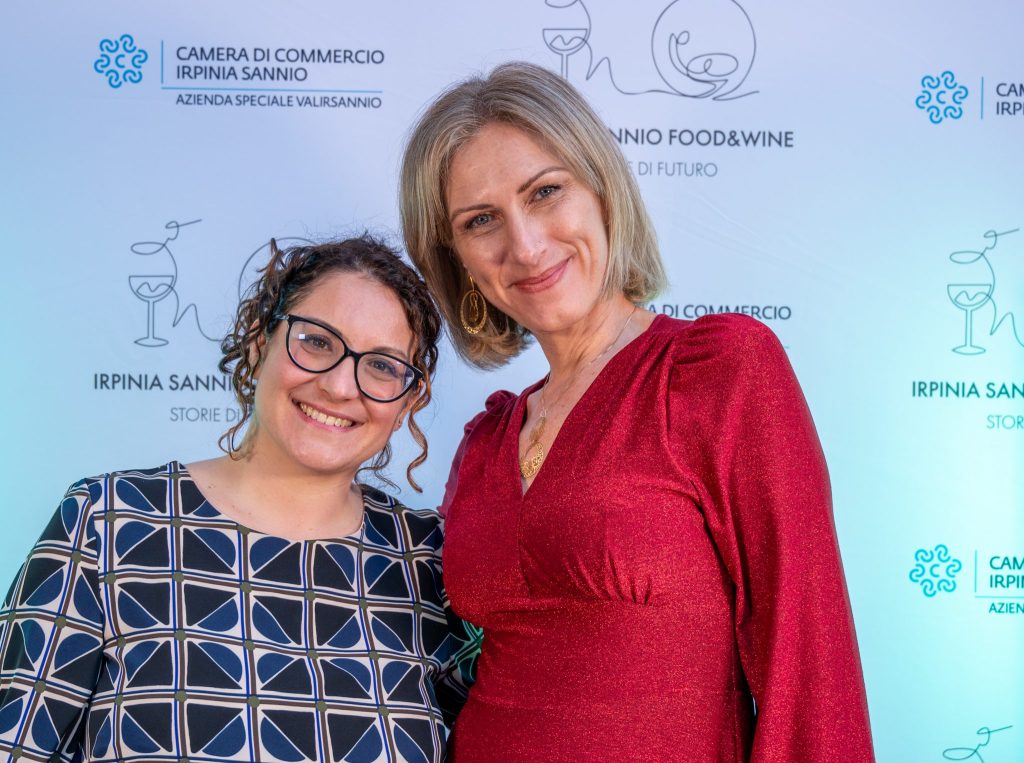
“Storie di Futuro” has found this key. It is a digital communication campaign, commissioned by the Irpinia-Sannio Chamber of Commerce and managed by Rural Hack, which aims to bring visibility to the food and wine excellences of the two territories. The project intends to give a voice to the many wineries in the Irpinia and Sannio areas, from which the majority of Campania’s wine production originates.
Wineries rich in history, like the native grape varieties of their lands, rich in passion and tradition, but also with a strong drive toward the future. But if they are stories, how can they tell of the future? Because the Italian word “storia” (which means both story and history) derives from the Latin historia, which in turn comes from the ancient Greek ἱστορία (historía), meaning “research”, “investigation”, “tale”, or “narrative”. Therefore, even though over time it has taken on the meaning of an account of past events, the term originally indicated a cognitive investigation aimed at understanding and recounting reality. The reality we live in today is but a prelude to what we will be tomorrow. And yet, there is something ironic about speaking of “reality” in an era where it is increasingly difficult to discern what is truly real.
And it is precisely this difficulty that makes the “Storie di Futuro” (Stories of the Future) project even more precious. It aims to explore how the territories of Irpinia and Sannio have evolved over time, adapting to contemporary needs without ever renouncing their roots. And this is because it linearly follows every step, every phase of change, starting from the grandfather who worked the land with a hoe up to the influencer who today tells stories in their reels. This approach allows us to clearly understand how the change occurred, without trivializing any of the intermediate stages. Seeing this evolution step by step helps us grasp the nuances and the deep reasons behind each transformation, without neglecting any phase, but rather valuing every moment of the process.
The means change, but the intentions remain unaltered. And it is precisely these intentions—like the secret language of wine, with its subdued tones, nuances, abstractions, and symbols—that suggest the profound truth of a time that never stops transforming.
The pillars are: tradition, not in opposition, but as a driving force for innovation; history as the genesis of the future; the prestige of the sector; sustainability; and the value of the territory.
Who can tell the stories of the future?
Or rather, who can act as a spokesperson? Someone who understands market dynamics and how social media works; someone who can responsibly manage the mass flow of people seeking something from the media.
In a context where information blends with opinion, the influencer can, and should, be the person who breaks down the news, making it understandable and accessible without distorting its value. It is not enough simply to talk about one’s own life or interests; it is possible (and indeed a duty) to use one’s voice to tell broader stories: those linked to sustainability, culture, social awareness, and the future of new generations. Because, after all, the influencer is not just a megaphone, but also an amplifier of messages with an enormous responsibility: that of guiding the flow of attention toward what truly deserves to be heard.
In a world where information mixes with background noise, it is difficult to find true value. Yet, amidst the endless scrolling we do every day on social media, besides memes and cat videos (which, yes, are always adorable), it would be nice if at least a small fraction of that information helped us grow and learn. We are not talking about a vegan tiramisu recipe for our neighbor, but about those pearls of wisdom that allow us to elevate our daily lives.
For example, why not find someone who, besides recommending a good wine, also teaches us how to taste it with the right focus and without rushing? Now, that is a true social-friendly life lesson.
Because, let’s face it, wine is the topic that would definitively shatter the myth of “social media = a waste of time.” Not only because—who would have ever thought—social media can be our go-to resource for learning everything about grape varieties, vintages, and territories, but also because wine, to be truly appreciated, requires one fundamental thing: company. The real, physical kind, without filters and without double taps.
You cannot drink a good glass of wine from a distance, no. What you need is the glass in your hand, the conversation at the table, and the moment you raise your glass to toast and enjoy yourselves.
So, why not use social media to learn how to live better? It is not just about likes and shares, but about knowing that behind every bottle there is a story, a journey, a passion that might be coming from a small winery in a remote corner of the world, but which, thanks to social media, can reach your table.
So, yes, social media can be a powerful medium for connecting, not just through a screen, but also through the senses. Because in the end, what truly matters is staying connected… in every sense.
However, there is a decline in youth participation that demands urgent reflection: the wine sector is failing to connect with new generations.
In 2023, data on wine consumption in Italy showed a significant shift that cannot be ignored: despite maintaining a base of 29.4 million consumers, the wine sector is facing a growing difficulty in engaging young people. In particular, Gen Z youth represent only 4.4% of wine consumers, a figure that highlights how wine consumption is increasingly becoming a sporadic phenomenon rather than an established tradition.
It is not just about selling wine, but about educating young people toward a more mindful, responsible, and quality-oriented consumption. In a world where young people are increasingly attentive to sustainability and the origin of the products they consume, wine has a unique opportunity to reconnect with them, but only if it manages to communicate a message that reflects their values.
In this context, influencers have great responsibility but also great power.
According to research conducted by Buzzoole, over 27 million Italians between the ages of 18 and 74 follow at least one influencer on social networks, and 57% of the sample follows them actively and daily. Influencer marketing has become one of the most popular and effective forms of online marketing: with millions of users browsing social media every day for entertainment, inspiration, and purchasing advice, it is no surprise that marketers are capitalizing on this market, which reached a value of $21.1 billion in 2023.
Despite this, Italian wineries are investing little in digital marketing, despite the growing use of technology in production. A ProWein report reveals that only 15% of wineries plan to increase their investments in digital marketing by 2025. This sector has great growth potential, but many wineries continue to manage data manually and do not fully exploit the available tools that could lead to new opportunities for visibility and sales.
Furthermore, recent studies have shown that when a consumer buys wine online, their choice is often influenced by “cognitive shortcuts” that trigger emotional responses, such as the eye-catching packaging of a bottle or images on social media. These emotional stimuli not only alter the perception of the product but also guide the decision-making process, making emotion a key factor in the purchase of wine. In fact, just as neuromarketing—which combines neuroscience and marketing—studies how people react emotionally to external stimuli and how these reactions influence their purchasing behavior, there exists, so to speak, in the wine sector, neuroenology, which explores the relationship between emotions and purchasing decisions within the context of wine.
From this perspective, involving food influencers in the Storie di Futuro (Stories of the Future) campaign means focusing on a collective and emotional storytelling approach. This expands the audience without limiting the narrative to technical content about the wines, their pairings, or production processes, but instead recounts the initiative and the territories in an engaging and authentic way. The goal is not sales or direct marketing, but rather to offer an inspirational narrative, leaving individuals the freedom to make their own choices and evaluations, including those related to consumption and purchasing.
“In today’s saturated market, there is room for everyone, as long as you remain true to your own identity.” – Stephanie Cabibbo
With her experience as a food blogger and her knowledge of the wine industry, Stephanie Cabibbo realized that the secret to effective communication isn’t proving how skilled you are, but rather conveying culture in an accessible way. Her key? Irony. To debunk stereotypes and make wine a topic accessible to everyone, she chose a light and engaging approach, where the audience can feel like part of a story rather than mere spectators.
She explains to us, in fact, that the key is to tell the truth, giving people time to see that it is possible to interact with her in a simple and natural way…My real breakthrough on social media happened when I understood the true meaning of having a food blog: it’s not about showing how good you are, but trying to spread culture in an educational way. In fact, I don’t act like a chef, and this is the big difference: a chef has their secrets that they don’t reveal, whereas I share everything with everyone because I believe that knowledge should be accessible to anyone. Only by knowing can everyone then make their own choices in an informed way. “.
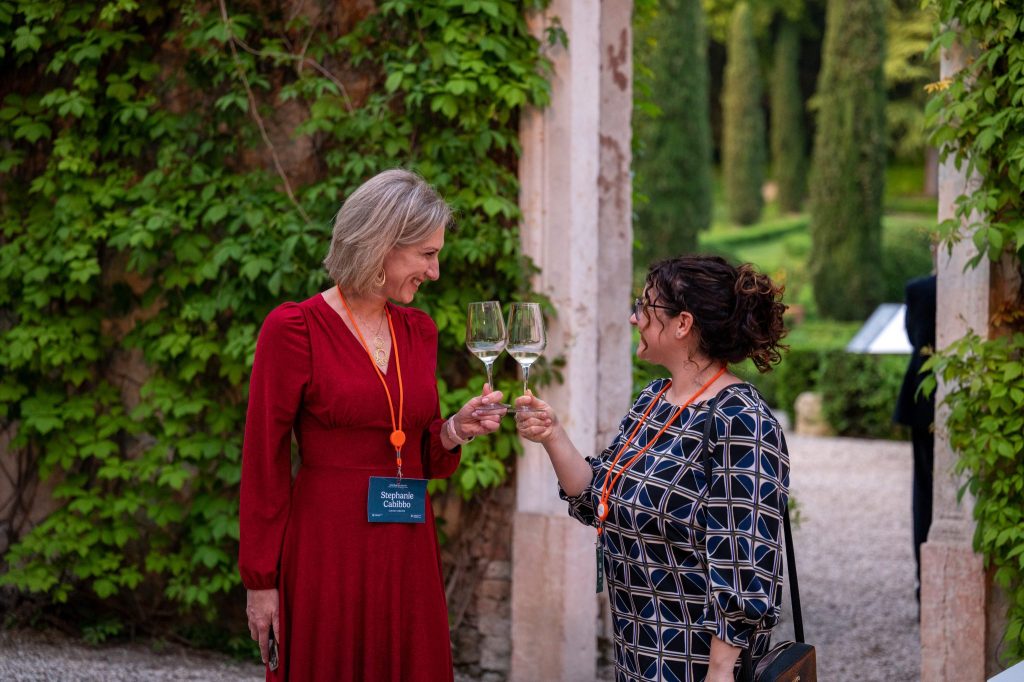
Indeed, culture is the term that best describes wine: talking about wine, especially in Italy, means sharing an immense cultural and historical heritage. Because of this, together with Stephanie, we reflected on the fact that we are in a phase of digital saturation, where everyone seems good at telling stories, but few truly know how to listen. This led to an even more important reflection: how do we keep our wine heritage alive without reducing it to a simple cliché? Stephanie emphasizes how essential it is to avoid trivializing wine. In an increasingly fast and superficial digital world, the real challenge is communicating without losing the depth of wine culture.
“Talking about wine also means being consistent with your own ethics—not chasing trends, but building a solid point of reference. If there were more focus on promoting not only what generates the most profit, but also what has a positive and lasting impact on the market and culture, we would likely be able to build healthier and more authentic communication, one that sustainably values producers and their territories. … Having worked for some wineries in the past and attended an ONAV course, I was able to create content featuring bite-sized wine tips, designed to be immediately understood and put into practice by the consumer. In my opinion, what truly resonates with the general, non-expert public—with whom you need to communicate in a genuine and simple way—is the story behind a wine, its emotional side. It’s not just the best wine, produced with the utmost care, that makes the difference, but rather the one with the most fascinating and engaging story, capable of creating an intimate bond with those who drink it. Wine is rooted in the earth; it is born from manual labor.
To truly tell the stories of the future of wine, we need initiatives that go beyond the trends of the moment and that are, at the same time, a diary, a testament to a place, a magical spot to rediscover and highlight the beauty of our territories. In fact, to stay true to the storytelling style, it is essential to attribute a sense of ethics and identity to wine. In this regard, Stephanie suggests that “ .. producers should have more of a cooperative spirit, shifting the focus from the individual product to the territory where they operate”
What, on the other hand, does Stephanie consider the most urgent innovation to truly be able to tell the Stories of the Future of wine?
“The most urgent innovation is definitely being able to ‘transfer’ the consumer inside the company, even without bringing them there physically. In practice, it is the company itself that must succeed in winning over the consumer, creating a direct and authentic bond, even from a distance. It doesn’t take much to describe a wine technically if you have the knowledge, but the real challenge is being able to connect emotionally with people ”.
An interesting idea suggested to us is the organization of thematic tours within the region, involving a variety of stakeholders: producers, journalists, enthusiasts, and consumers. By creating a diverse group, each with their own expertise and perceptions, it would be possible to gather a wide range of information and viewpoints, enriching wine communication and enhancing every nuance. These themed tours, organized on-site, would become moments of shared experience that go far beyond a simple tasting: they become opportunities to tell a story and create genuine connections between the wine and the consumer, fostering an interaction that transcends the product and takes root in the surrounding land and culture.
Stephanie seems to have described the figure that every company dreams of, but are we truly ready? Here is what she thinks:
The wine world, digitally speaking, is still a bit behind. In Italy, small producers struggle to understand the importance of investing in intangible assets, such as online branding. If an action doesn’t immediately translate into measurable sales, it is often considered superfluous, and this holds back investment in the digital sphere.“
In fact, it is essential to explain the role of the digital communicator, a figure capable of bridging the gap between tradition and innovation. The communicator helps companies engage effectively with the digital world, thanks to an in-depth understanding of the sector’s specific dynamics. For instance, the industry is subject to strict regulations: since it involves alcohol, there are online communication limits—such as the inability to make explicit health claims or the requirement to target only adult audiences—to avoid content being flagged or blocked.
Now, let’s set aside the more serious talk and dive into the beauty of cooking, where food and wine meet and the aroma of the wine becomes part of the experience. The bond between cuisine and wine is not just a matter of taste; it’s a story of land, culture, and passion. One of the most iconic examples of this synergy, according to Stephanie, is Taurasi: an intense, structured red wine that pairs perfectly with hearty, earth-based cuisine. ‘It brings to mind red meat, the concept of family, and warmth,’ she says.
But there’s no shortage of surprises: sometimes, daring pairings can lead to unexpected results. For example? A dish of prawns and tomatoes with red wine, topped with a grating of caciocavallo cheese. “I broke two taboos at once: pairing red wine with fish, and cheese with fish. The result was surprising because the contrast of flavors and textures stimulated every single taste bud. This proves that conventions can be overcome with creativity and knowledge. Furthermore, Stephanie says that while pairings are often made out of habit, every wine deserves to be studied with care.
“…that’s exactly why I’m fascinated by structured white wines: white grapes are more delicate, and behind their processing lies an immense amount of work that justifies the final price. This is an aspect that should be better explained to the consumer, because beyond a wine’s family history, there is, above all, the story of its production. .
And for those working in the sector, the advice is clear: never give up.
I’ve always said it to myself, and in this context, I feel like saying the same to small businesses that hold onto their uniqueness despite the pressure from the market and social media. In such a saturated mess, there’s a small space for everyone, as long as they don’t give up.
“Wine is like a perfume: it must be worn. Everyone has their own olfactory memory, their own life experience. There is no right or wrong wine; there is only the one that moves us.” – Francesca Pace
Francesca Pace, a Food Science and Technology graduate, digital food and wine communicator, and AIS Sommelier, is one of the freshest and most authentic voices in wine communication. Her ability to blend technical rigor with accessible language has captivated her audience, bridging the gap for many who find the wine world distant or complex. Her philosophy is straightforward: wine should be experienced with awareness, but without taking oneself too seriously.
“…there is a lot of responsibility in wine communication, including social responsibility, so it’s inevitable that those with the expertise will lean into the technical side. However, digital content needs to stay light, because chasing perfection can ruin the pleasure of drinking. I’m there in the quickest and most direct way possible, offering small tips to navigate a world that is part of our daily lives, yet one that can catch us off guard at any moment.”
In her approach, Francesca invites us to never forget that at the heart of every bottle of wine lies a science that, while complex, can be shared in an interesting and engaging way. As she herself points out:
“Wine is like a perfume you wear: it doesn’t necessarily need to be understood rationally, because each of us possesses a unique olfactory memory, tied to our own memories and personal experiences. What matters is what you like—what fits you. Just as a fragrance is truly appreciated when worn, a wine’s value is fully realized when you taste it, for it is in that moment that all the emotions linked to its flavors and aromas awaken. ”
It is a message that invites us to experience wine with a sense of lightness, yet also with a certain depth, because every sip tells a story that goes far beyond labels and technical rules. It is a simple concept, yet one that is all too often forgotten. In fact, one of the most common mistakes is choosing a wine based solely on its prestigious label, without considering one’s own personal taste. A good wine is one that moves us, one that makes us feel at home and stimulates both our memory and our palate. “If I have an expensive, famous bottle, what’s the point if I don’t have the right setting to drink it in?”
But choosing a wine is also about the story it tells. In line with the goals of the ‘Storie di Futuro’ project, Francesca—echoing Stephanie’s earlier statement—says:
Without history, there is no evolution. We must not forget where wine comes from and where we began. It is essential to preserve our historical memory, while keeping our eyes fixed on the future.
“This principle guides her way of narrating wine. Every bottle, every vineyard, and every producer has a story to tell, and it is often these very stories that create a deep bond with the consumer. This is why, when discussing regions like Irpinia and Sannio, Francesca cannot help but focus on the narratives these places hold. It is not just about wine; it is about culture, tradition, and people who have dedicated their lives to the land. “Consumers should no longer choose a wine based solely on its color; they must ask themselves: what is truly in this glass?”
In the same way, Francesca is convinced that… …the balance between tradition and innovation is essential. In the world of wine, tradition is the foundation, but innovation is what allows wine to evolve and respond to today’s challenges, such as climate change. Rising temperatures and water scarcity, for instance, are leading to higher sugar concentrations, altering the sensory profile of wines. However, what concerns Francesca most are extreme weather events, like sudden storms and hailstorms, which can irreparably damage the vineyards.”
Once the grapes are damaged, they cannot be recovered”,she emphasizes, highlighting the importance of protecting our environment to safeguard future generations of wine. We talk about grapes because, without them, wine simply does not exist. Winemaking is a perfect mechanism, where every gear works in harmony with the others. And once you enter this world, you cannot afford to overlook anything.
The relationship between food and wine is another aspect Francesca loves to explore on her channels. It’s not just about finding the right pairing, but about understanding the chemical reactions that occur between the two. For example, when it comes to tannins and meat, Francesca explains that tannins bind to salivary proteins, creating what is known as a ‘puckering’ or ‘mouth-drying’ sensation. This astringency is perfect for balancing, for example, a rich, hearty bite of meat. Sparkling wines, on the other hand, pair perfectly with shellfish, enhancing their aroma s. These scientific details are more than just trivia; they help us understand how food and wine interact, enriching the overall sensory experience.
Speaking with Francesca, it’s clear that she shares a relationship of trust with her followers. In fact, she admits that before suggesting anything, she tries it personally; if she decides to talk about something, it’s because she genuinely likes it herself and is certain it’s worth recommending.
At this point, we would like to share a reflection born from these conversations. We are human beings; behind our screens, there are bodies, and within those bodies, there are souls. It is not that we have lost the ability to be moved; we have simply lost faith in what is truly authentic, real, and sincere today. It is beautiful to think that wine can both give and receive: if, on one hand, it needs to be narrated, on the other, it possesses the power to narrate. It is fascinating that it can do both in the same place, at the same time, and in the same way. And I would go even further: beyond telling its own story, it can tell ours—it can tell our history. It can show how it still manages to move us in a world that tries to make us believe the digital realm is made of nothing but algorithms.
For a more comprehensive overview, you can also consult another one of our articles, which explores certain aspects of this topic in greater depth!
Article by Fabiana Mango