

It would have been nice to start this article by saying: since there is so much talk about it, let’s try to understand something about these new genetic technologies applied to plants… but the truth is that it is discussed very little.
If there is one thing chemical and seed companies have learned from the great era of opposition to GMOs—which for about 20 years filled public squares and animated national and supranational decision-making bodies (and sometimes even the courts)—it is that the less the issue becomes public knowledge, the better. Heaven forbid that consumers and, more properly, adequately informed citizens should clearly express their opinions, and that politics should actually end up respecting their wishes.
A complex theme, the cheering squads do not help
So today we are here, in few, too few to talk about TEA, that is of Assisted Evolution Techniques (Tecniche di Evoluzione Assistita), a theme anything but simple and on which too often one ends up taking sides without ifs and without buts, on one side or the other, as if it were a matter of stadium cheering.
The terminological choice already is significant, in consideration of the fact that life and therefore evolution has existed on Earth for almost 4 billion years. Four billion is not bad as a curriculum, no? We humans have realized that there exists a thing that today we call DNA for less than 150 years. I repeat: we realized it, we did not invent it. The DNA was there from the beginning of time. But nothing, we put it in our heads that we must assist evolution, because by itself it does not hurry, it has times that are too long. Step aside because we will take care of it.
The Anglo-Saxons have not found better terminological solutions with their New Breeding Techniques (NBT) or New Genomic Techniques (NGT) or worse I feel with the so-called Genome Editing. Editing is the correction, it is what is done before sending an article to print, cleaning it of errors, repetitions, typos….
In short, we have started to nitpick Nature, but the problem, beyond the very scarce elegance of this self-nominating as correctors and assistants of something that has already widely demonstrated to us (and continues to do so every day) to know how to work perfectly (and indeed much better) without us, is another.
The problem is: cui prodest?
When a part of the world of science (both in the field of private and public research) fell in love with GMOs, organisms genetically modified by means of transgenic engineering, it started to promote the new seeds as the panacea of all evils, not only of agriculture, but exactly of the world. According to them, thanks to GMOs hunger would have been defeated, one would have been freed from parasites, weeds, it would have been Christmas three times and a holiday all day long.
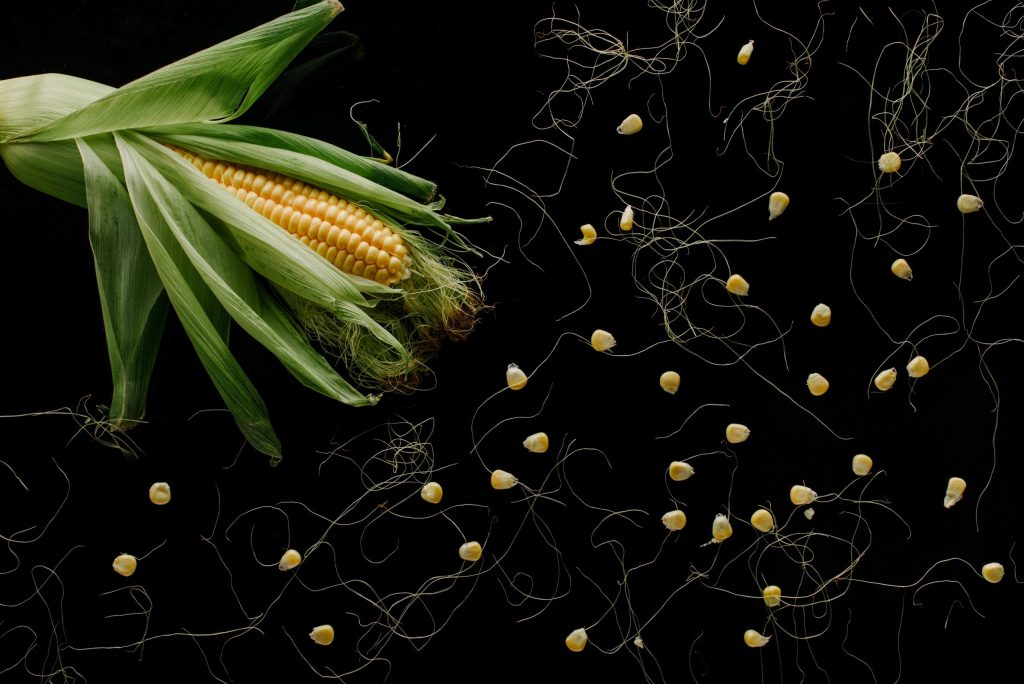
But the real objectives did not correspond to the declared ones. Not coincidentally, GMOs have concerned only four species (soy, corn, cotton and rapeseed): those with the greatest industrial characterization ; the most useful to feed the zootechnical supply chains and the no-food (from textiles to biofuels). To this end, the biotech multinationals have imposed the replacement of conventional seeds with GM ones and the main producing and exporting Countries of these raw materials (USA, Argentina, Brazil and Canada) by now cultivate only transgenic plants. These are the reasons why, with GMOs not even one of the initially declared objectives was realized: because they replaced the pre-existing cultivations and because they fueled supply chains whose products are certainly not destined for the Countries with the greatest food security problems.
Patents, the heart of the problem
Let’s come to the point: why were (and are) multinationals so interested in GMOs? Because with the TRIPS agreements (Trade Related Aspects of Intellectual Property Rights, that is an international treaty promoted by the World Trade Organization OMC or, in English, WTO which defined the standards for the protection of intellectual property) of 1994 the patentability of the living was allowed and this provided such companies (which are the only ones able to sustain that level of costs) the opportunity to increase their already strong power of conditioning the entire agro-industrial system, through the control of the market of the main productive factor (the seed).
The patent system that accompanies GMOs forces farmers into practices of submission to the direct control of multinationals in their farms, prohibiting the reuse of seeds obtained from the harvest and imposing the repurchase of new ones at every sowing. Not only and not so much because probably those obtained with the harvest would be less performing as very often happens to hybrid varieties, but exactly because the contract makes an express prohibition of reusing the obtained seeds: if you do it, if you try, it is as if you were stealing, you are criminally punishable.
In agriculture however, in that which for about 12 thousand years and until a few decades ago was considered agriculture, producing one’s own seeds is synonymous with freedom, self-sufficiency, capacity of adaptation to soil and climate of a specific territory, therefore identity.
The side dish of synthetic chemistry
And again. The main protagonist of GMO seeds (soy and corn in primis) is no longer, for decades, the resistance to a parasite (as was initially for the BT corn, crossed with toxins of Bacillus Thuringiensis to make it resistant to the rootworm) but the resistance to a chemical herbicide based on glyphosate, the Round Up (this too, like GM seeds, initially patented by Monsanto and today produced by Bayer Crop Science, which in 2018 purchased Monsanto). The World Health Organization has classified glyphosate as a probable carcinogen. Then Efsa (European Food Safety Authority based in Parma, which does not carry out autonomous research but deliberates on the basis of dossiers presented by the producing companies of the chemical substances that make request for authorization) has counter-declared that the carcinogenicity is “unlikely” and thus in 2023 glyphosate was authorized in the EU for another ten years. The reason for so much pressure to not eliminate glyphosate-based products from European agriculture is that this active principle, which enters into the composition of various herbicides (the RoundUp is the most famous but many others exist), is produced in Europe, and precisely in Poland, by Ciech Sarzyna, and to no avail have been the many lawsuits that in the United States have been lost by Monsanto-Bayer which have already had to pay settlements for millions of dollars to citizens who fell ill with cancer.
GMO surfaces are decreasing: are we sure?
After the enthusiasm that brought GMOs into 128 countries of the world and about 200 million hectares cultivated, starting from 2016 the surfaces cultivated with GMOs started to decrease, because the intrinsic weaknesses of the system became evident, the risks to health, the progressive and dramatic indebtedness of the peasants, in particular of those of the poorest countries (exactly those whose fates GMOs should have raised) the deaths from poisoning by chemical substances used in a wicked way, the exhaustion of the vitality of soils intoxicated by herbicides…
But this apparent reduction of surfaces must be observed closely, because it is important to understand first of all how these accounts are made and secondarily with which seeds the old GMOs are replaced. Having official data on GMOs has always been problematic, because the multinationals from the beginning imposed them on the market as “substantially equivalent” and therefore one could not obtain diversified data. The only ones available were those from ISAAA, which however is financed by the same multinationals to propagandize their products. ISAAA provides data on GMO cultivations until 2019, after which it stops; but in the meantime the TEAs have entered the field, it’s really the case to say it.
Are TEAs GMOs or not?
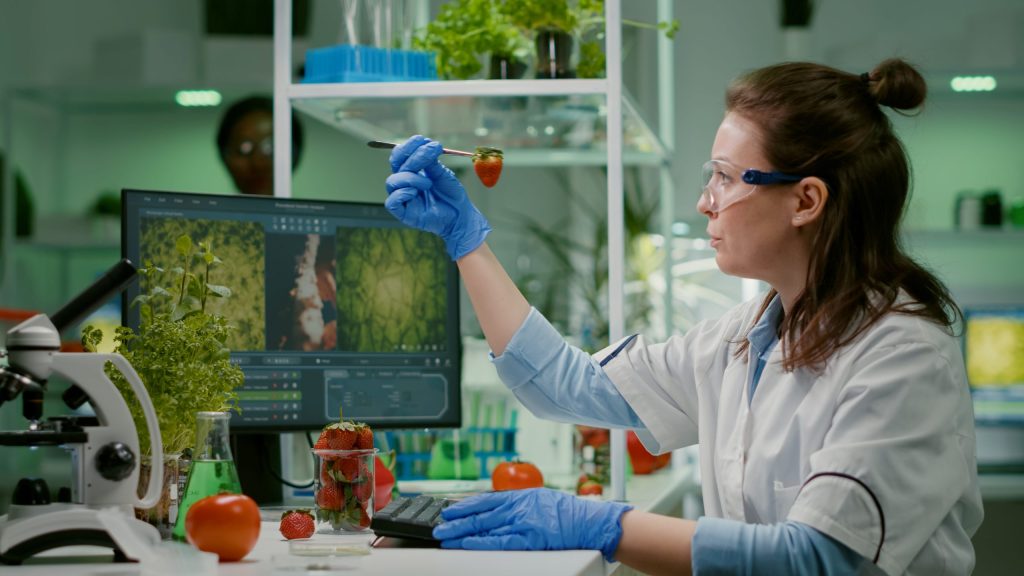
Starting from the 2000s, in fact, the process of development of TEAs began. It is a matter of techniques of genetic manipulation that, unlike the first GMOs, which introduced, into the DNA of the plant to “improve,” segments of DNA of organisms belonging to another genus (for this they are called transgenic), work on the DNA of a specific organism (editing) or on those of interspecific and therefore interfertile organisms. From the scientific point of view it is undoubtedly good news. It is in fact possible to identify, in the DNA of a plant, what the genetic trait is that makes it subject to a determined disease or to any type of problem that can occur in the course of its life and “cut” away that trait so as to make it immune: in this case one speaks, precisely, of editing. Or it is possible to look in a plant of the same species (maybe in a wild variety belonging to the species that is domesticated for agriculture) for the resistance to diseases or parasites that the plant lacks and therefore modify the DNA of the plant that we are interested in cultivating in a convenient way.
The European Court has pronounced… more or less
In 2018 the European Court issued a sentence that should have been decisive. But in substance it reiterated the validity of directive 2001/18, in the sense that all organisms obtained through processes of genetic engineering different from those that could occur in nature had to continue to be considered GM. It is a sentence that lends itself to being pulled from every side, because it presumes that someone can predict with absolute certainty what can occur in nature (but when? in which conditions? with what times) and what cannot happen.
Can a plant decide to amputate the gene that makes it vulnerable to a determined fungus? What does the fungus say? The level of interdependencies present in nature is such that if someone arrogates the right to decide what can or cannot happen, they probably decide only based on their own convenience. In short, that sentence, which apparently included TEAs in the category of GMOs, in fact left the field open to TEAs for the simple fact that they are not transgenic, without clarifying too much. All to the benefit of the multinationals to which it is convenient to maintain that NBTs are not GMOs.

The more prudent look and less interested in profit tells us instead that these manipulations of DNA are to all effects genetic modifications and therefore these plants must also be subject to the regulation (and to the eventual prohibitions of cultivation in open field that some countries, including Italy) have put in place on the basis of a clear refusal expressed by consumers. That sentence has consequences for what concerns not only cultivation, but also labeling obligations, and more generally traceability.
These new GMOs, in fact, present a characteristic that the old ones did not have: from the moment that it is a matter of plants that, potentially, could have been born also by means of spontaneous crosses or determined by farmers with traditional systems, it is no longer possible, once the modified plant is obtained, to understand, from the analysis of its DNA, if it is a plant that was modified through TEA or if instead it is a cross (that is a new variety) that developed through natural ways or traditional agriculture. If therefore that sentence were interpreted in the most prudent way, the products obtained with these techniques should be traced and made recognizable to consumers.
But the look of the multinationals has won
When the EU Parliament, at the end of the last legislature, approved the text on NBTs it applied the sentence in the most convenient sense to multinationals. The problem is that NBT technologies are not as precise as one wants to make believe and that the recourse to technology to operate genetic manipulations (even when genes of the same species are used) is not necessarily equivalent to the recombinations that can occur in nature. In any case it is not possible, nor scientifically correct to assume that genetic engineering and natural evolution are the same thing.
Now, the issue should be addressed keeping in consideration at least two questions:
- the right of consumers to know what they eat and how their food was cultivated; food sovereignty also means this. Of course, for the specific characteristics of this technology, the risks to health (allergies or other contraindications) involved by these products could be less compared to those of their transgenic cousins ; however a margin of unpredictability remains that would require an attitude guided by moderation, by prudence and by directing research towards solutions that cooperate with nature instead of once again prevailing over it. Industrial agriculture in the last 100 years has yanked the rhythms of evolution an infinite amount of times, making the whole biosphere pay the costs, as is easy to understand by observing that the agri-food supply chain is one of the main responsible for the climatic crisis in progress.
- Then there is the point of view of farmers: the new varieties will be objects of patents similar to those that already characterize transgenic varieties. Spontaneous pollinations with non-modified crops will however be much easier and much less traceable: how will the multinationals react to finding “their” DNA in fields of companies that do not have a contract with them? Let’s remember that we are talking about patents, and given that food sovereignty concerns not only consumers but first of all farmers (and their right to cultivate food in a sustainable way), here the perspective becomes that of a colossal expansion of the power area of multinationals over substantially every typology of commercial agriculture: limiting the right of farmers to the reproduction of their own seeds, we have already alluded to it, means reducing farms to subcontractors of multinationals, more than has already been done so far. There is then an exquisitely economic element: if the seed market is gradually monopolized by an ever smaller number of companies, it will be impossible to control from below the trend of seed prices. This represents a danger at every latitude, certainly, but in the poorest countries it means putting at risk the life of entire rural communities, with all due respect to the fable according to which genetic technology will erase world hunger. The biggest problem is that while GMOs were limited to four species, TEAs are and will concern very many; even the arboreal ones. And one thing is to be subject to the constraints of the patent for an herbaceous cultivation that stays in the field for a few months and that produces commodities ; another is for an arboreal crop that stays in the field for years, if not decades and that can also give products of excellence (think of the vine). In this regard, the text approved by the European Parliament, where it is stated that TEAs cannot be patented, is of little relevance. The patentability of the living is provided by the TRIPS agreements which were signed (together with all the WTO rules) by the EU and it will certainly not be the EU that does not respect them and exposes itself to a dispute in the WTO.
And then there is organic
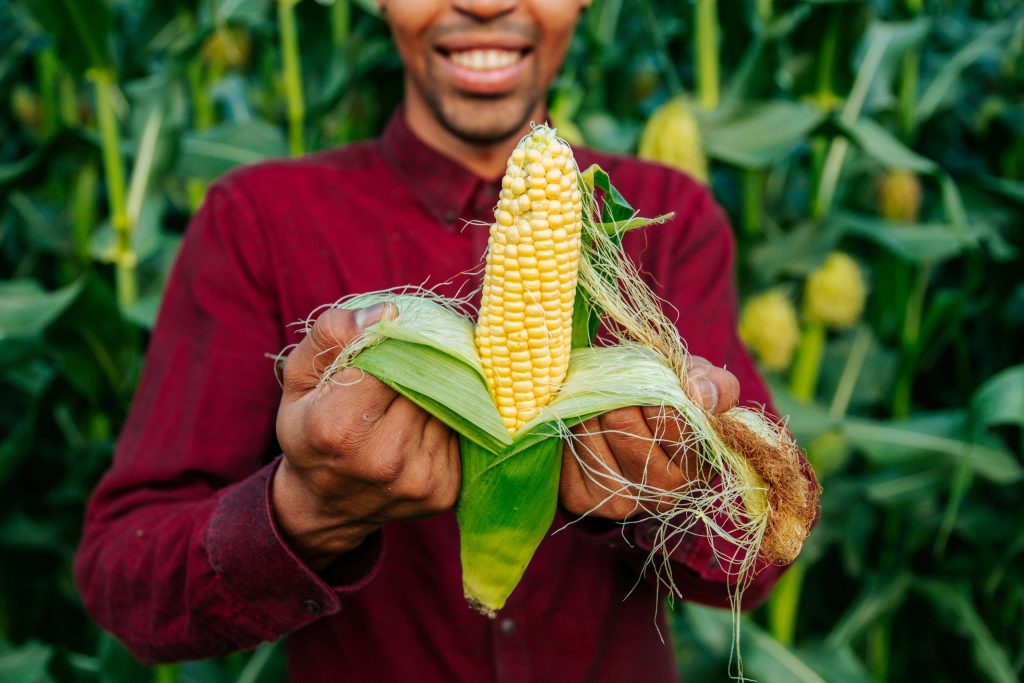
A further point of view is then that of organic farmers: how will those who practice organic agriculture be able to protect themselves from these contaminations? The legal answer seems obvious: let’s stop considering them GMOs and thus the problem for the organics does not arise. But we are not making word plays. We are dealing with the future of soils, of food production, of life on the planet.
We have a Green Deal that among the sneers of those who want to continue making profit on pollution and diseases asks EU countries to arrive at 25% of surfaces cultivated with organic within the next 5 years and to halve, in the same period, the use of chemistry in agriculture. The Green Deal is a controversial measure (we will talk about it always here on Rural Hack, very soon) but the fact remains that organic farmers are the only allies of the planet at this moment and their practices are those of cooperation with nature, according to the model of agroecology.
Do TEAs also do good things?
It is certainly true that, with these new crosses, one could obtain resistances intrinsic to the plant which therefore would not need to be protected with chemical inputs such as pesticides and insecticides. But it is also true that plants do not grow under glass bells. We have already seen this film with the RoundUp Ready varieties, which resist glyphosate thanks to the insertion into the DNA of the plants of a genetic trait belonging to a soil bacterium.
In this way the farmers can abound with the herbicide (see case produced by the same seed company) without worrying about damaging their crops. The same story could for reasons of profit which are those that guide the research of multinationals occur with the “creation” of a plant immune to a bacterium that simply could move elsewhere or, more probably evolve very rapidly to manage anyway to settle in that plant, which at this point would need to be further modified and the laboratories (and the commercial staffs) of the multinationals are there on purpose and already at work exactly for this. We repeat it: TEAs, as has already happened with the past generation of GMOs, are less precise than how they are told to us and could give rise to results different from those that one says to be certain of obtaining.
The real question is: what agricultural model are we looking at?
The theme is anything but simple, and if it becomes simple it is only because someone is singing to us only half the mass. Of course, TEA varieties can resist drought and salinity, or bacteria or viruses. Considering themselves, leaving aside every possible relation with the rest of nature, and above all with the world of business and politics, they are objectively excellent solutions.
But they are productions that almost always need that industrial model that applied to agriculture has already given the measure of the disasters it can accomplish.
A model oriented toward monoculture, which therefore necessarily has negative impacts on biodiversity, on soil well-being and in general on the environment. Global business does not have gardeners in mind, and vice versa. The few chemical and seed companies that govern the world of profit-making agriculture want immense surfaces and to have them they are willing to everything: including putting into act land grabbing operations that imply the expulsion of indigenous populations from their lands, and if they don’t leave with the good ways one can always spray chemical agents on the plantations that surround their villages, putting at risk the life of entire communities, children first.
All for 5 years of advance?
The supporters of crosses accelerated through TEAs say that instead of the 6-7 years that the research for a resistant cross with traditional methodologies requires, TEAs require just 1. Is that all? Really? We have been bombarding the planet with chemistry for at least 100 years and now the anxiety to find a solution saving 5 takes us? And what does it mean that we want plants resistant to drought and salinity? That we do not intend to work to mitigate climate change, but only find a (market) solution to continue to produce despite the disaster we have created and do not want to stop creating?
Let’s try, really, to talk about it
It is true that there are technical differences between transgenic GMOs and TEAs, but the implications, in terms of control of resources, power of multinationals and denial of rights (to information and to food sovereignty to cite only two) are unfortunately very similar. The margin of unpredictability is reduced, certainly, and this can only be a good thing, but the social, political, economic and environmental dynamics remain very similar. If TEAs are equated to conventional varieties, the control of agricultural production, and therefore of world nutrition, and therefore of planetary geopolitics will be increasingly in the hands of a few multinationals, Bayer-Monsanto, Corteva and ChemChina above all.
Let no one touch research, but a regulatory framework is needed that has at heart first of all the protection of the environment and of the most fragile: and therefore let’s talk about it again, let’s talk about it more, let’s all talk about it.
For further information:
https://www.science.org/doi/10.1126/science.adm7634
https://www.wired.it/article/tea-tecniche-evoluzione-assistita-riso-differenze-ogm/#uno
https://www.radarmagazine.net/il-dibattito-sulle-tea-e-sia-scientifico-che-politico