

A short journey into the world of the “third kingdom” and how it could play an essential role in cleaning up pollution.
Yes, as we were told in school, fungi are neither animals (they don’t have a nervous system or muscles) nor plants (they don’t perform photosynthesis because they lack chlorophyll). We have since discovered that they feed by absorbing organic substances from the environment—a process similar to that of animals at the molecular level.
Actually—depending on your age and your level of biology education—you may have been told a different story, also because these definitions were only epistemologically finalized about twenty years ago.
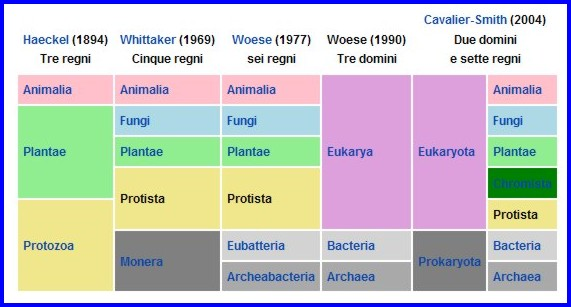
Source: The classification of living things link
Humans and Fungi: A Special Relationship
I was born and raised in Piedmont, in a big city, but ever since I was a child, with my grandmother (originally from Emilia), my mother, and the whole family, we would wait for autumn (or sometimes the beginning of summer) to go mushroom hunting in the hills.
I learned the names of mushrooms in dialect. Many years later, I went mushroom hunting all over Italy, with Ligurian and Tuscan friends, discovering how mushroom names—and culinary habits related to them—change drastically.
I picked Famiole (some call them “chiodino”, scientific name: Armillaria tabescens), Porcini (Boletus edulis), and Parasol mushrooms (Macrolepiota procera). They picked beefsteak fungi (Fistulina hepatica) and other mushrooms we had always avoided out of ignorance or fear.
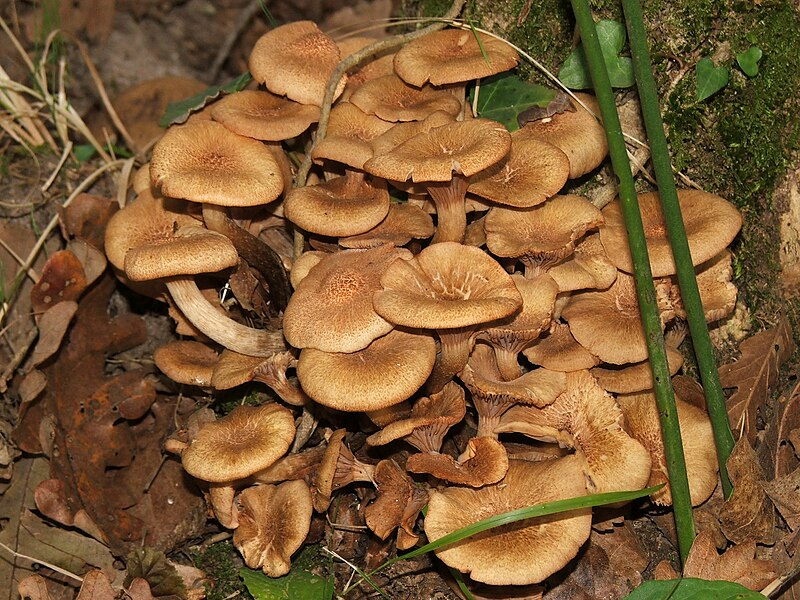 | 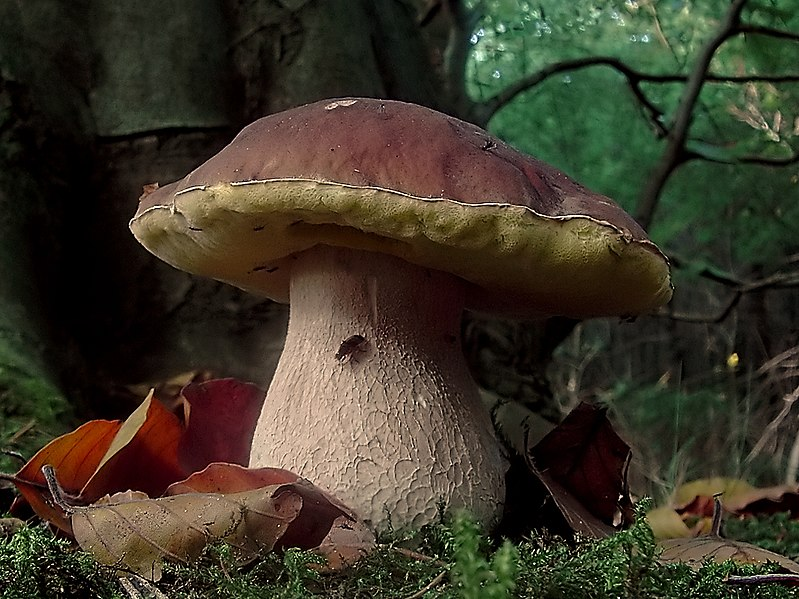 | 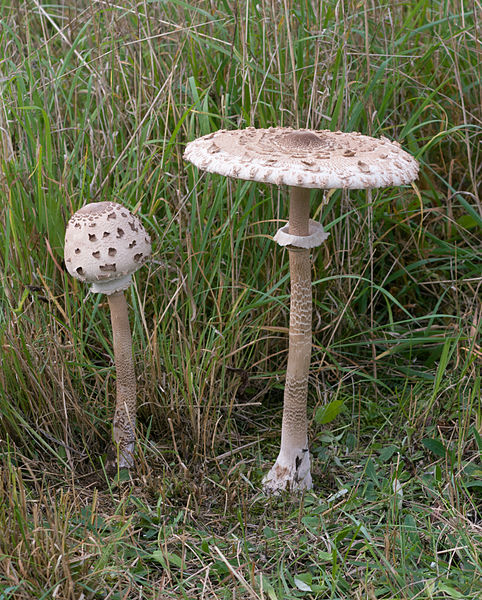 | 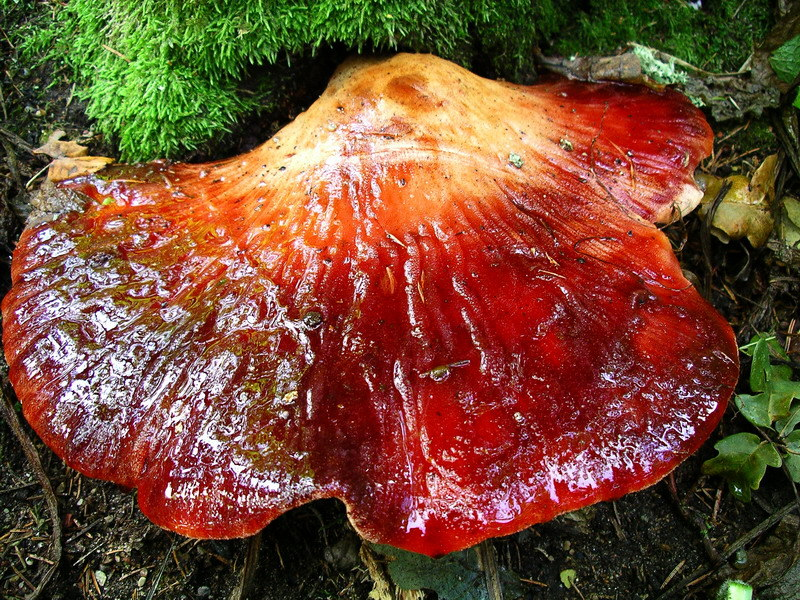 |
| https://it.wikipedia.org/wiki/File:Armillaria_tabescens.JPG | https://it.wikipedia.org/wiki/File:Boletus_edulis_(Tillegem).jpg | https://it.wikipedia.org/wiki/Macrolepiota_procera | https://it.wikipedia.org/wiki/File:Fistulina_hepatica_1.jpg |
As we can imagine, the relationship between humans and fungi goes way back in time and involves many different types of mushrooms: obviously edible ones, but also for medical, military, or even divinatory uses.
Mushrooms as Weapons? That’s right. There are many examples: the Vikings used Amanita muscaria to increase aggression and endurance and to reduce pain perception (the word “berserk” comes from this). The Scythians (a Eurasian people, distant Indo-European relatives) and Siberian tribes used mushrooms to prepare for battle, to see the future, and in significant life moments like coming of age (the word “shaman” originates from the Siberian steppe).
This without even mentioning the Mazatecs and the Aztecs and their use of psychedelic mushrooms (Psilocybe mexicana, known as Teonanácatl, “flesh of the gods”) in religious ceremonies.
There are even scholars—though here we enter the realm of theory, not confirmed history or science—who argue that the consumption of certain mushrooms played a key role in the development of our brain and consciousness: the so-called “stoned ape theory” developed by Terence McKenna, a psychedelic writer and philosopher, and widely promoted by a remarkable figure who will guide us through this article on mycoremediation: Paul Stamets.
Mycoremediation
A term coined by mycologist Paul Stamets; most of the fungi used for this purpose are white-rot basidiomycetes.
In the presence of specific fungal species, toxic molecules are progressively degraded (biodegraded) into simpler molecules like water, carbon dioxide, and biomass—i.e., biocompatible substances.
Mycoremediation is an innovative practice that harnesses the metabolic power of fungi to degrade pollutants and restore compromised ecosystems. In Entangled Life, Merlin Sheldrake explores this process and its environmental impact. Fungi, with their extensive hyphal networks, can absorb and transform toxins present in soil and water, including pesticides, hydrocarbons, and heavy metals. This capacity stems from their evolution as primary decomposers, capable of breaking down even the most complex materials.
Paul Stamets, one of the leading pioneers of mycoremediation, has demonstrated how fungi like Pleurotus ostreatus can degrade petroleum and other toxic substances. In his book Mycelium Running, he documents experiments where fungi were successfully used to treat contaminated soils, sparking growing interest in this natural solution. Stamets has also worked with government agencies to study fungi’s ability to break down neurotoxins like VX, an extremely dangerous chemical agent.
Despite its potential, mycoremediation poses various challenges. A fungus’s effectiveness in the lab doesn’t necessarily guarantee success in complex, real-world environments. Ecosystems require a succession of microorganisms to complete the degradation process, and environmental conditions like oxygen levels and nutrients must be carefully managed. However, experimental projects in places like California and Denmark are exploring innovative solutions, such as mycelium buoys to filter pollutants in ports.
Beyond direct applications in environmental cleanup, mycoremediation fits into a broader vision of symbiosis between fungi and humans. Research by Sheldrake and Stamets suggests that a better understanding of fungi’s role in biogeochemical cycles could open new paths to tackle pollution and climate change. Stamets’s radical idea is that mycelium is not just a remediation tool, but a vital ally in regenerating our planet.
If you want to hear a great lecture on the subject, we recommend this one by Umbrian mycologist Andrea Arcangeli: link
Some fungi have shown the ability to decompose various types of plastic, offering potential solutions to reduce environmental pollution.
For example, the fungus Aspergillus tubingensis, discovered in a landfill in Pakistan, can degrade polyurethane within weeks by producing specific enzymes that break the plastic’s chemical bonds. source
Another example is the marine fungus Parengyodontium album, which can decompose polyethylene, one of the most common plastic polymers. However, this process is more effective when the plastic has been exposed to ultraviolet sunlight, which weakens its structure. source
In the future, integrating mycoremediation with sustainable waste management strategies could represent an innovative solution to plastic pollution. Combined with recycling and reducing single-use plastic production, fungal biodegradation could significantly mitigate the environmental impact of these materials, promoting a more circular approach to waste management.
A concrete example of this direction is the VORTEX project, funded by the European Union, which studied the ability of oceanic microorganisms to decompose plastic. Scientists involved in the project identified several species of fungi and bacteria capable of colonizing and degrading plastic polymers in marine environments.In particular, the fungus Rhodotorula mucilaginosa has shown notable ability to degrade polyethylene, suggesting potential for large-scale use.
The project’s results also highlighted the importance of pre-treating plastic with ultraviolet light to accelerate degradation, making the polymers more susceptible to fungal enzymes. However, the natural degradation rate of microplastics in oceans is still very low, and the volume of plastic waste continues to outpace the environment’s natural breakdown capacity.
This means that even with innovative solutions like mycoremediation, it’s essential to combine strategies for mitigation, reduction at the source, and improvement of recycling infrastructure
Looking ahead, the VORTEX project will continue to map new plastic-degrading microorganisms and study the biochemical mechanisms involved in decomposition. This research not only helps better understand plastic’s life cycle in the environment but also provides essential data to guide more effective environmental policies. Scientific innovation, combined with informed political decisions, will be crucial in tackling one of the most urgent environmental challenges of our time.
Further reading:
- The hidden order. , IBS 12,35 €
- Fantastic Fungi, documentary by Paul Stamets Watch on YouTube or Amazon Prime
[1] Il termine “sciamano” proviene dal tunguso “šaman” (шаман), una parola usata dai popoli indigeni della Siberia per indicare una persona in grado di comunicare con il mondo degli spiriti attraverso stati di trance o estasi.